



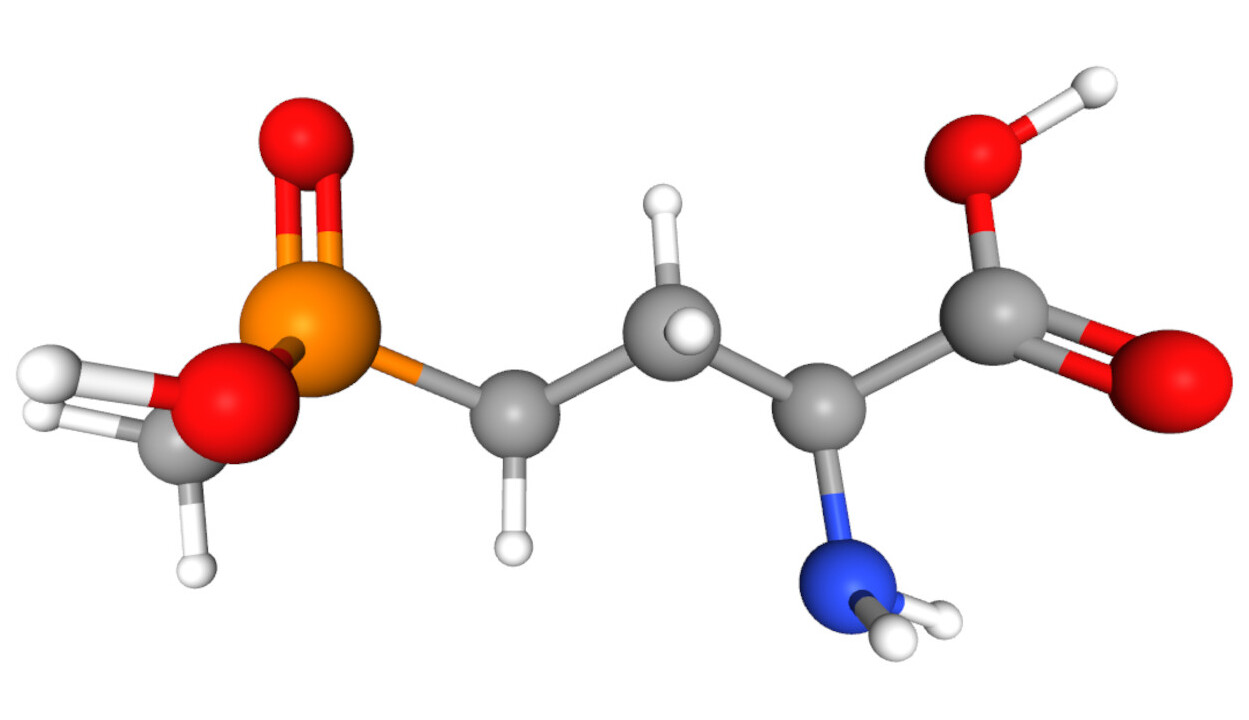
Glufosinate is a broad-spectrum herbicide widely used in agriculture to control annual and perennial weeds in crops such as soybeans, corn, cotton, and canola. It is applied foliarly and acts as an alternative to glyphosate, especially in resistance management systems.
Common name (ISO): Glufosinate
Synonyms: Liberty, Final, Biffo and others.
Gross formula: C5H12NO4P
Number CAS: 51276-47-2 (for glufosinate); 77182-82-2 (for the ammonium salt, the most commonly used commercial form).
Chemical class: A phosphinic acid derivative, belonging to the organophosphate family. It is a structural analog of glutamate, classified as a glutamine synthetase inhibitor in group L of the HRAC (Herbicide Resistance Action Committee) classification.
Release year: 1984 (first commercialization by Hoechst, in the form of glufosinate-ammonium).
Development history: Glufosinate was discovered in the 1960s and 1970s as part of the natural compound bialaphos, produced by soil bacteria of the genus *Bialaphos*. Streptomyces (specifically Streptomyces hygroscopicus e Streptomyces viridochromogenesDuring research at the University of Tübingen (Germany) and Meiji Seika Kaisha (Japan), Hoechst (now Bayer) synthesized the racemic version (a mixture of L and D enantiomers) in the 1970s and identified its herbicidal potential. The resistance genes (bar and pat) were isolated in the late 1980s, allowing the development of genetically modified resistant crops. Commercialization began in 1984 as a non-selective herbicide. The first resistant crops were released in 1995 (canola), followed by corn (1997), cotton (2004), and soybeans (2011).
Mode of action: Glufosinate is an irreversible inhibitor of the enzyme glutamine synthetase (GS), essential for ammonia assimilation and glutamine synthesis in plants. By blocking the glutamate binding site, it causes a toxic accumulation of ammonia in leaf tissues, reducing glutamine levels and disrupting photosynthesis. This leads to uncoupling of photophosphorylation, production of reactive oxygen species (ROS), lipid peroxidation, and destruction of cell membranes, resulting in plant death within 5-10 days. It is primarily absorbed by the leaves, with limited systemic translocation.
Patent numbers: HU 185003, US 4168963 A, EP 0009022 A1 and others.
Cultivar Newsletter
Receive the latest agriculture news by email