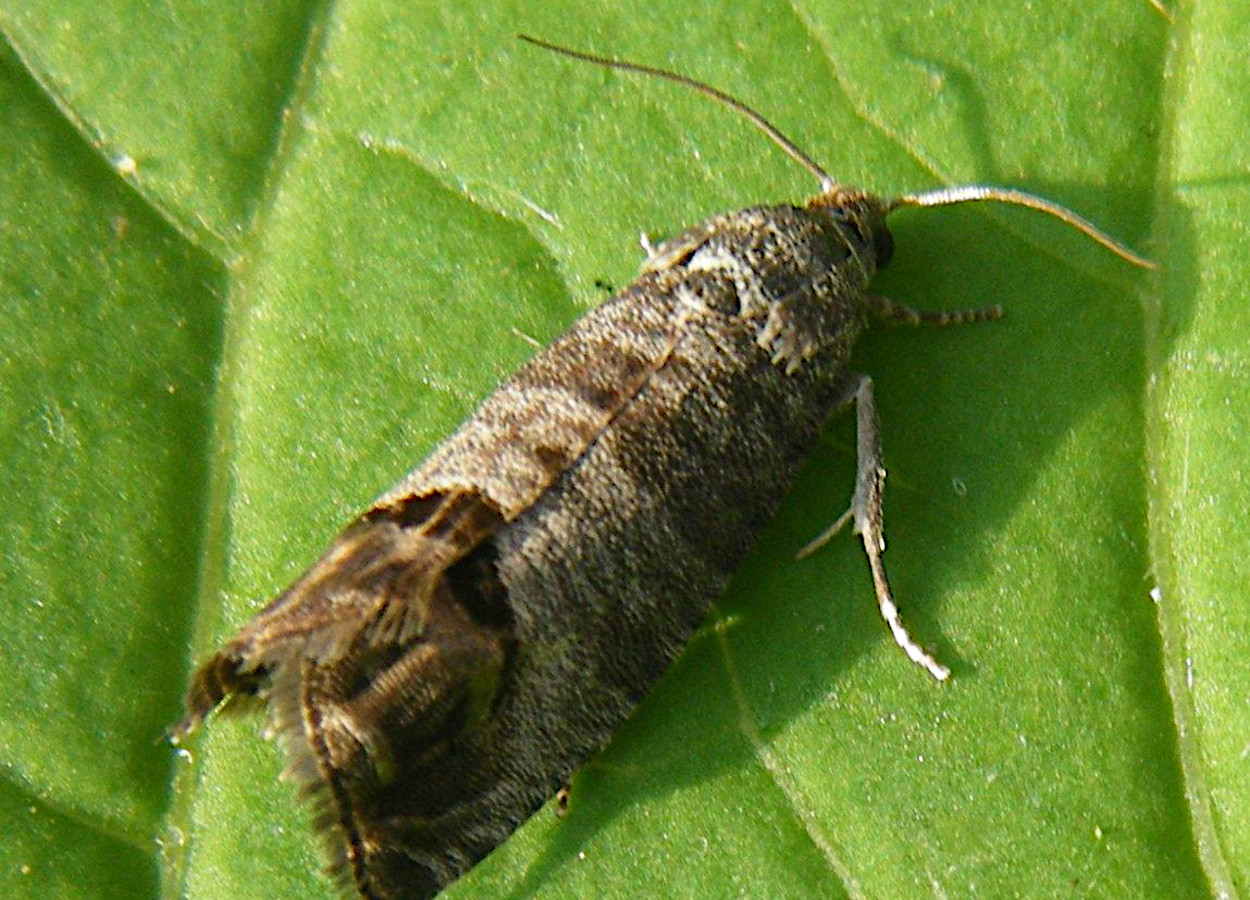
The apple moth, Cydia pomonella (Linnaeus, 1758), represents one of the most significant and economically devastating pests of world fruit production. This small moth of the family Tortricidae has transcended its Eurasian origins to become a global agricultural problem, accompanying the expansion of pome fruit cultivation across the continents.
Taxonomy and evolution
The taxonomic classification of C. pomonella reflects a rich and evolutionarily significant nomenclatural history. Originally described by Linnaeus in 1758 as Phalaena pomonella, the species underwent successive reclassifications that culminated in its current position in the genus Cydia, within the family Tortricidae.
This taxonomic trajectory not only documents the progress of systematic knowledge, but also reveals the phylogenetic relationships that connect this species to a diverse complex of carpophagous Lepidoptera.
The gender Cydia, with approximately 215 valid species, represents a monophyletic group highly specialized in the exploitation of plant reproductive resources, particularly seeds and fruits.
the position of C. pomonella within the Grapholitini tribe, there is evidence of an evolutionary lineage that developed specific adaptations for endophytic life in plant structures, characteristics that became fundamental to its ecological success and, consequently, to its status as an agricultural pest.
Biological architecture
The biology of Cydia pomonella reveals a life organization adapted to the exploitation of fruitful resources. Its holometabolous development cycle, comprising the egg phase, five larval instars, pupa and adult, is closely synchronized with the phenology of its host plants.
The morphology of different developmental stages reflects distinct functional specializations.
Adults, with their characteristic 15-22 mm wingspan and cryptic coloration pattern, are adapted for crepuscular and nocturnal activity, minimizing exposure to diurnal predators. The presence of the distinctive golden patch on the forewings not only serves as a diagnostic feature, but possibly plays a role in intraspecific communication.
Larval behavior represents the most economically relevant aspect of the species' biology. After hatching, larvae demonstrate highly directed searching behavior, locating and penetrating young fruits.
Once established inside the fruits, they develop a feeding pattern that maximizes the use of nutritional resources, preferentially targeting seeds, structures with greater nutritional density.
The larval diapause phenomenon is a crucial adaptation for survival in temperate environments. This strategy allows the species to synchronize its development with favorable seasonal conditions, avoiding periods of resource scarcity and adverse climatic conditions.
The regulation of diapause by photoperiod and temperature demonstrates the sophistication of the adaptive mechanisms developed by this species.
A 2019 study revealed duplication of the olfactory receptor OR3 gene (CpomOR3a and CpomOR3b), which increases the ability to C. pomonella to exploit kairomones and pheromones such as pear ester and codlemone to locate host plants and mates. The study also identified the role of the CYP6B2 gene in insecticide resistance, with RNAi silencing increasing sensitivity to deltamethrin and azinphos-methyl (doi.org/10.1038/s41467-019-12175-9).
Ecology and environmental interactions
The ecology of Cydia pomonella exemplifies the fundamental principles governing interactions between specialist organisms and their environments. Their geographic distribution, virtually cosmopolitan wherever suitable host plants exist, illustrates both their adaptive capacity and their dependence on humans for long-distance dispersal.
The trophic relationships established by C. pomonella are structured around an oligophagous specialization centered on the Rosaceae family. This specialization represents an evolutionary compromise between efficiency in the use of specific resources and ecological flexibility.
The hierarchical preference for different hosts (apple > pear > quince > other rosaceae) reflects gradients of nutritional quality and suitability for larval development.
The population dynamics of the species follow complex patterns determined by the interaction between intrinsic factors (reproductive capacity, intraspecific competition) and extrinsic factors (climatic conditions, host availability, pressure from natural enemies).
Exponential population growth under favorable conditions can quickly transform small infestations into devastating outbreaks, a characteristic that underlies its importance as an agricultural pest.
Natural enemies play a crucial role in regulating the population of C. pomonella. The complex of parasitoids, predators and entomopathogens associated with the species represents a natural biological control system that, under balanced conditions, can maintain populations at tolerable levels. The efficiency of this natural control, however, is often compromised by intensive agricultural practices, creating a cycle of dependence on chemical control.
Management impacts and challenges
The economic impacts caused by C. pomonella transcend the simple loss of production, encompassing control costs, depreciation of fruit quality, commercial restrictions and impacts on the entire fruit production chain.
the management of Cydia pomonella represents one of the greatest challenges in contemporary applied entomology.
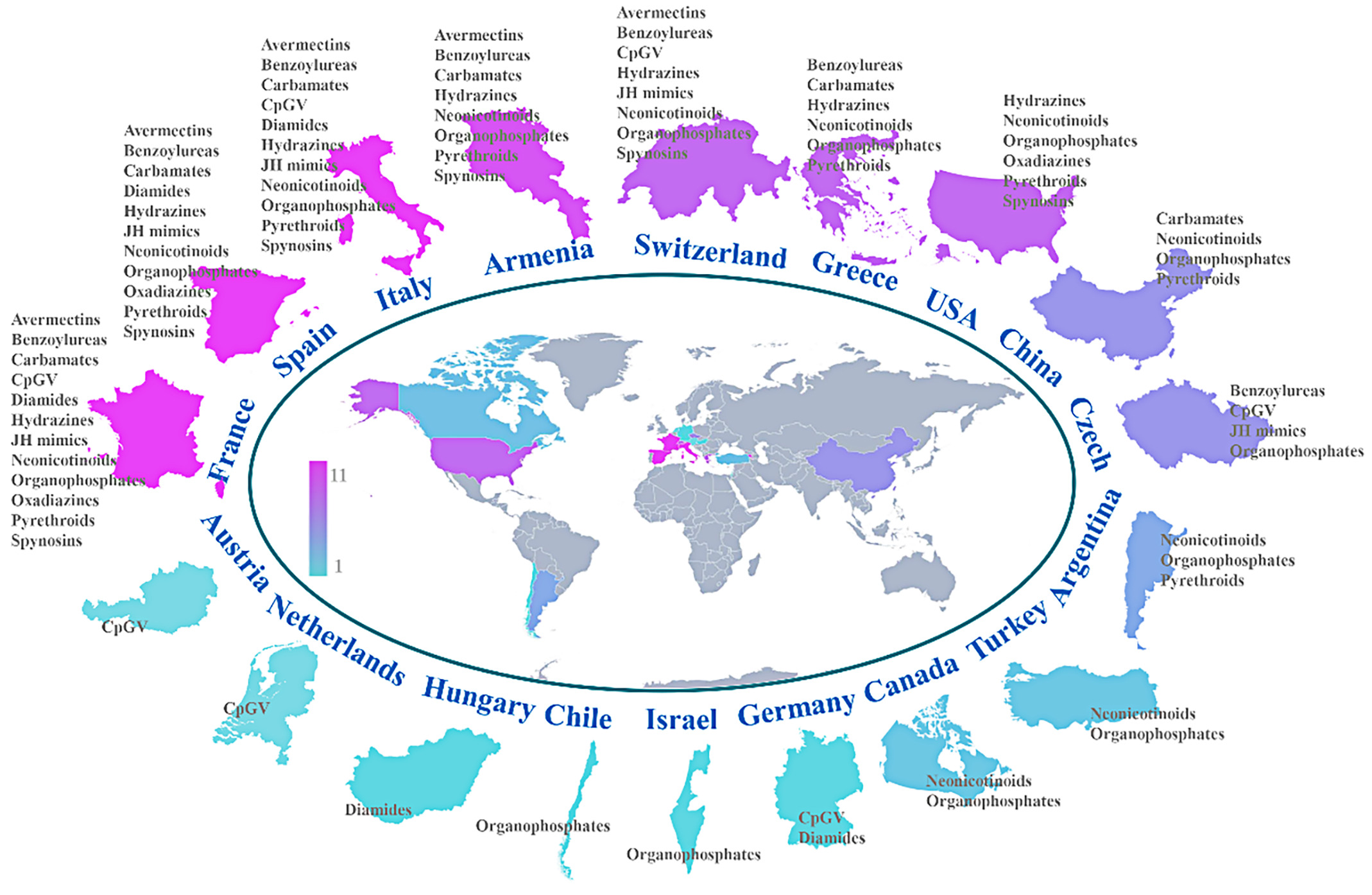
Different levels of insecticide resistance against organophosphates, neonicotinoids, hydrazines, benzoylureas, pyrethroids, diamides, spinosyns, avermectins, JH mimics, carbamates, oxadiazines and granuloviruses C. pomonella (CpGVs) have developed in different countries.
Integrated management strategies include cultural components (orchard sanitation, adequate pruning), biological components (release of parasitoids, application of entomopathogens), biotechnological components (sexual confusion, sterile insect technique) and chemical components (targeted and selective applications).
The effectiveness of these systems fundamentally depends on a deep understanding of the biology and ecology of the pest, highlighting the importance of basic research for practical applications.
Cultivar Newsletter
Receive the latest agriculture news by email