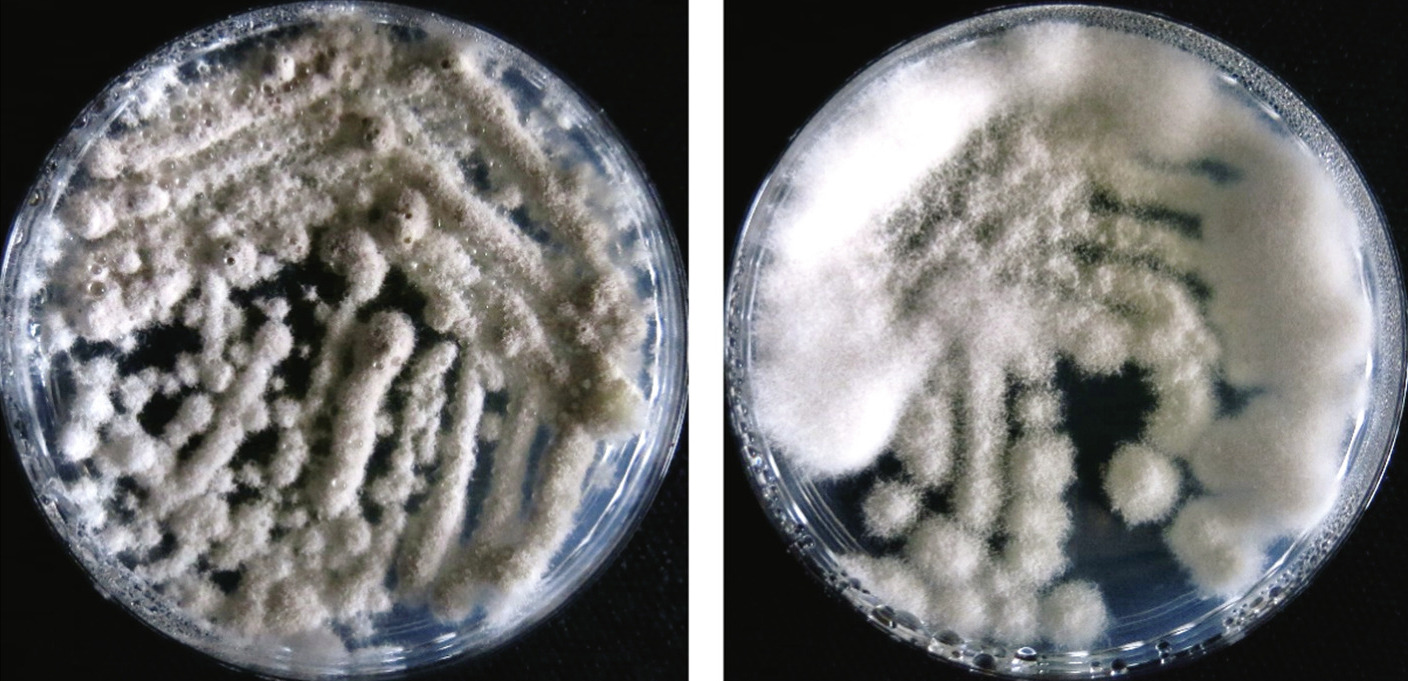
Cordyceps javanica (Frieder. & Bally) is an entomopathogenic ascomycete fungus of the family Cordycipitaceae, previously classified as Isaria javanica. It is characterized as a highly effective biological control agent against insect pests, especially sucking hemipterans such as whiteflies (Bemisia tabaci), psyllids and aphids. The fungus acts through cuticular infection, hemolymphatic colonization and toxin production, offering a sustainable alternative to chemical insecticides in integrated pest management (IPM).
Taxonomic identification
Current classification:
- Kingdom: Fungi
- Phylum: Ascomycota
- Class: Sordariomycetes
- Order: Hypocreales
- Family: Cordycipitaceae
- Genre: Cordyceps
- Species: cordyceps javanica (Frieder. & Bally) Kepler, B. Shrestha & Spatafora
Synonymy: Isaria javanica (Friedr. & Bally) Samson & Hywel-Jones; Paecilomyces javanicus (Friedr. & Bally) AHS Brown & G. Sm.
Registered commercial strains: Several strains are marketed globally, including Brazilian isolates maintained in Embrapa's collection of entomopathogenic microorganisms, with emphasis on strains adapted to tropical and subtropical conditions.
Morphology and life cycle
The anamorph of cordyceps javanica produces simple or branched conidiophores, with cylindrical to fusiform phialides organized in whorls. The conidia are unicellular, ovoid to cylindrical, hyaline, with typical dimensions of 2,5-4,0 × 1,5-2,5 μm. The teleomorphic (sexual) phase is characterized by the formation of perithecia immersed in clavate or capitate stromata, of yellow-orange coloration.
The infectious cycle comprises five distinct stages: adhesion of conidia to the host tegument, germination with formation of appressoria, penetration through the cuticle by the action of proteolytic and chitinolytic enzymes, colonization of the hemocoel with proliferation of blastospores, and death of the insect by toxicosis and/or nutritional depletion. The incubation period varies between 4-10 days, depending on environmental conditions and host susceptibility.
C. javanica demonstrates limited saprophytic capacity in soil, with conidial viability maintained for 30-60 days under favorable conditions. Survival is influenced by soil texture, organic matter, competitive microbiota and abiotic factors. Studies indicate endophytic potential in some crops, providing additional protection against environmental stresses.
Target hosts
cordyceps javanica has a broad spectrum of action, being particularly effective against:
- Hemiptera: Bemisia tabaci (whitefly), Myzus persicae (green aphid), Aphis gossypii (cotton aphid), diaphorina citri (citrus psyllid)
- Thysanoptera: Frankliniella occidentalis (western thrips), Tabaci Thrips (onion thrips)
- Lepidoptera: Plutella xylostella (cruciferous moth), Spodoptera frugiperda (fall armyworm) - early stages
- Coleoptera: Diabrotica speciosa (little cow), curculionid larvae
Efficacy varies according to the host's development stage. Nymphs and young adults are more susceptible due to less cuticular sclerotization. Eggs are generally resistant, while mature adults may have reduced mortality. Penetration is facilitated in less sclerotized regions such as joints, respiratory stigmas and anus.
Mechanism of action
Adhesion to the tegument: Initial adhesion occurs through hydrophobic and electrostatic interactions between conidia and host cuticle. Surface glycoproteins (adhesins) facilitate specific recognition and anchoring of fungal propagules.
Germination and cuticular penetration: After adhesion, the conidia germinate forming germ tubes that develop specialized appressoria. Cuticular penetration is mediated by an enzyme complex including chitinases, proteases (Pr1, Pr2) and lipases, in synergy with mechanical pressure exerted by the appressorium.
Hemolymphatic colonization: Inside the host, the fungus differentiates into blastospores that multiply in the hemocoel, evading immune responses through virulence factors such as cyclosporin A and destruxins. Colonization is accompanied by nutrient depletion and changes in osmotic balance.
Insect death: Mortality results from a combination of toxicosis (destruxins and other mycotoxins), nutritional starvation, obstruction of the circulatory system, and impairment of vital organs. Postmortem, external conidiogenesis occurs under conditions of high relative humidity.
Factors affecting effectiveness
Temperature: The optimum range is between 25-28°C, with reduced germination below 15°C and above 35°C. Extreme temperatures (>40°C or <5°C) significantly compromise conidial viability and infection speed.
Relative humidity: greater than 85% is essential for germination and sporulation. Low humidity conditions (<60%) drastically reduce effectiveness, while water saturation (>95%) favors vegetative development and conidiogenesis.
UV radiation: Ultraviolet radiation is the main limiting factor in field persistence. UV-B (280-320 nm) causes damage to DNA and proteins, reducing viability by 50-90% after 4-6 hours of direct exposure. Formulations should include UV protectants or application at the end of the day.
Substrate pH: Optimal growth occurs at pH 6,0-7,5. Extremely acidic (pH <4,0) or alkaline (pH >9,0) conditions inhibit germination and fungal development, affecting efficacy in soils with inadequate pH.
application methods
Foliar spraying: Most common method, using aqueous suspensions of conidia. Typical concentration: 1×10⁸-1×10⁹ conidia/mL. Preferably applied in the late afternoon or early evening to minimize UV degradation. Spray volume: 200-400 L/ha depending on the crop and equipment.
Soil treatment: application of conidia in granulated or liquid substrate directly to the soil to control soil pests. Dosage: 1×10¹²-1×10¹³ conidia/ha. Surface incorporation (2-5 cm) improves distribution and contact with target pests.
Seed coating: emerging technology using biodegradable polymers for adhesion of conidia to seeds. Concentration: 1×10⁶-1×10⁷ conidia/seed. Provides protection during germination and initial establishment of the crop.
Controlled release: Encapsulation systems allow gradual release of conidia into the environment. Alginate or chitosan microcapsules protect against adverse conditions and extend the period of action to 15-30 days.
Recommended dose and frequency
Conidial concentration: for control of whiteflies and aphids: 1×10⁸-5×10⁸ conidia/mL. More resistant pests (thrips, lepidopterans): 1×10⁹-2×10⁹ conidia/mL. Concentrations higher than 1×10¹⁰ conidia/mL rarely increase efficacy proportionally.
Interval between applications: sequential applications every 7-14 days during periods of high pest pressure. Under low infestation conditions, intervals of 21-28 days may be sufficient. Pest population monitoring should guide application frequency.
Compatibility with adjuvants: Non-ionic adhesive spreaders (0,05-0,1%) improve coverage and adhesion. Avoid cationic surfactants that may affect fungal viability. Mineral or vegetable oils (0,5-1,0%) may protect against desiccation and UV.
Integrated pest management
Synergy with parasitoids: C. javanica demonstrates compatibility with egg parasitoids (Trichogramma spp.) and larval-pupal (encarsia e Eretmocerus spp.). Applications should be programmed to minimize impact on natural enemies, preferably on non-susceptible stages of the parasitoids.
Alternating use with chemicals: Rotation with insecticides of different modes of action prevents the development of resistance and maintains the effectiveness of the control program. Minimum intervals of 7-10 days between fungal and chemical applications are recommended to avoid antagonism.
Application windows: Preventive applications during crop establishment and early pest colonization maximize effectiveness. Favorable weather conditions (high RH, mild temperatures) should guide the application schedule.
Resistance management
Rotation of modes of action: alternation between different species of entomopathogenic fungi (beauveria bassiana, Metarhikum anisopliae) and other microbial agents reduces selective pressure and risk of resistance.
Effectiveness monitoring: Periodic assessments of natural and induced mortality in field populations allow early detection of reduced susceptibility. Laboratory bioassays with local isolates complement monitoring.
Good agricultural practices: maintenance of refuges with susceptible hosts, crop diversification, conservation of natural enemies and adequate application management contribute to the sustainability of biological control.
Environmental impact
Selectivity for natural enemies: C. javanica It has low pathogenicity for most beneficial arthropods. Predators (coccinellids, lacewings) and parasitoids are generally little affected in field concentrations, maintaining the ecological balance of the agroecosystem.
Ecosystem degradation: the fungus is rapidly degraded by abiotic factors and soil microbiota, not persisting in the environment for prolonged periods. Secondary metabolites are biodegradable and non-bioaccumulative in the trophic chain.
Safety and toxicology
Effects on mammals: C. javanica It is not pathogenic for mammals due to thermosensitivity (growth inhibited at 37°C) and the absence of virulence factors specific for vertebrates. No cases of mycoses have been reported in humans or domestic animals.
Oral and dermal LD₅₀: acute toxicity tests in rats indicated: oral LD₅₀ > 5×10⁹ conidia/kg body weight; dermal LD₅₀ > 2×10⁹ conidia/kg body weight. Absence of mortality, clinical signs or histopathological changes at the doses tested.
Field results
Efficiency studies in different cultures: field trials in soybeans demonstrated 70-85% control of B. tabaci with two applications of C. javanica (1×10⁸ conidia/mL) at 14-day intervals. In citrus, 60-75% reductions in the population of D. citri were observed with biweekly applications during budding.
Cultivar Newsletter
Receive the latest agriculture news by email