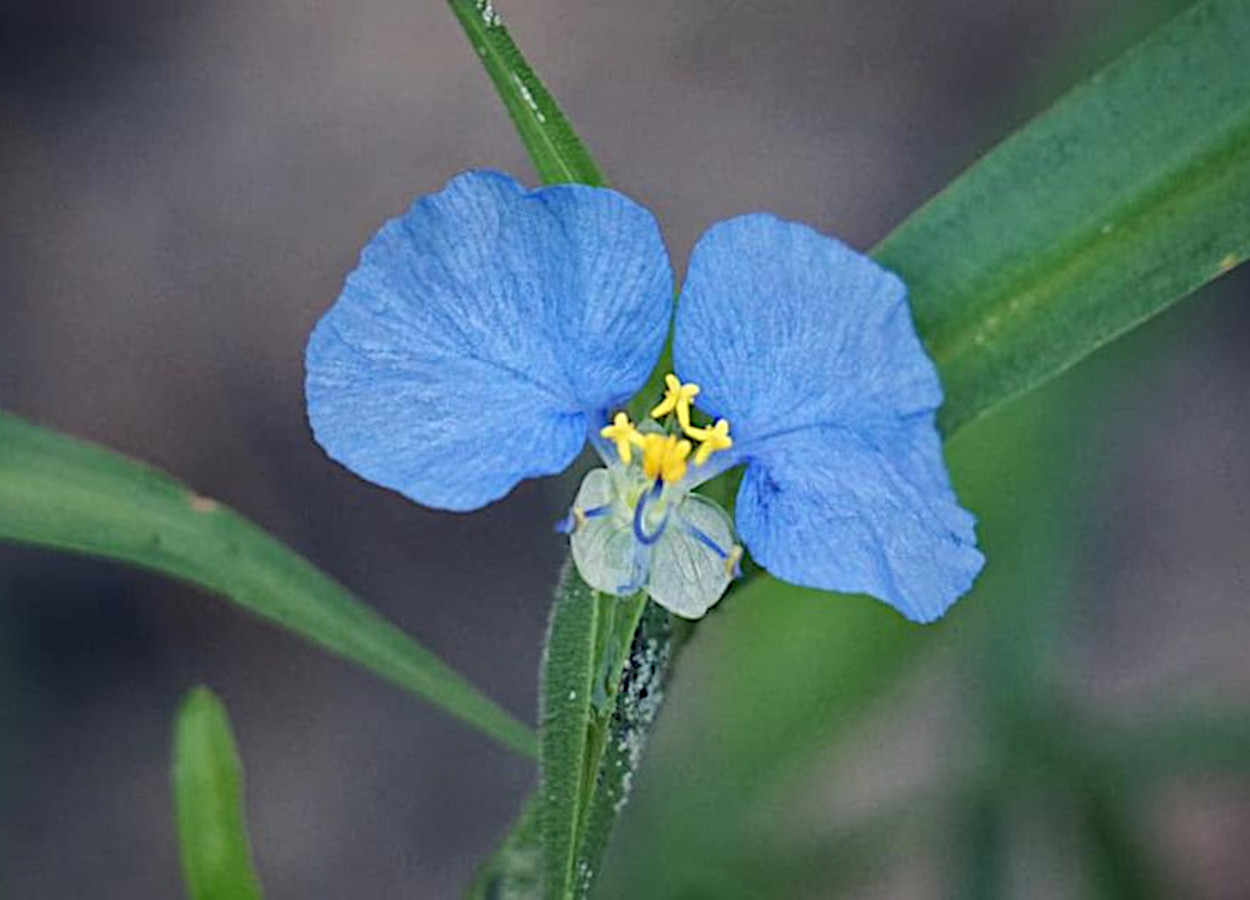
commelina erecta L., popularly known as trapoeraba, marianinha or erva-de-santa-luzia, represents one of the main phytosanitary challenges in Brazilian and global agricultural systems.
Belonging to the Commelinaceae family, this herbaceous species has stood out as one of the most problematic weeds in several commercial crops, requiring an in-depth understanding of its biological characteristics and effective management strategies to minimize its impacts on agricultural productivity.
Morphological and taxonomic characteristics
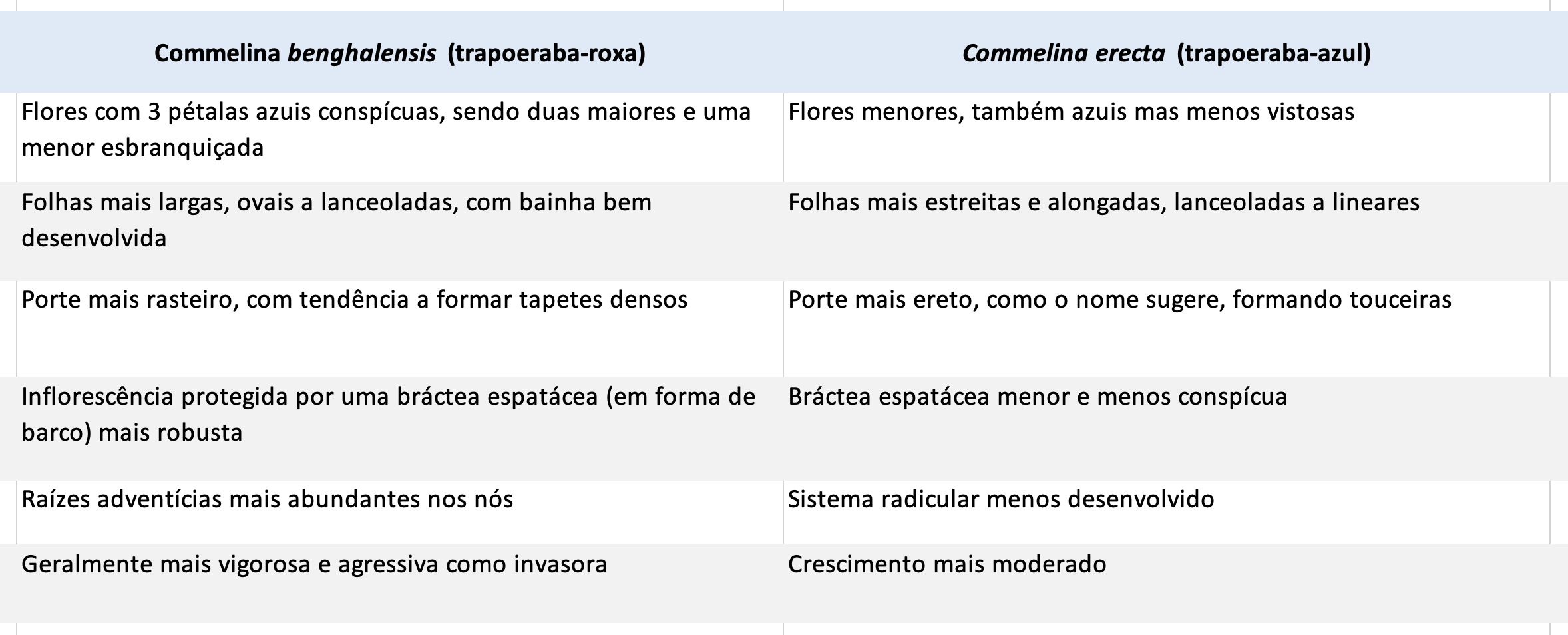
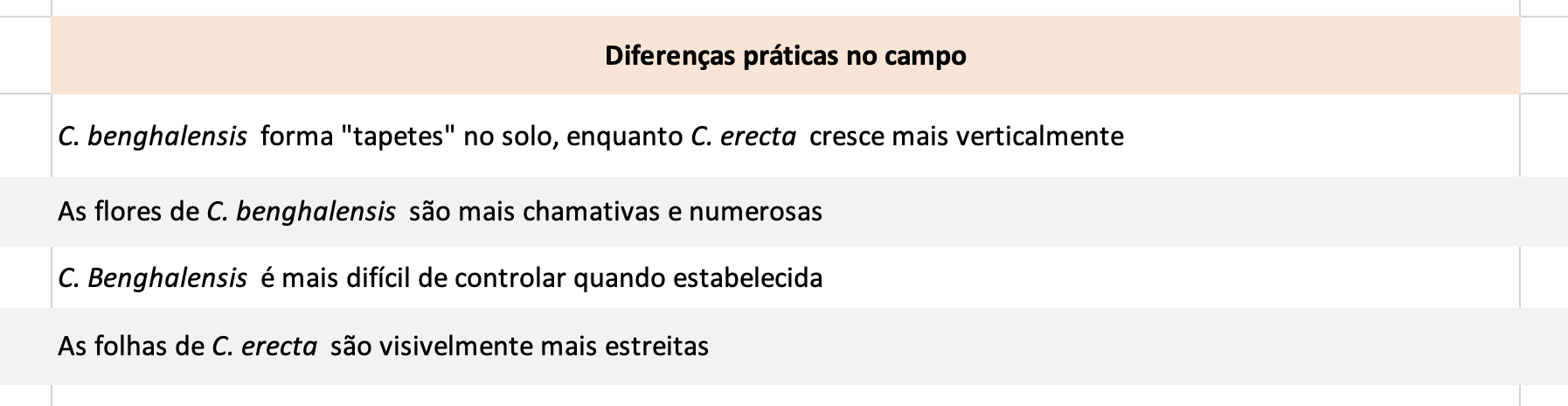
commelina erecta It has a characteristic morphology that facilitates its identification and understanding of its ecological behavior.
The species develops herbaceous and succulent stems, with well-defined nodes and internodes, which can reach between 30 and 80 centimeters in height.
A fundamental characteristic is the ability to take root adventitiously at the nodes when in contact with moist soil, giving the plant an extraordinary capacity for vegetative propagation.
The root system is fibrous and relatively superficial, efficiently exploring the upper layer of the soil, rich in nutrients and moisture. The leaves are simple, alternate, lanceolate to ovate-lanceolate, with a closed sheath characteristic of the Commelinaceae family.
The inflorescence presents flowers organized in scorpion-shaped cymes protected by a boat-shaped spathe bract, the flowers being zygomorphic with three distinct petals: two larger blue ones and one smaller one, often white or translucent.
This morphological architecture gives the species significant competitive advantages in agroecosystems, allowing efficient exploration of resources and rapid colonization of new environments through multiple reproductive strategies.
Reproductive biology and life cycle
The complexity of the reproductive system of commelina erecta is one of the main factors in its success as an invasive species. The species reproduces sexually through entomophilous pollination, carried out mainly by small insects attracted to the showy blue flowers.
Additionally, it develops cleistogamy, producing closed flowers that self-fertilize, ensuring seed production even in the absence of suitable pollinators.
Asexual reproduction occurs through stem fragmentation and subsequent rooting at the nodes, allowing rapid colonization of new areas and perpetuation of the species under adverse conditions. This dual reproductive strategy confers extraordinary adaptive plasticity, explaining the persistence of the species in different environments and management conditions.
The life cycle varies between annual and short-lived perennial, depending on environmental conditions.
Their seeds do not present physical dormancy, being permeable to water. And they can exhibit physiological dormancy, with free seeds germinating immediately after falling and coated seeds entering the seed bank (Panigo, 2024).
Germination is favored by 12 hours of light at 24-29°C and 12 hours of darkness at 10-15.6°C, being positive photoblastic.
Initial vegetative development is relatively slow, but accelerates significantly after the root system is established, with flowering beginning between 40-60 days after germination.
Ecophysiological adaptations
commelina erecta has developed several adaptations that explain its success in agroecosystems. The species has succulent characteristics, storing water in the stems and leaves, conferring tolerance to periods of moderate water deficit. This ability is essential for survival in agricultural systems subject to seasonal water variations.
Phenotypic plasticity represents another crucial adaptation, allowing morphological adjustments according to light conditions. In shade, it develops longer internodes and larger leaves, while in full sun it presents more compact and resistant growth. As a C3 plant, it presents photosynthesis typical of temperate species adapted to tropical conditions through specific morphophysiological adjustments.
The efficiency in nutrient absorption, especially nitrogen and phosphorus, allows effective competition with agricultural crops for essential resources. This characteristic, combined with tolerance to a wide pH range (4,5-7,5) and different soil textures, explains its widespread occurrence in several production systems.
Conditions conducive to development
The establishment and development of commelina erecta are influenced by a complex interaction of abiotic and biotic factors. Climatically, the species thrives in temperatures between 20-30°C, with precipitation between 800-1500mm per year, although it tolerates more restrictive conditions due to the morphophysiological adaptations developed.
Soil characteristics have a significant influence, with a preference for clayey to sandy loam soils, well-drained and with moderate to high fertility. Tolerance to a wide pH range allows occurrence in soils typical of different Brazilian agricultural regions.
Inadequate management practices can create extremely favorable conditions for establishment.
Excessive soil disturbance exposes dormant seeds to ideal germination conditions, while irrigation systems create moist microenvironments conducive to development.
Surface fertilization and periods of bare soil between crops offer ideal opportunities for the establishment and development of the species.
Impacts on agriculture
commelina erecta causes significant impacts on agricultural productivity through interspecific competition for essential resources. Competition is particularly intense for water, nutrients and light, and can cause substantial reductions in the productivity of crops such as corn, soybeans, cotton, sugarcane and coffee.
The shallow but efficient root system competes directly with crops for nutrients in the most fertile soil layer. The ability to develop in both full sun and partial shade allows effective competition at different stages of crop development. Additionally, the production of allelopathic substances can negatively influence the development of sensitive crops.
Economic losses extend beyond the direct reduction in productivity, including additional control costs, depreciation of equipment due to the presence of succulent stems during mechanical harvesting, and reduced quality of agricultural products due to contamination by seeds or vegetative fragments.
Integrated management strategies
The effective control of commelina erecta requires an integrated approach that combines preventive, cultural, mechanical, chemical and biological methods, adapted to the specific characteristics of each production system.
Preventive strategies are the basis of sustainable management. Thorough cleaning of agricultural equipment prevents dispersion between areas, while the use of certified seeds prevents introduction into non-infested areas.
Proper management of borders and pathways eliminates reservoirs of propagules.
Adequate cultural practices create unfavorable conditions for the development of the species. Crop rotation interrupts reproductive cycles and allows the use of different control strategies. Adjusting planting density and spacing accelerates canopy closure, reducing light availability for germination and development.
Planting times can be adjusted to avoid critical germination periods, while localized fertilization favors crops over weeds.
Mechanical control should be carefully planned, taking into account the biology of the species. Mechanical cultivation is effective when carried out on young plants, before rooting at the nodes, avoiding fragmentation that can multiply infestation foci. Manual weeding is efficient in small areas, and should be carried out before flowering to avoid seed production.
Chemical control offers effective solutions when properly integrated into the management system. Pre-emergent herbicides such as atrazine, metribuzin and S-metolachlor effectively control plants from seeds, presenting adequate residuality for controlling subsequent germination flows.
Post-emergent herbicides such as glyphosate, 2,4-D and nicosulfuron are effective against established plants, especially when applied at young stages of growth. Combinations of herbicides broaden the spectrum of control and reduce the risk of resistance development.
The sustainable management of commelina erecta must consider aspects of herbicide resistance, environmental impacts and long-term economic viability. Rotation of herbicide action mechanisms, use of adequate doses and integration with non-chemical methods are essential to preserve the effectiveness of the available tools.
Click here and see the herbicides registered for the control of commelina erecta
Cultivar Newsletter
Receive the latest agriculture news by email