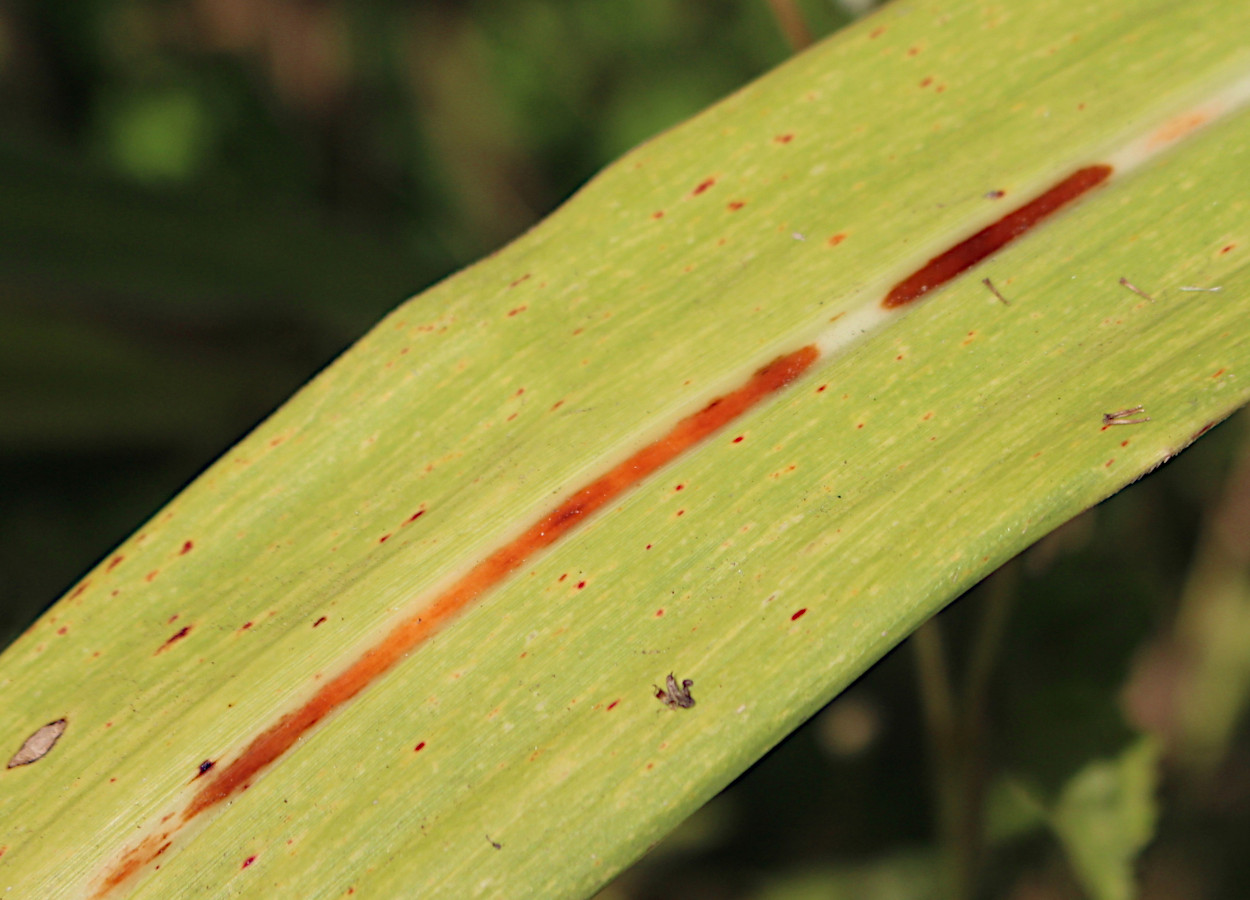
Colletotrichum falcatum Went is the etiological agent of red rot, one of the limiting diseases of sugarcane production. This filamentous fungus, belonging to the phylum Ascomycota, stands out for its complex biology and remarkable adaptability to different environments.
Kingdom: Fungi
Division: ascomycota
Class: Sordariomycetes
Order: Glomerellales
Family: Glomerellaceae
Genre: Colletotrichum
Species: Colletotrichum falcatum
Taxonomic characteristics
Colletotrichum falcatum is part of the Glomerellaceae family, order Glomerellales, characterized as a member of the complex Colletotrichum graminicola, a group of cryptic species specialized in the infection of grasses.
Accurate identification of this species has evolved significantly with the advent of molecular techniques, as traditional morphological characteristics often overlap between related species.
The distinctive morphology of C. falcatum It manifests itself primarily through its sickle-shaped conidia, asexual reproductive structures measuring 15-25 × 3-4 μm and exhibiting a characteristic curvature that gives rise to the specific epithet "falcatum." These structures are produced in subepidermal acervuli bearing sterile dark setae, which rupture the host epidermis to release the inoculum. The apprehensioria, specialized adhesion and penetration structures, are oval to club-shaped and melanized in color, conferring resistance to adverse environmental conditions and the ability to generate the turgor pressure necessary for mechanical penetration of host tissues.
The teleomorphic phase, called Glomerella falcata, although less frequent in nature, plays a fundamental role in the genetic variability of the species through sexual recombination. This phase is characterized by the formation of globose perithecia containing hyaline, spindle-shaped ascospores, structures that contribute to survival in adverse conditions and to gene flow between distant populations.
Lifecycle
Colletotrichum falcatum It is an organism of remarkable adaptive complexity, capable of switching between different nutritional and reproductive strategies depending on environmental conditions and host availability. Its life cycle integrates asexual and sexual phases, with the former predominating under favorable conditions and responsible for the rapid multiplication and dissemination of the inoculum.
The infection process begins with the dispersal of conidia, primarily through rain splashes and irrigation, followed by adhesion to the leaf surface via specific mucilages. Conidial germination, which occurs within 2–4 hours under optimal temperature conditions (25–30°C) and relative humidity above 80%, is followed by the formation of melanized apprehensions capable of generating turgor pressures of up to 8 MPa.
Penetration can occur directly through the intact cuticle, taking advantage of natural or mechanical wounds, or through natural openings such as stomata. This process involves the coordinated secretion of lytic enzymes, including cutinases, cellulases, and pectinases, which progressively degrade the host's structural barriers.
A notable feature of the pathogenesis of C. falcatum Its facultative necrotrophic strategy initiates colonization through a biotrophic phase that suppresses host defenses without causing immediate cell death. This phase, which lasts approximately 72 hours, is followed by a transition to necrotrophism, characterized by the massive production of toxins and degrading enzymes that result in cell death and the formation of lesions characteristic of red anthracnose.
Virulence factors
The pathogenicity of Colletotrichum falcatum results from the coordinated action of multiple virulence factors, including cell wall-degrading enzymes, specific toxins, and effectors that manipulate host physiology. Among the most relevant enzymes are polygalacturonases and pectin lyases, which attack the middle lamella, facilitating cell separation, and cellulases, responsible for the degradation of structural cellulose.
The toxins produced by C. falcatum These include oxalic acid, which acidifies the environment and chelates calcium ions essential for cell wall integrity, and tenuazonic acid, a phytotoxin that causes localized necrosis. Melanin production provides protection against UV radiation and host antimicrobial compounds, while gliotoxins suppress the plant's immune response.
Pathogen-secreted effectors represent a sophisticated category of virulence factors, including proteins that are translocated to the cytoplasm of host cells where they interfere with signaling and defense processes. These effectors can suppress the hypersensitive response, alter cellular metabolism, and manipulate host gene expression in favor of the pathogen.
Ecology and distribution
Colletotrichum falcatum It is concentrated mainly between latitudes 30°N and 30°S, coinciding with the world's main sugarcane-producing regions. This distribution is determined primarily by climatic factors, especially temperature and humidity, which influence both the pathogen's survival and its infectivity.
The pathogen exhibits ecological plasticity, adapting to different microclimates and cultivation systems. Its survival depends primarily on infected crop residues, where the mycelium remains viable for prolonged periods, and on contaminated planting material, which constitutes the primary means of long-distance dissemination. The ability to form resistant structures, particularly ascospores, contributes to its persistence under adverse environmental conditions.
The ecological interactions of C. falcatum extend beyond the direct relationship with its primary host, including competition with other phyllosphere microorganisms, interactions with insects that can act as vectors or create wounds that facilitate infection, and relationships with antagonistic microorganisms that can limit its development. These complex interactions determine the pathogen's population dynamics and influence the severity of epidemics.
Management strategies
The economic impact of red anthracnose is substantial, with losses that can reach 50% of sugar production in susceptible varieties under conditions favorable to the pathogen. These losses result not only from reduced productivity but also from deterioration in juice quality, compromising both sugar and ethanol production.
The effective management of C. falcatum requires multiple strategies. The use of resistant varieties is the most effective and economically viable measure, although the durability of this resistance is constantly challenged by the pathogen's adaptive capacity. The development of varieties with horizontal resistance, based on multiple genes of minor effect, offers more promising prospects for durable resistance.
Cultural practices play a fundamental role in integrated management, including the elimination of infected crop residues, heat treatment of seedlings, crop rotation when feasible, and appropriate irrigation and nutrition management. Chemical control, while effective in specific situations, must be used judiciously to prevent the development of resistance and minimize environmental impacts.
Biological control emerges as a promising alternative, with antagonistic microorganisms such as Trichoderma spp. And Bacillus spp., demonstrating efficacy in suppressing the pathogen through competition, antibiosis, and resistance induction. The integration of these different strategies, adapted to local conditions and the production system, represents the most sustainable approach for long-term management.
Click here to see the fungicides registered for the control of Colletotrichum falcatum
Cultivar Newsletter
Receive the latest agriculture news by email