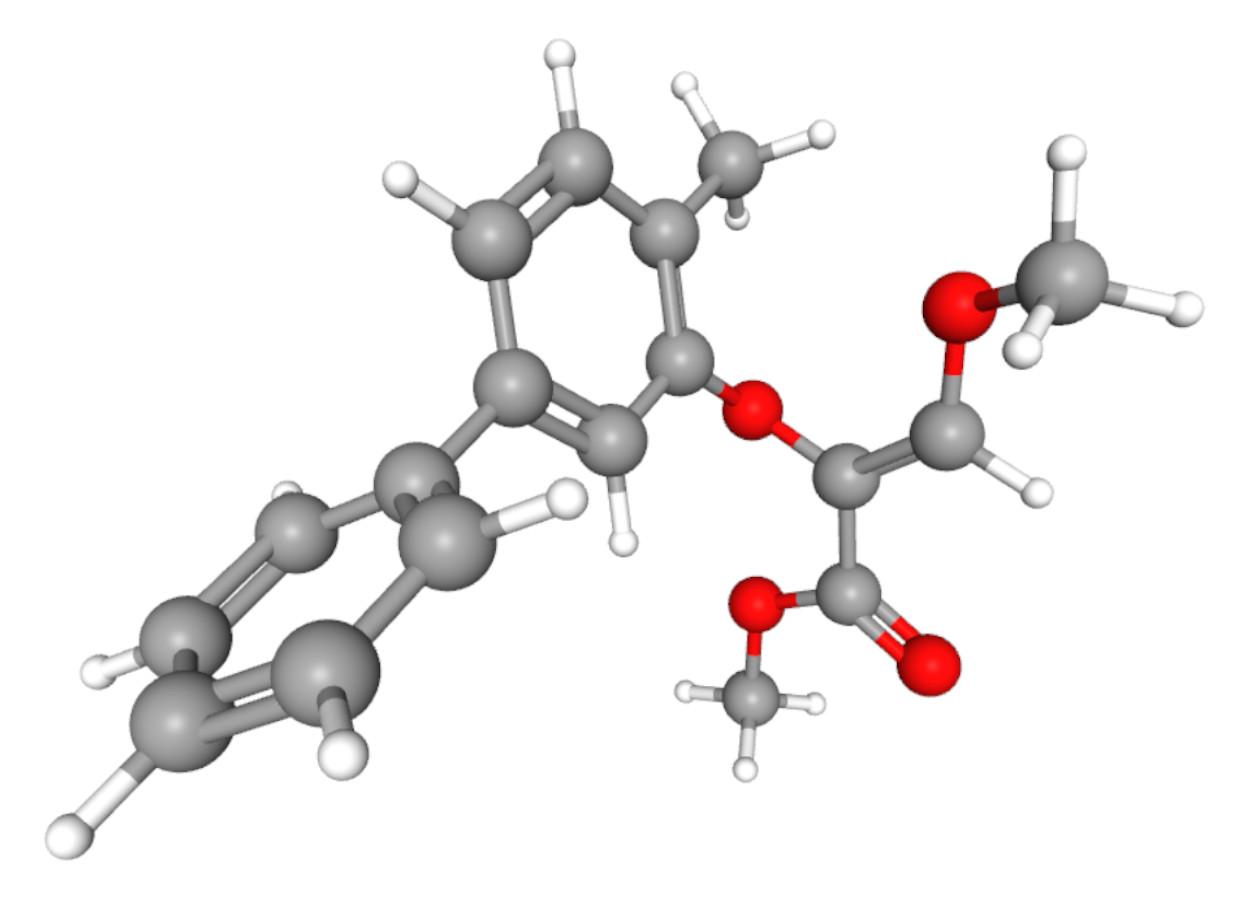
Bifemetstrobin is a novel strobilurin (QoI) fungicide discovered by Sumitomo Chemical Co., Ltd. (Japan), development code S-2326. It is an active ingredient with significant potential for managing foliar diseases in crops such as soybeans, rice, wheat, fruits, and vegetables, especially in scenarios of resistance to existing QoI fungicides.
Common name: bifemetstrobin
Number CAS: 2454319-63-0
Gross chemical formula: C18H18O4
Chemical class: Strobilurin fungicide from the quinone outside inhibitor (QoI, FRAC code 11 / group C3 — inhibitor of mitochondrial respiratory chain complex III at the Qo site). It belongs to the phenoxypropenoate / methoxyacrylate subclass. It is described as a new member of the family with characteristics that allow activity against some strains resistant to classic QoIs.
Development history: Discovered by Sumitomo Chemical (Japan). Provisional ISO name in June 2024. The company reported on registration applications submitted on July 9, 2026 (Japan, United States, and Brazil). The active ingredient was developed with a focus on broad spectrum and, especially, efficacy against strains of pathogens resistant to existing QoIs, including Phakopsora pachyrhizi (soybean rust). Internal and external studies confirmed this "resistance-breaking" characteristic. Patents protect the composition and methods of use. It is considered a new generation active ingredient within the strobilurins.
Mechanism of action: QoI inhibitor blocks mitochondrial respiration by inhibiting complex III (cytochrome bc₁) at the ubiquinol oxidation site (Qo site). This prevents electron transfer and ATP synthesis in pathogenic fungi. It acts predominantly by contact. It differs from other QoIs by exhibiting low resistance factors (RFs) in several mutant cytochrome b (Cytb) haplotypes that confer resistance to azoxystrobin, pyraclostrobin, or piribencarb.
Control spectrum: Filamentous fungi (Ascomycota, Basidiomycota, Blastocladiomycota etc.), Oomycetes, Phytomyxea.
Examples of targets: Cochliobolus miyabeanus, Magnaporthe oryzae, Phakopsora pachyrhizi (highlighting strains resistant to QoIs, including F129L), Pyricularia oryzae, Rhizoctonia solani.
Compatibilities and interactions: Specific data is still limited (very recent active ingredient). Like other QoIs, it should exhibit good physical and chemical compatibility with many fungicides, insecticides, and adjuvants in tank mixtures, but prior compatibility and phytotoxicity testing is always recommended.
Important for resistance management: QoIs are high-risk (FRAC). Bifemetstrobin should be used in mixtures or alternating with fungicides from other action groups (e.g., SDHI, triazoles/DMI, multi-site fungicides such as chlorothalonil or mancozeb) to delay the development of resistance. In vitro studies show low cross-resistance with several Cytb mutants that affect other QoIs.
Agronomic positioning: A promising tool for managing QoI resistance in resistant populations, especially in Brazilian soybean crops, where Asian soybean rust represents a major phytosanitary and economic challenge. Its ability to maintain activity in strains with mutations such as F129L (and other combinations) positions it as a valuable option in integrated disease management (IDM) programs. Its main preventive action is typical of contact strobilurins; use in mixtures broadens the spectrum and protects long-term efficacy.
Cultivar Newsletter
Receive the latest agriculture news by email