





Albaugh Registered Ace Fungicide for Seed Treatment in the US
Product has been assigned number 45002-40 by the Environmental Protection Agency (EPA)
19.12.2022 | 17:50 (UTC -3)
Summer in the Southern Hemisphere begins at 18:48 pm (Brasília time) next Wednesday (21) and ends on March 20, 2023 at 18:25 pm. Due to its climatic characteristics, with large volumes of rain, summer in Brazil is very important for economic activities such as agriculture, energy generation (through hydroelectric plants) and for water replacement and maintenance of water supply reservoirs in satisfactory levels.
The period reflects the increase in temperature throughout the country due to the relative position of the Earth in relation to the Sun further south, making the days longer than the nights and with rapid changes in weather conditions with conditions favorable to heavy rain, falling hail, wind with intensity varying from moderate to strong and electrical discharges.
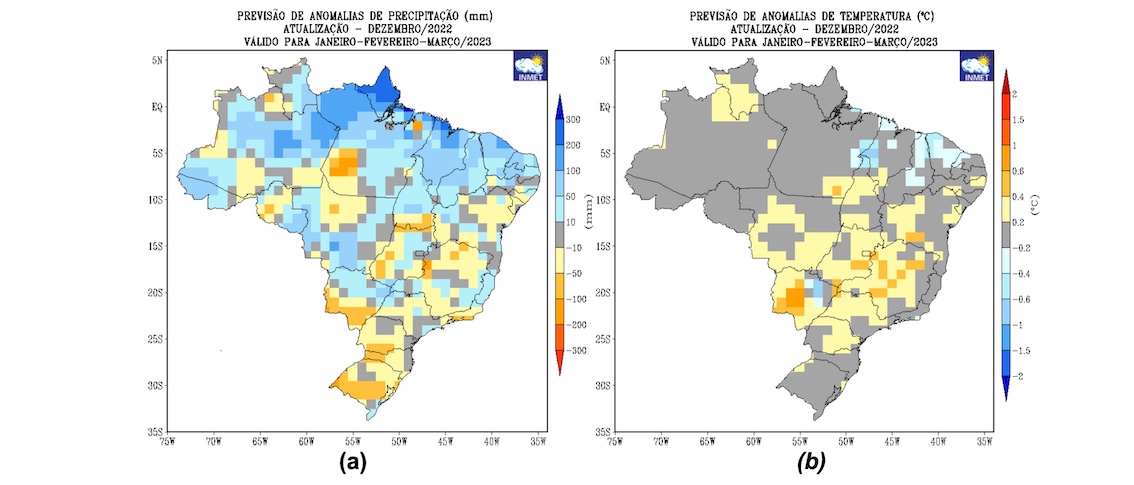
In summer, rains are frequent throughout practically the entire country, with the exception of the extreme south of Rio Grande do Sul, northeast of Roraima and east of the Northeast, where rainfall totals are generally less than 400 millimeters (mm).
In Matopiba, a region that encompasses areas of Maranhão, Tocantins, Piauí and Bahia, the forecast of above-average rainfall in the region in the coming months, with the exception of areas in the south of Tocantins and western Bahia, mainly in January 2023, They can help maintain moisture in the soil and promote crops in the region, such as soybeans, first-crop corn and cotton.
In Central Brazil, the gradual return of rains, which has been observed in recent months, has contributed to an increase in water levels in the soil and has been important for the establishment of summer crops in the field, such as soybeans, corn, beans and cotton . However, the irregular rains forecast for the coming months, in addition to a possible dry spell, that is, below-average rainfall, mainly in January 2023 in areas of Minas Gerais, Goiás and Mato Grosso do Sul, could negatively impact the water storage in the soil and crops that are in more sensitive phenological stages.
In the South Region, the reduction in rainfall in a large part of the region, mainly influenced by the persistence of the La Niña phenomenon, especially in Rio Grande do Sul, caused water restrictions in the initial phases of summer crops. Furthermore, forecast rainfall at or below average could reduce water levels in the soil, mainly in areas of the center-south of Rio Grande do Sul and west of Santa Catarina, and negatively impact agricultural crops that are at more sensitive phenological stages. such as soybeans, first-crop corn and beans.
Receive the latest agriculture news by email



Receive the latest agriculture news by email
