



Conab points to drop in corn exports in February
Soybean shipments have more than doubled compared to last year
31.03.2025 | 17:44 (UTC -3)
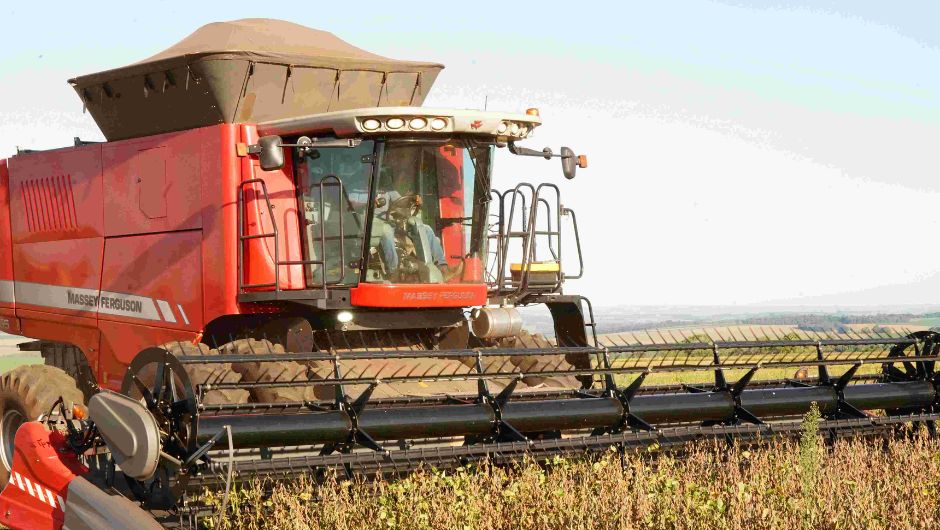
With more than 30% of the soybean crops in Cotrijal's area of operation harvested by the last week of March, the harvest is beginning to head towards the final stretch. In the field, 57% of the crops are in the maturation phase and should be harvested soon. According to the latest Emater report from Rio Grande do Sul (RS), around 24% of the crops have already been harvested throughout the state, and 40% are maturing.
Productivity results vary greatly depending on the weather conditions recorded in each area throughout the harvest. To date, the overall average productivity in the cooperative's area of operation is estimated at around 40 bags per hectare. In the state, Emater/RS estimates 37,3 bags/ha, with wide variability.
“We had a very challenging harvest due to the climate conditions and a very big challenge in terms of management, as the climate required changes in planning”, points out the coordinator of the Technical Department (Detec) at Cotrijal, Alexandre Nowicki.
In terms of phytosanitary issues, at the beginning of the harvest, the regular rainfall favored the development of diseases such as Asian rust and leaf spot. From January onwards, the high temperatures and lack of rain favored diseases such as powdery mildew and the spread of pests such as thrips and mites. “This change in the management of fungicides and insecticides required a lot of knowledge and a lot of dynamism,” he recalls.
After a challenging harvest, it is necessary to optimize the harvest to ensure the results achieved and avoid further losses. This harvest, due to climate problems, the soybean plants are not uniform, that is, they present different stages of development, a situation that requires even greater attention from producers before starting the harvest.
“We are observing that in the vast majority of areas the pods are already ready for harvest, they are dry, but the plant is still a little green and, mainly, with green and retained leaves. So, in some situations, we have to use a physiological ripener applied seven to ten days before harvest to achieve this general uniformity in the area”, he explains.
Another important point is assessing the moisture content of the grains. It is recommended that the harvest be carried out with moisture content below 14% to 15% to facilitate the machine's performance. Regarding the machinery, it is also necessary to check and calibrate the harvester, especially the platform, in order to avoid loss and threshing of the grain. In addition, it is also important to check the wind speed and the sieves.
Receive the latest agriculture news by email



Receive the latest agriculture news by email