Commission assesses sugarcane production trends in the 25/26 harvest
Expert's lecture points to a drop in sugarcane productivity and ATR in the new cycle
16.07.2025 | 17:10 (UTC -3)
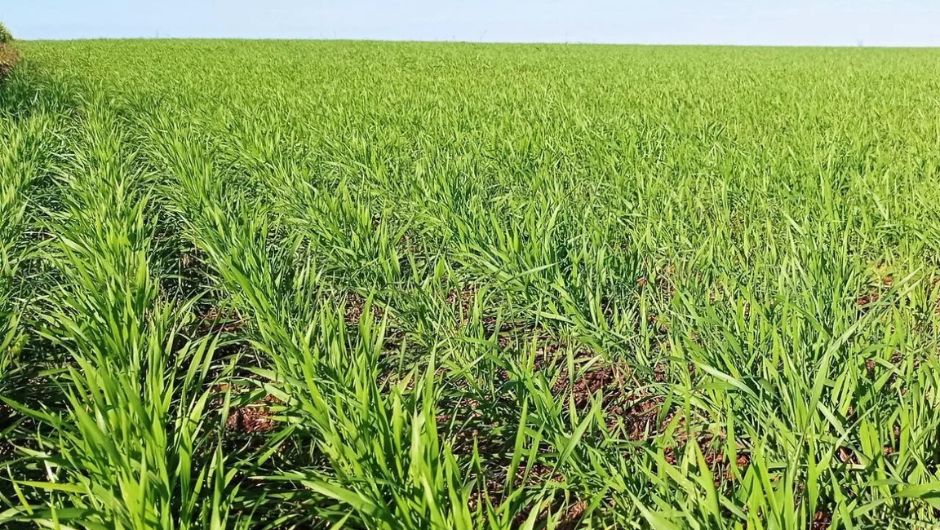
With an estimated area of 1,19 million hectares for this winter harvest, wheat planting in Rio Grande do Sul reached 92% completion as of this week, according to the Economic Bulletin released by Emater/RS this Thursday (July 17). This significant progress was driven by the predominance of dry weather in July and exceeds the rates observed in previous years for the same period. Sowing is expected to be completed within the window indicated by the Agricultural Climate Risk Zoning (Zarc).
Recently planted crops are in the germination and emergence stages, but they depend on regular rainfall to ensure good seedling establishment. Areas planted in May and June show good density, intense green coloration, and uniform growth, signs of good nutritional status. Even so, plant recovery varies by region: in the South, humidity and cloud cover have limited development; in the Northwest, high temperatures have caused leaf yellowing and early symptoms of fungal diseases.
In the Western Border, sowing progress has lagged behind expectations in municipalities such as São Borja, Itaqui, and Maçambará, due to heavy rains and the need for replanting in areas prone to erosion. In Erechim, 90% of the wheat area has already been planted; and in Santa Rosa, planting has reached 96%, with reports of reduced input use as a cost-cutting measure.
The sowing of white oat is also nearly complete in the state. The cultivated area is expected to reach 401,2 hectares, with an expected yield of 2.254 kg/ha. Despite the progress, excess moisture at the beginning of the cycle caused physiological stress in some crops, and frosts between June 30th and July 3rd caused isolated damage to areas planted outside the recommended period.
A canola Sowing has concluded, with crops recovering well after the abiotic stresses experienced at the beginning of the season. The estimated cultivated area is 203,2 hectares, with a predicted yield of 1.737 kg/ha. In regions such as Bagé, Santa Rosa, and São Borja, the stages vary between vegetative, flowering, and grain filling. The effects of the frost are still being assessed, but recovery is expected, depending on weather conditions in the coming weeks.
Already barley Planting has been completed and shows good initial establishment. The crops are in the vegetative development phase, with a predominance of cultivars adapted to beer production, with moderate resistance to foliar diseases and good technological performance. In Erechim, cultivation is progressing in accordance with contracts with the malt industry.
Receive the latest agriculture news by email


Receive the latest agriculture news by email