American study indicates lower soybean production costs in Brazil
Research indicates lower total cost in the country, despite higher spending on fertilizers and pesticides
02.11.2026 | 16:26 (UTC -3)
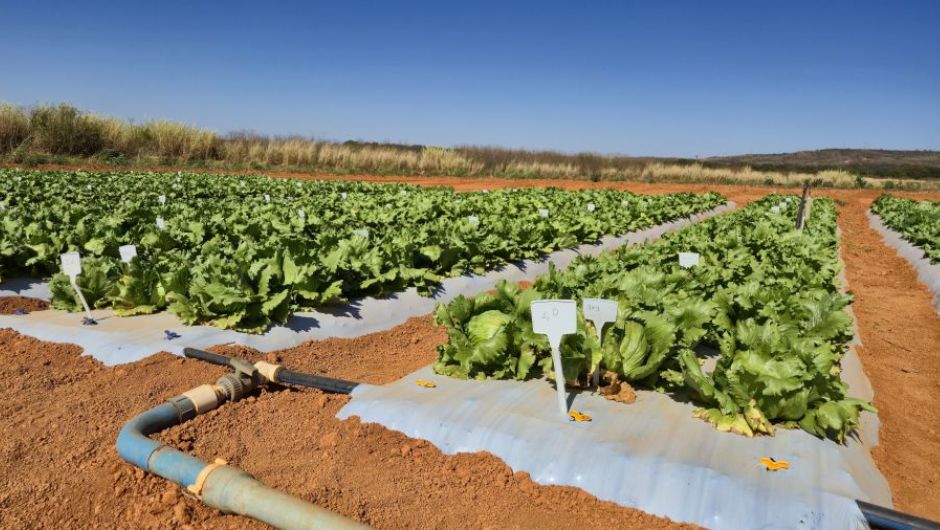
Researchers at Embrapa Hortaliças (DF) propose strategies to increase the resilience of Brazilian vegetable production to the impacts of El Niño. The study identifies the vulnerabilities of the main crop groups and presents adaptation measures in the face of extreme events, such as heat waves, intense rainfall, and agricultural droughts.
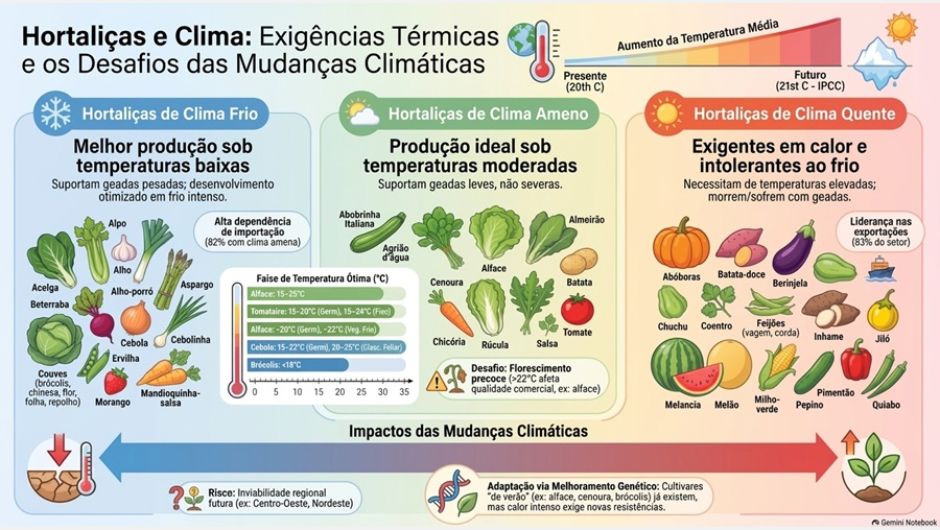
Most vegetables develop best at temperatures between 18°C and 25°C, and also depend on good quality and availability of water. High temperatures increase evaporation and water demand, favoring water scarcity, soil salinization, and the occurrence of pests. Excessive rainfall, on the other hand, causes waterlogging, damages roots, and promotes fungal and bacterial diseases.
The survey highlights different levels of vulnerability among crops. Tomatoes, peppers, and potatoes are sensitive to heat, which compromises flowering and fruiting. Leafy greens and brassicas suffer from high temperatures and water deficit. Garlic and onions depend on regular irrigation, while carrots, beets, and sweet potatoes require water stability for root formation. Melons, watermelons, cucumbers, pumpkins, and zucchini also need a uniform availability of water.
To reduce risks, researchers recommend six areas of action: climate monitoring, adjusting the planting calendar and choosing adapted genetic materials, integrated water and soil management, microclimatic protection, risk-oriented phytosanitary management, and validation of conservation technologies.
Among the highlighted practices are minimum tillage and the Direct Planting System for Vegetables (SPDH). According to researcher Marcos Brandão Braga, these systems help reduce the temperature and thermal amplitude on the soil surface, promote water infiltration, and decrease evaporation, surface runoff, and erosion.
Recommendations vary according to regional conditions. In the North and Northeast, localized irrigation and salinity management are important. In the South, priorities include controlling waterlogging and diseases. In the Midwest and Southeast, researchers highlight humidity sensors, insect screens, and protected cultivation.
The study was authored by Marcos Brandão Braga, Samuel Cordeiro Vitor Martins, and Carlos Eduardo Pacheco Lima. According to Braga, adaptation requires a structural change in production systems, integrating adapted genetics, efficient water management, soil conservation, diversification, and phytosanitary management.
Receive the latest agriculture news by email



Receive the latest agriculture news by email