Soybean production in the 2024/25 harvest reaches historic record
StoneX survey indicates that the advance is due to the positive review of productivity in Bahia
01.07.2025 | 17:13 (UTC -3)
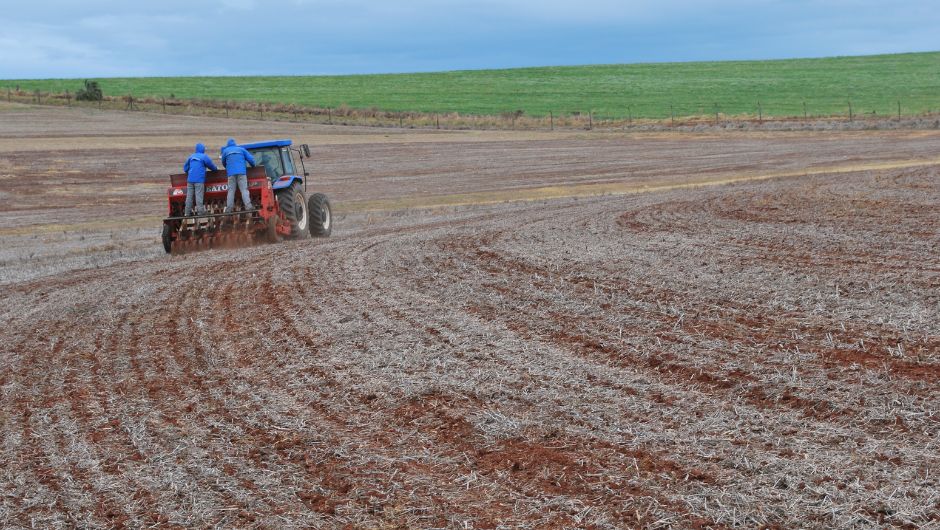
The rains caused delays in wheat planting in Rio Grande do Sul. In the northern half of the country, where wheat production is concentrated, it rained almost three times the historical average expected for the month of June. Embrapa Trigo researcher Osmar Conte advises producers who are looking to ensure good crop implementation with the forecast of favorable weather for the coming days.
The wheat sowing window indicated by the Agricultural Zoning of Climatic Risk (Zarc) for Rio Grande do Sul runs until July 31, but the preferred time in the north and northwest regions runs until July 10, considering the succession of soybeans in the summer. “We still have a good sowing window ahead of us. The important thing is to sow well, with all phytosanitary care, and not just sow early,” warns Conte.
According to the Emater/RS Conjuntural Newsletter, less than 40% of the area planned for wheat cultivation had been sown in June. The delay was a consequence of heavy rains, which soaked the soil and prevented machinery from entering the cultivation areas. At the Embrapa Trigo meteorological station in Passo Fundo, the historical average, based on records from the last 30 years, is 158 mm of rainfall in the month of June, but in June 2025, 425 mm were recorded.
Insolation, measured by hours of sunlight per month, was 36% lower, with humidity above 80% on most days. In areas where crops were already planted, plants in vegetative development suffered stress from humidity and low light, limiting growth and making it impossible to carry out cultural treatments, such as the application of herbicides, fungicides and top dressing.
According to Aldemir Pasinato, an analyst at Embrapa Trigo's meteorology laboratory, the forecast is favorable for wheat sowing operations in the northern half of the country, with dry weather until mid-July. "Despite the forecast of a neutral climate, without events such as El Niño or La Niña, this winter will be marked by periods of consecutive days of rain, interspersed with dry days and cold waves that may extend until spring," says Pasinato. The Inmet Climatological Bulletin, with the agroclimatic forecast for the months of June, July and August, indicates rainfall close to and below the historical average in Paraná and Santa Catarina, but above-average rainfall is forecast for Rio Grande do Sul.
The historical average rainfall in Rio Grande do Sul is between 1500 and 1900 mm/year, varying between the different regions of the state, with rain concentrated in the winter and spring months.
Soil waterlogging increases the risk of common wheat mosaic, a disease that can cause a 50% reduction in grain yield. Embrapa surveys show that the greatest damage from mosaic is associated with rainfall of close to 200 mm in the month of sowing. The most critical phase is in the days following sowing, when early infection has the potential to cause more damage to the plant, affecting the development of the tissues in formation.
Symptoms of mosaic, alternating green and yellow stripes on the leaves, begin to appear about a month after infection, with diseased plants distributed in the field in patches or clumps, especially in places where soil drainage is not good. Currently, the safest recommendation for producers is to invest in mosaic-resistant cultivars.
Another problem caused by the excess rain in recent days is water erosion, caused by floods with rainwater that was unable to infiltrate the soil. “Sowing with planting lines arranged up and down hills, widely and erroneously adopted by rural producers, directs the flow of the floodwater to the sowing furrow, increasing the dragging of seeds and fertilizers. This type of sowing is the main cause of water erosion in crops managed under direct planting,” explains Embrapa Trigo researcher José Eloir Denardin.
The researcher recommends creating barriers to contain the floodwaters by adopting contour planting and agricultural terraces. “Contour planting, with planting rows arranged transversely to the direction of the slope, creates barriers to the free flow of the floodwaters, reducing their speed and ability to remove soil cover or even transport soil, seeds, fertilizer, limestone, nutrients and organic matter out of the field. In addition, contour planting and strategically sized agricultural terraces ensure the infiltration of up to 100% of rainwater, ensuring a water reserve to supply summer crops,” advises Denardin.
Given the uncertain scenario, producers need to plan to ensure the best results from nitrogen fertilization in wheat. In general, the amount of N used in wheat crops is 60 to 120 kg/N/ha, applying 15 to 20 kg/N/ha at sowing and the remainder as topdressing (tillering and stem elongation). However, considering possible losses due to excess rain, the strategy indicated by the research is to split N applications into three moments: at sowing; between two leaves and the beginning of tillering; and in the reproductive phase (between tillering and the beginning of elongation).
Furthermore, in the event of high rainfall accumulations after N application, causing surface runoff in the field, the producer must compensate the dose in the next application.
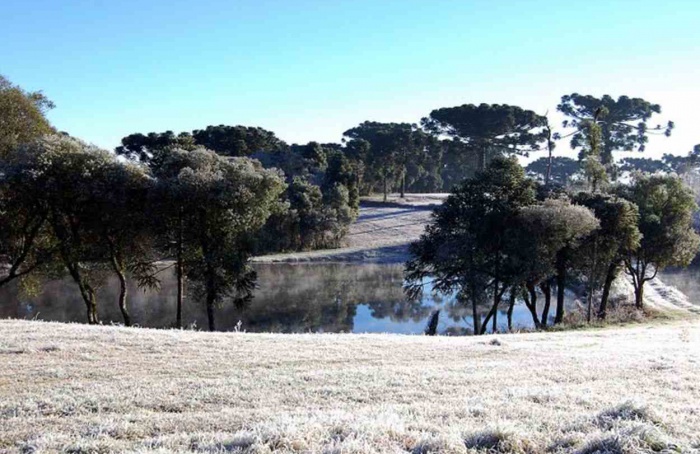
With subzero temperatures and little wind, frost is common throughout the winter. For wheat, the risk is frost at earing, which can cause the plants to die. Delaying wheat sowing can reduce losses due to late frosts, which can occur in late August and early September.
Humidity and low sunlight levels require attention to control fungal diseases, such as leaf spots, especially during early wheat development. The most common are brown spot, yellow spot and glume spot. The main control is crop rotation, which can reduce the incidence of spots by up to seven times, combined with seed treatment and the use of resistant cultivars. To learn more about disease control, access the publications of the Cooperative Wheat Trials Network, which evaluates the efficiency of fungicides available on the market.
Receive the latest agriculture news by email



Receive the latest agriculture news by email