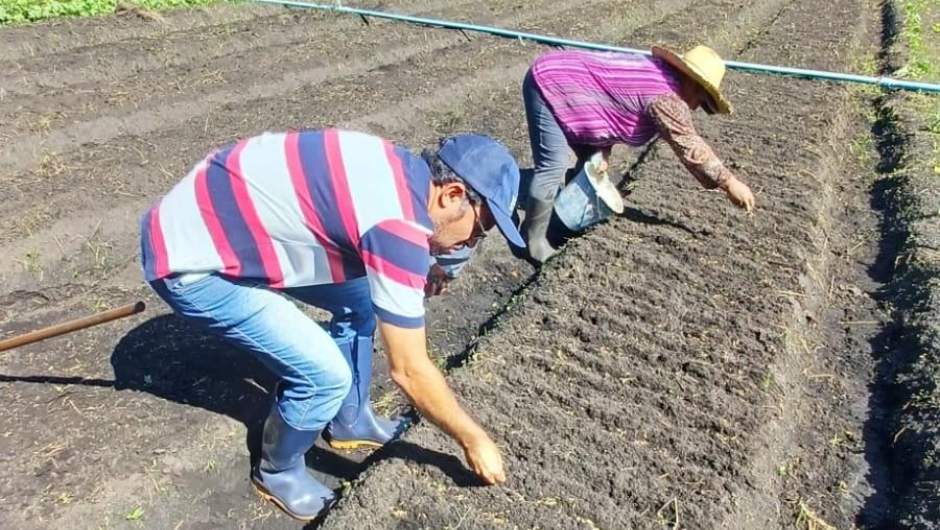
Green Belt producers bet on direct planting to reduce losses
Strong heat and summer storms have affected vegetable, green and root crops
18.01.2024 | 17:03 (UTC -3)
Bárbara Beraquet, Cultivar Magazine edition
Photo: Disclosure
Intense heat and summer storms: these potentially damaging weather conditions, especially for the vegetables, greens and root crops that are part of our daily menu, cannot be avoided, but good choices in the field protect rural producers from losses accentuated.
Agricultural engineer Thiago Costa, from CATI, explains that vegetable crops in general, but especially hardwood crops, of which we consume the aerial part, are those that suffer most from climatic phenomena and their extremes. “Mainly chives, lettuce, kale, arugula, spinach, endive, carrots, beets, among other foods that are part of our daily diet”, points out the technician, who works at CATI Regional Mogi das Cruzes, one of the municipalities in the Green Belt of São Paulo .
Thiago points out that one of the most common damages caused by climatic phenomena is the increase in the appearance of fungal and bacterial diseases, lower oxygenation of the soil and plant roots, a result of excess humidity caused by too much rain. High temperatures, as they cause an increase in plant evapotranspiration and greater water consumption, require the cultivation area to receive irrigation more frequently. According to the technician, winds can also cause plants to fall. “When we think about the damage caused by extreme weather factors, the most common are losses due to hail, which causes dents, grooves, holes in the leaves, and broken petioles and stems. When it rains a lot, we also have partial or total loss of crops, due to flooding”, he explains.
According to the CATI technician, the medium and small family farmers and settled producers served by the agency in the region have fungiculture, fruit growing and horticulture as their main crops, in the case of vegetables, with a medium level of technology.
Training
To mitigate the damage caused by adverse weather conditions, CATI Regional Mogi das Cruzes promotes training, workshops and orientation visits and work on practices for implementing windbreaks or hedges, balanced fertilization, with techniques such as the application of dust rock in the plantation, a low-cost agricultural input that provides nutrients necessary for vegetables and for a balanced soil.
The team has also been working with producers on green manure, with the adoption of cover crops, such as black oats, millet, millet, sunflower, sunn hemp, pigeon pea; as well as the biological control of pests and pathogens, through the production of organic compounds and biofertilizers. “All these practices have a preventive and mitigating effect in cases of adverse weather conditions”, he says, remembering with special emphasis the system of direct planting of vegetables on straw (SPDH).
Among the principles of the system is minimally turning the soil only in pits or furrows, which guarantees less compaction and conservation, reducing losses due to erosion; crop rotation, with cover crops that will produce straw; and permanent soil cover. By recommending the maintenance of straw and the subsequent planting of vegetables, this system reduces soil temperature, requires lower irrigation frequency, controls spontaneous plants by smothering, promotes an increase in soil organic matter and recovery of degraded or weak soils due to subsequent cultivation of the same species.
“There are several management aspects that need to be well worked on for a satisfactory result, including the need to take a taller seedling to the field, but the production cost is lower, as there is a substantial reduction in inputs, mainly fungicides, insecticides and herbicides, as well as fertilizers in the medium and long term, as soil quality is improved”, points out Thiago.