RS 2024/25 Harvest: climate boosts winter crops
Wheat, oats, canola and barley are showing satisfactory development, with expectations of good yields in the State
21.08.2025 | 17:37 (UTC -3)
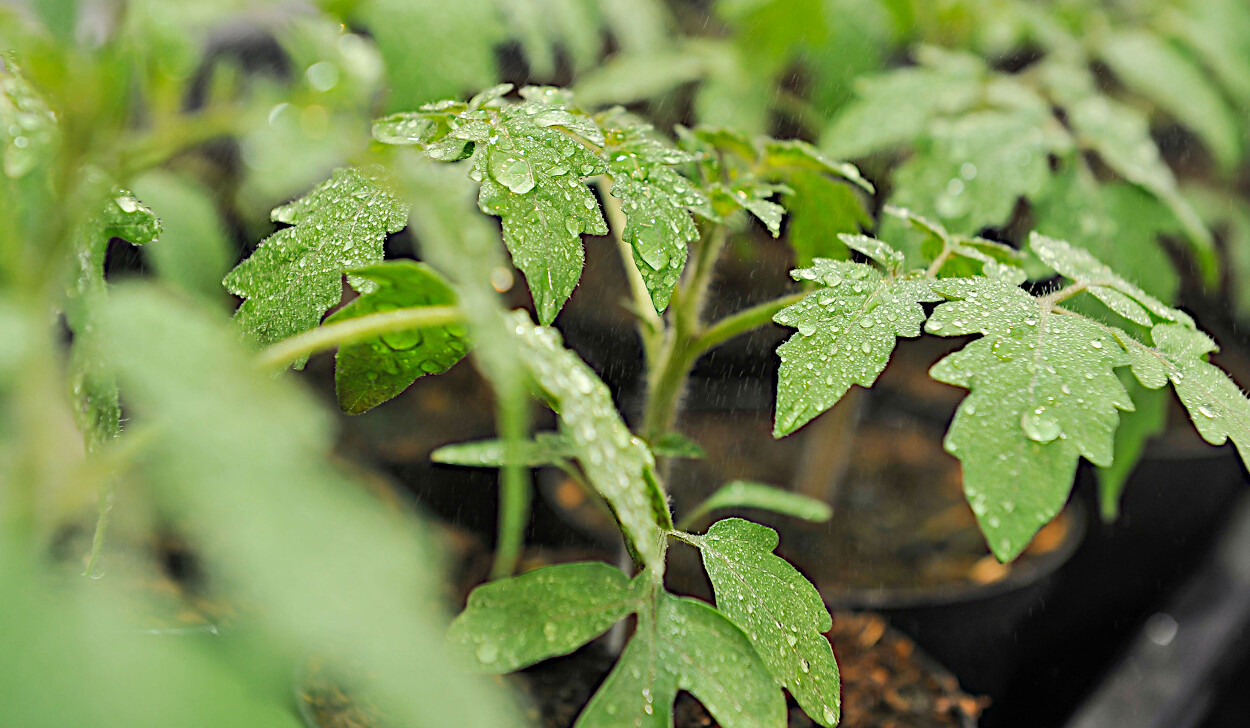
Researchers at the universities of Tübingen and Hohenheim in Germany have identified a novel peptide in tomato plants that prevents unnecessary activation of the plant's immune system. Called antiSys, the compound blocks receptors for the molecule Systemin, which triggers defense reactions against herbivores.
In species like tomatoes, the defense system activates when injured by insects. In these cases, the plant releases the peptide Systemin, which binds to the SYR1 receptor and triggers the production of compounds that inhibit the herbivore's digestion. The problem is that, if activated excessively or without a real threat, the system compromises the plant's normal development.
AntiSys prevents this. It competes with Systemin for the same receptor, but without activating it. In healthy plants, antiSys predominates. When attacked, Systemin is produced in large quantities and displaces antiSys, activating the defense.
Using CRISPR/Cas9 gene editing, researchers created tomato mutants that lack antiSys production. The results were dramatic: plants with stunted growth, reduced fruit production, and even abnormal leaf and branch formation.
According to Professor Georg Felix of the University of Tübingen, even small amounts of Systemin activate the defense in these mutants, as the SYR1 receptor is permanently unprotected. However, by also eliminating the receptor, the symptoms disappear. This proves that antiSys acts directly on Systemin perception.
The research also identified a family of peptides similar to Systemin. In addition to the already known SYS1, the scientists discovered three other agonists: SYS2, SYS3, and SYS4, all capable of activating plant defenses. AntiSys is the only one in the group with antagonistic action.
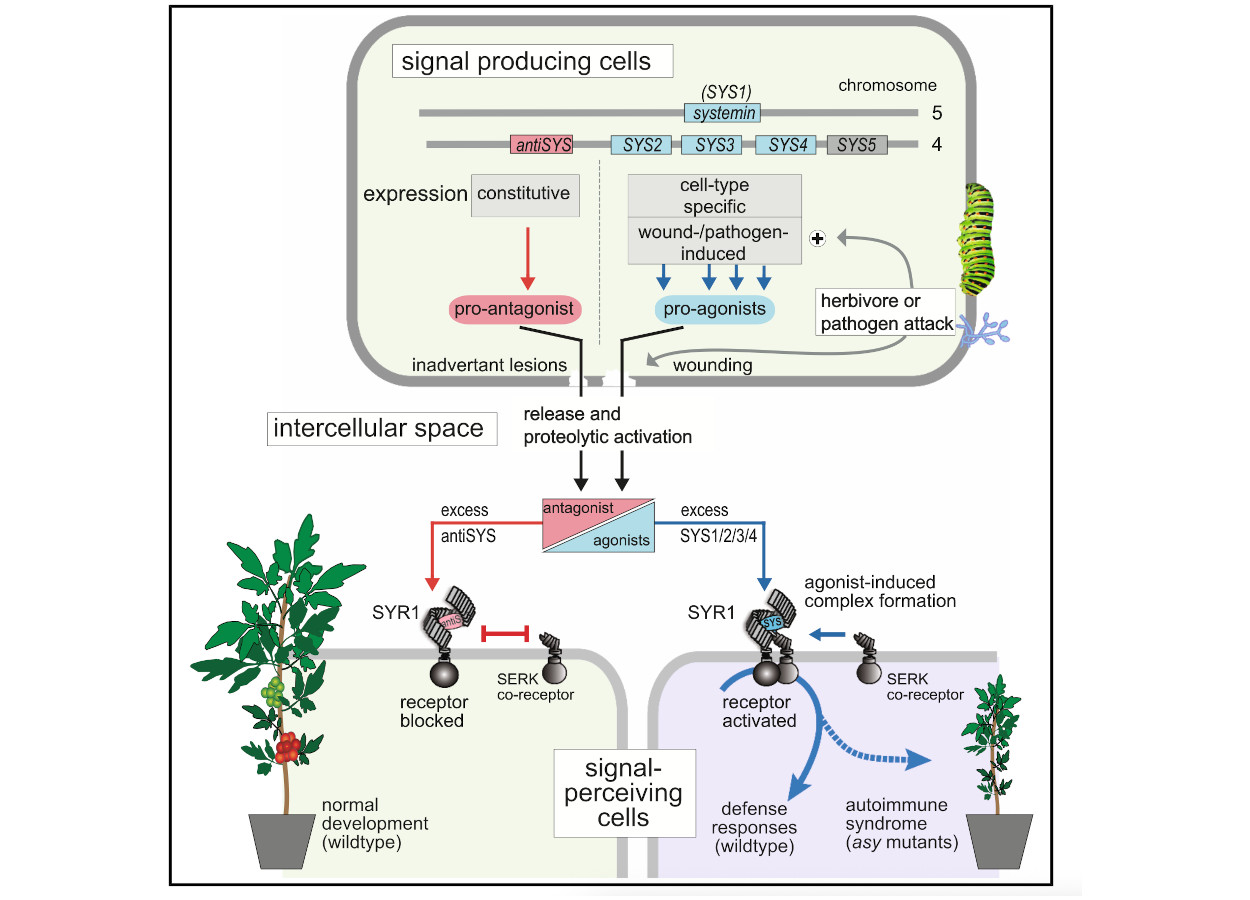
These peptides belong to a group called phytocytokines, signaling agents that resemble human cytokines in that they trigger immune responses. Like interleukins in animals, plant phytocytokines are produced as prepeptides and activated by enzymatic cleavage.
The expression of the genes encoding these peptides varies by tissue and condition. AntiSys exhibits constant expression, while agonists are expressed upon stimulation. In roots, for example, there is strong expression of antiSys and SYS3, but an absence of SYS1. In leaves, SYS1 predominates.
AntiSys was also found in other cultivated Solanaceae, such as potato, eggplant and pepper, indicating that this immune regulation is conserved in the evolution of the species in the group.
The study characterized the molecular mechanisms of antiSys. It has high affinity for the SYR1 receptor, similar to Systemin, but does not activate the receptor. Furthermore, antiSys prevents SYR1 from recruiting SERK family coreceptors, which are necessary for signaling.
Substitutions in specific amino acids transform agonist peptides into antagonists. Positions 15 and 16, for example, determine whether the peptide will activate or inhibit the receptor. This discovery could guide the synthesis of bioactive compounds.
The data show that fine-tuning defenses through antiSys prevents unnecessary responses and preserves growth. This regulation resembles the interleukin balance in animals, where a lack of antagonists leads to autoimmune diseases.
The authors suggest that manipulating the balance between Systemins and antiSys could generate more productive cultivars without sacrificing insect resistance. Strategies such as gene editing or external application of peptides could precisely modulate plant immunity.
The structure of the Systemin/antiSys system resembles that of the interleukin-1 (IL-1) family in humans. Both include activating and inhibitory molecules, processed from prepeptides, released in response to cellular damage, and which act on specific receptors with decisive effects on physiology.
The similarity suggests that cytokine antagonists may represent a convergent solution from nature to regulate defense responses in both plants and animals.
Further information at doi.org/10.1016/j.cell.2025.07.044
Receive the latest agriculture news by email


Receive the latest agriculture news by email