New cowpea cultivars have higher grain quality than current ones
Researchers developed four genetic materials recommended for the state of Pará and with potential for the Brazilian Northeast region
10.04.2023 | 17:20 (UTC -3)
Ana Laura Lima
Photo: Ronaldo Rosa
Grains with high market value, nutritious, tasty and quick cooking are among the main attributes of the new cultivars of cowpea, or cowpea (Unguiculata vine L.) that Embrapa recommends for the state of Pará. The cultivars BRS Bené (large brown grains), BRS Guirá (black grains), BRS Utinga (large white grains) and BRS Natalina (“manteiguinha” type) are plants with high productive potential, health and good size and architecture.
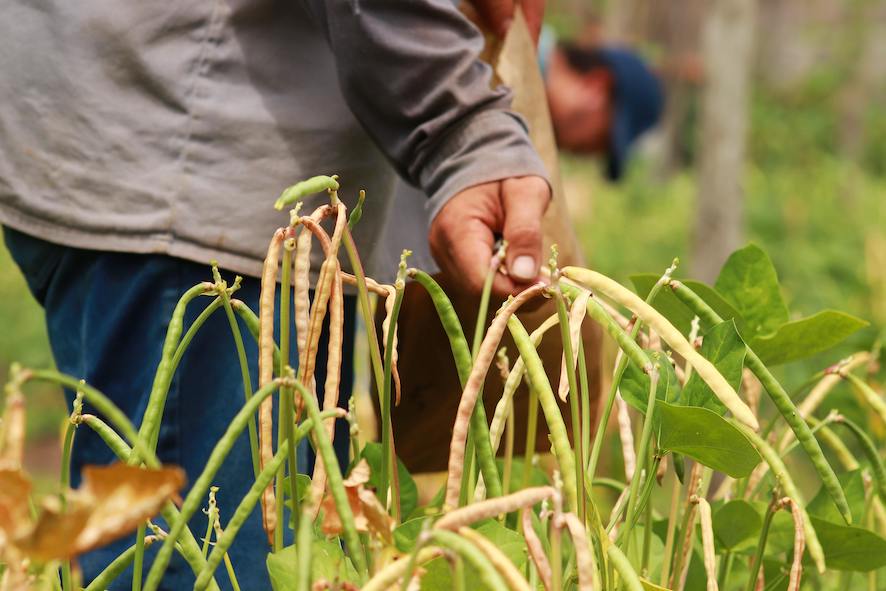
Result of 40 years of research into genetic improvement of cowpea, also known as colony bean, the cultivars BRS Bené, BRS Utinga and BRS Guirá have an erect, semi-erect and semi-prostrate bearing, which adapt well to mechanized harvesting and favor also manual harvesting. And BRS Natalina, the first "manteiguinha" cultivar in Brazil.
“This is an important technological contribution to agriculture on a family and business scale in Pará and states in the Northeast Region”, says agronomist Francisco Freire Filho, retired researcher from Embrapa Amazônia Oriental, who led the genetic improvement work on cultivars. .
He highlights that the new cultivars have different commercial appeals and meet consumption and production demands. “The grains have excellent quality, good cooking time and good levels of protein, iron and zinc. All of them have productivity levels that are much higher than the materials currently used in the field and are suitable for both mechanized and manual harvesting”, details Freire.
Pioneer in Brazil
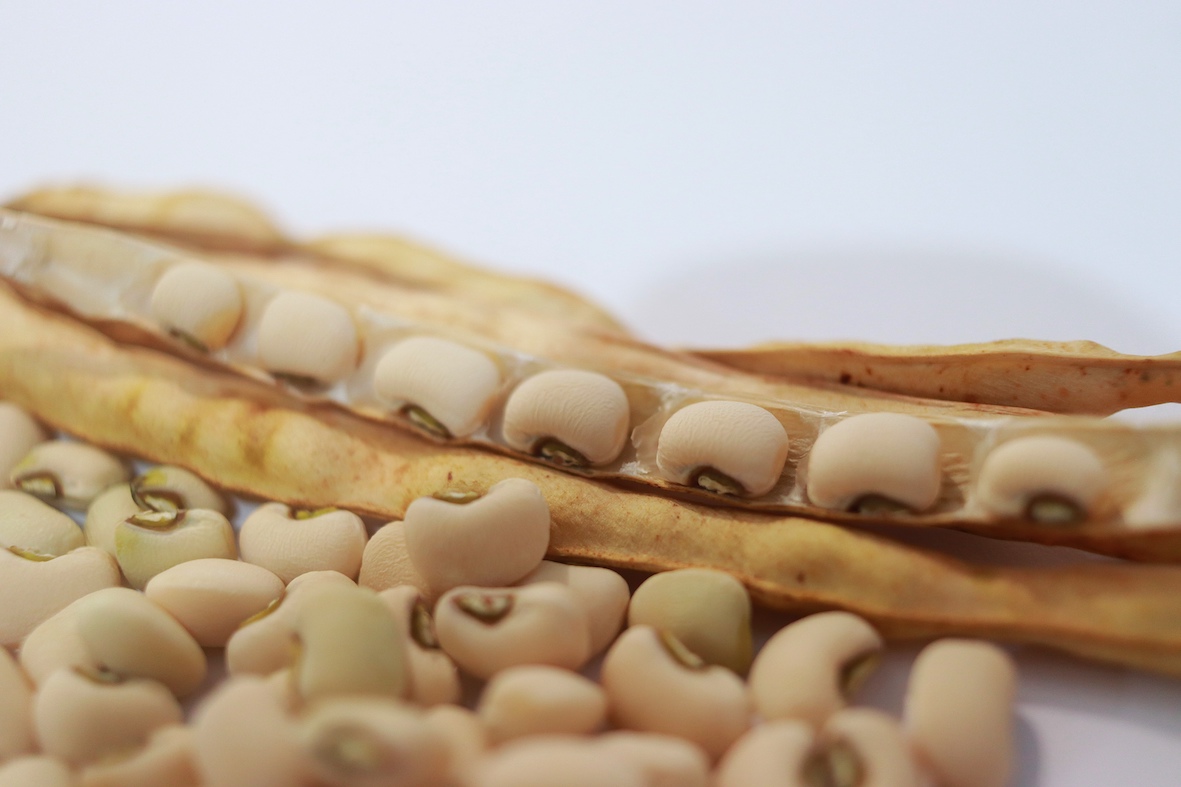
The "manteiguinha" beans have small, cream-colored grains and are a tradition in Pará cuisine. It is produced by family farmers in different regions of Pará, but mainly in the western region of the state, where it is known as “Bean of Santarém”.
“Currently, the materials grown by producers come from creole seeds with a long cycle, more than 90 days, with high genetic and productive variability, in addition to uneven grains”, says Freire.
BRS Natalina is the first cultivar in Brazil for the "manteiguinha" type. It was selected from lines obtained from the best landraces, has uniform, extra-small grains, cream color, medium-early cycle of 70 to 75 days and higher production potential than materials grown in the field.
Another highlight of the variety is its average protein content of 26% and quick cooking, making it an excellent option for the vegetable protein market. Furthermore, BRS Natalina has a higher level of resistance to viruses compared to landraces, according to the expert.
The name Natalina is a tribute to the scientist Natalina Tuma da Ponte, who was a professor at the former Faculty of Agricultural Sciences of Pará (FCAP), currently the Federal Rural University of the Amazon (UFRA), and a researcher at the Northern Agronomic Institute (IAN) and Instituto of Northern Agricultural Research and Experimentation (Ipean), predecessors of Embrapa Amazônia Oriental. “Doctor Natalina was one of the pioneers in cowpea research in the North Region and in Brazil”, recalls Freire.
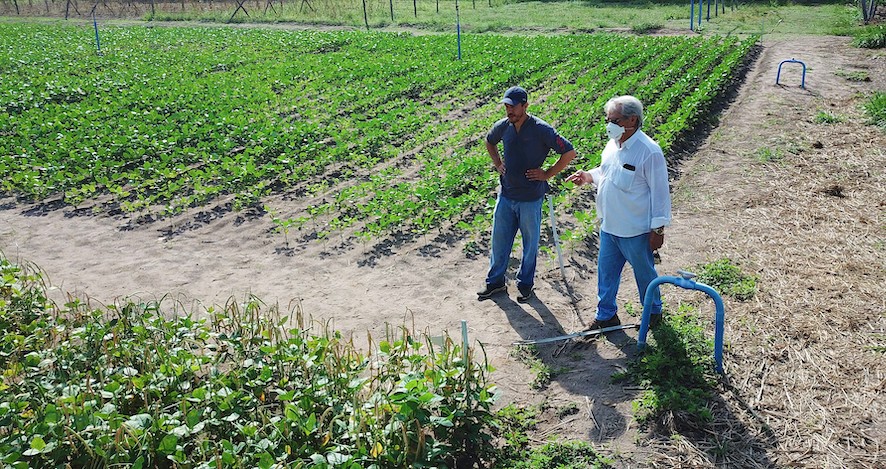
Researchers Francisco Freire Filho and Rui Alberto Gomes Junior planting beans - Photo: Ronaldo Rosa
Great selection work
To arrive at the new cultivars, the research carried out extensive collection work. Materials were collected in different regions of Pará; crosses are carried out to generate and conduct populations with defined attributes.
The selection of new cultivars was made among hundreds of lines until arriving at the final varieties. "On average, eleven research harvests are required, from the completion of the crossings to the end of the experimentation for a cycle of improvement and selection of a new cultivar. Considering that genetic improvement aggregates the gains from previous cycles, the new cultivars represent the gains made in more than 40 years of research”, adds Embrapa Amazônia Oriental researcher Rui Alberto Gomes Junior.
Scientists focused on cultivars that presented grain quality, productivity, plant size and architecture and disease resistance. The work, as reported by Embrapa researcher João Elias Rodrigues, involved a multidisciplinary team from the areas of genetic improvement, soils, plant health and agroindustry.
Beautiful, tasty and quick to cook
The quality of the grain was the main objective of the genetic improvement of the beans, according to Gomes. “Unlike other agro-industrial crops, the dry bean grain is the final product that will be packaged and offered to the consumer, therefore, visual quality is the first point that must be considered”, adds the researcher.
Other important points are flavor and cooking time, “because in addition to being beautiful, the beans have to be tasty and cook quickly”, he adds. Combined with the visual appearance and flavor, the grains of the new cultivars have high average levels of protein, iron and zinc. Embrapa researcher Ana Vânia Carvalho conducted laboratory analyzes and sensory tests with tasters who were potential consumers of the product, which indicated good acceptance of the new cultivars.
Regarding the physicochemical characteristics of the cultivars, a high protein content was observed. “More than 20% protein is a good level for foods in general. Cowpea is an excellent source of vegetable proteins, as well as iron and zinc”, says the researcher. Another result highlighted by the analysis was the cooking time of the grain, which remained the same after six months of storage, indicating a good shelf life.
Sensory evaluations with potential consumers were carried out for the cultivars BRS Bené (brown grains) and BRS Utinga (white grains). In the first round, 67 tasters analyzed the appearance and color of the raw grains, and the aroma, flavor, texture and overall impression of the cooked grains. “The two cultivars had excellent scores with an acceptance rate above 80%”, reports Carvalho. The researcher was surprised by the result of the comparison test between the BRS Bené cultivar and a common brown bean (Phaseolus vulgaris), sold in supermarkets. The tasters did not notice the difference between them.
Safe option for the “off season”
With the advancement of genetic improvement combined with the expansion of grain cultivation in Brazil, cowpea gained scale mainly in the state of Mato Grosso, which is the largest national producer of this grain, by integrating production where soybeans are the main crop, in the so-called “off season”. Cowpea is used as a second crop carried out in the same area and same agricultural year. This is because the early cycle and the size adjusted for mechanized harvesting made cowpea a competitive alternative in grain production.
“Cowpea cultivars have a cycle of 70 to 75 days, about a month less than the earliest corn cultivars. They have a very great potential for the soybean harvest in Pará, especially in the final planting phase when the corn crop has a higher risk or in conditions where the rainfall interval is limited for corn”, explains researcher Rui Gomes .
He also highlights that the size and architecture of BRS Bené and BRS Utinga are very well suited for mechanized harvesting. “These are currently the cultivars best suited for this operation. It is possible to use the same machinery used for soybeans, for example, with very low loss of grains”, says the researcher. The BRS Guirá cultivar, continues Gomes, despite its semi-prostrate size, has good architecture, with a high position of pods, making it also a good option for mechanized harvesting.
Economic importance and food security
A tradition in family farming in Pará, cowpea, known locally as colony beans, is a protein food with an important role in the food and nutritional security of local populations. It represents 86% of the total bean production in the state of Pará, according to data from the National Supply Company (Conab). The grain, however, has been losing space in the Pará countryside. The planted area of beans in the state, including cowpea and common, reduced from 80 thousand hectares, in the 2006/2007 harvest, to 28 thousand in the 2021/2022 harvest, and production suffered a drop of more than 60% in this period, remaining at 21 thousand tons in the 2021/2022 harvest.
For businessman and rural producer Benedito Dutra Luz de Souza, from the municipality of Tracuateua, Northeast Pará, the new cultivars can resume cowpea production in Pará. “We, producers, once we have access to this technology, we will return to planting cowpeas in this region”, he states. He believes that cowpea has the potential to serve both family and business agriculture.
Dutra, as he is known in the region, has been producing cowpea for 40 years in Pará. He inherited the tradition of this cultivation from his father, Benedito Dutra. BRS Bené is a tribute to his father, who was a pioneer in grain production in the Northeast of Pará.
Farmer Francisco Douglas Cunha, who has worked with cowpeas for 30 years in the municipality of Augusto Corrêa, in the Northeast of Pará, believes that the new materials will strengthen family farming in the region, as they directly meet farmers' demands.
“Each material has its advantage. The brown variety beans take a long time to darken, and this condition was everything we wanted in a colored bean, because we harvest it and are forced to sell it almost immediately. This makes it quite difficult”, explains Douglas.
“In relation to manteiguinha beans, there is a lot of mixing in the field among Creole populations and this new variety will increase the quality of our product, which has a certain market”, says the farmer.
“In addition to its economic importance, it is a food security crop, just like cassava. It is necessary to rescue public policies to encourage cowpea production in family farming in the state”, concludes businessman Benedito Dutra Souza.
Photo: Ronaldo Rosa
Market challenges
Of the almost 10 thousand tons that the Pará company Gama Lopes sells annually of beans, only 1,2 kg are cowpeas, between the traditional and the “manteiguinha” type. Despite accounting for just over 10% of sales, cowpea has the potential to grow, according to Fabrício Campos de Sá, managing partner of the company. “There are two major challenges facing the cowpea market in the state: the first is to increase consumption, as people from Pará are not in the habit of consuming this grain; and the second is to increase production”, says the businessman.
Gama Lopes has been operating in the Pará market for over 30 years with three types of common beans (phaseolos) and two types of cowpeas. All common beans bagged at the company come from other states such as Goiás, Minas Gerais, São Paulo, Paraná and Santa Catarina. “Of the beans we sell, Pará only produces the traditional cowpea and the manteiguinha type”, adds Campos de Sá.
For him, “manteiguinha” beans have an important market niche: haute cuisine. “But it is necessary to professionalize and expand the production of this grain in the state”, he highlights.
Exclusivity in haute cuisine
“Today we can already see manteiguinha emerging in Brazilian gastronomic creations”, says chef Ângela Sicília from Pará. With her brother Fabio Sicilia, also a chef and manager, she runs one of the most traditional restaurants in the capital of Pará.
Ângela Sicília, winner of the World Network of Creative Cities Gastronomy competition, run by the United Nations Educational, Scientific and Cultural Organization (Unesco), has been working with “Italian-Amazonian” gastronomy since 2012.
The “manteiguinha” beans make up one of the most popular dishes on the restaurant’s menu: the Marajônico Filet. The dish features red meat with Marajó cheese and “manteiguinha” bean risotto. “The dish entered the menu in 2019 and quickly reached second place in sales”, recalls Fabio Sicilia.
He believes in the potential of this grain, genuinely from Pará, in haute cuisine. “Butter pleases the demanding public of haute cuisine, it has excellent grain quality and as it is not a commodity, it is included in the list of exclusive ingredients. This makes chefs from all over the world want to have this difference,” he says. For Ângela, the biggest challenge is to get this grain into the hands of more chefs in Brazil and other countries.
Get to know each cultivar
The cultivars released belong to two groups: traditional cowpea, color subclass (brown, white and black); and cowpea from the butter subclass with extra-small grains, popularly known as “manteiguinha beans”.
BRS Bené, with large brown grains, has an average productivity of 1,5 kilos per hectare and can reach up to 2,5 kg/ha. This represents an increase of almost 50% in the productivity currently achieved in the field. In the last harvest (2021/2022), the average productivity of beans in Pará was 800 kilos per hectare, according to the National Supply Company (Conab). With an upright posture, architecture adjusted to mechanized harvesting and a medium-early cycle of 70 to 75 days, BRS Bené is aimed especially at “safrinha” cultivation of grains in the production centers of Pará, as an alternative to corn, which requires around 30 extra days to complete the cultivation cycle. The pods and grains are larger than traditional ones, with an average protein content of 24% and a cooking time of 13 minutes.
The large size and shape of the grains is also one of the distinguishing features of BRS Utinga, which has a rough-white color. The average productivity of this variety is 1,3 kilos per hectare, reaching up to 2,3 kg/ha. The grains have an average protein content of 25% and the cooking time is 11 minutes. The plant's semi-erect architecture is also suitable for mechanized harvesting and facilitates manual harvesting.
BRS Guirá, with black grains, completes the group of traditional cultivars. It is the first black cowpea recommended for the state of Pará. The grains have a protein content of 29%, which gives the product good nutritional quality. Average productivity is 1,4 kg/ha, and can reach 2,3 kg/ha. Another differentiator of BRS Guirá is its resistance to four types of viruses that occur in cowpea.