







Tobacco harvest officially opens in Rio Grande do Sul
Symbolic moment was held in Rio Pardo (RS)
08.11.2024 | 16:42 (UTC -3)
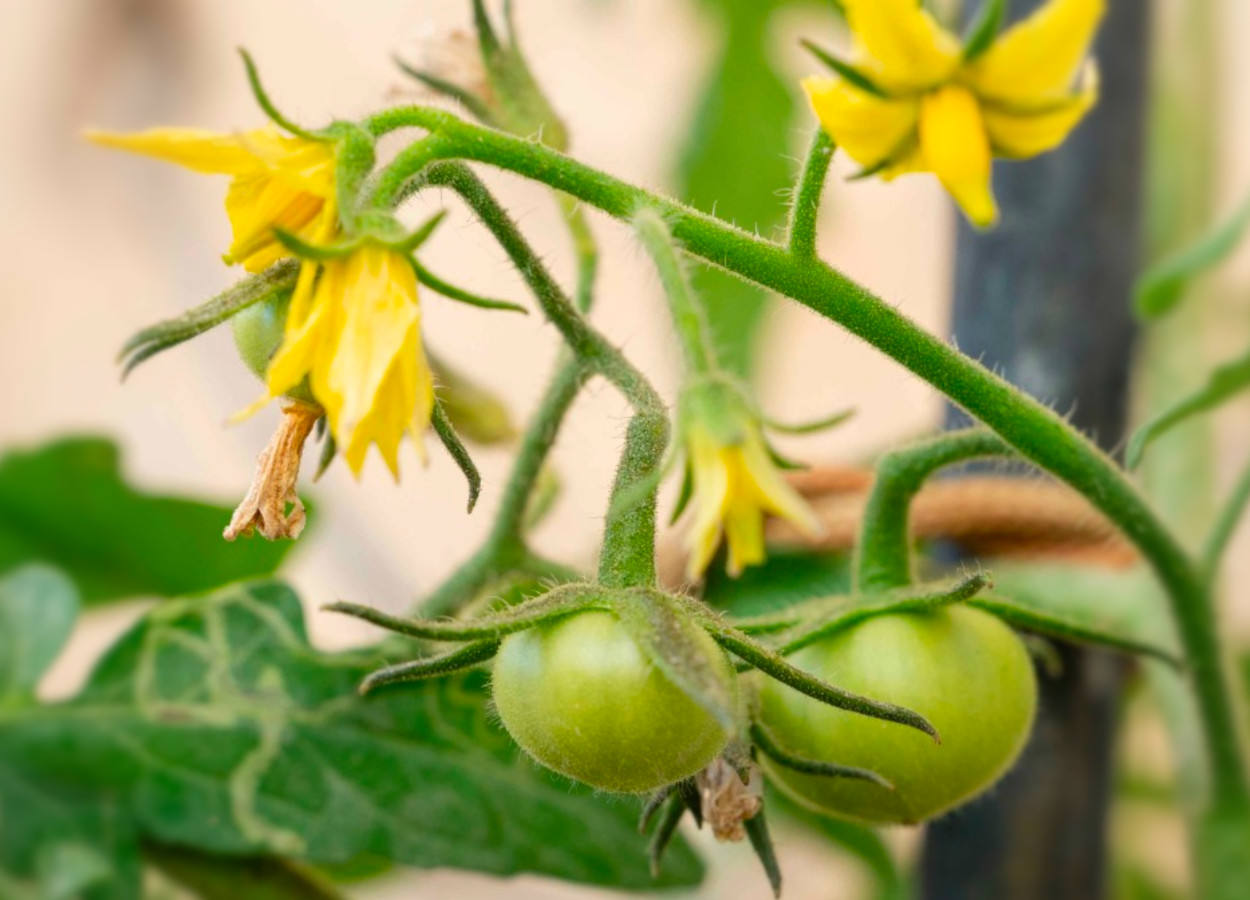
Scientists at Brown University have identified a critical phase in the tomato growth cycle when the plant is most vulnerable to extreme heat. The discovery offers a promising way to protect crops.
The study warns that for every 1 degree Celsius (ºC) increase in seasonal temperature, the productivity of some crops could fall by between 2,5% and 16%.
To bypass the long process of natural evolution, researcher Sorel V. Yimga Ouonkap and his team focused on understanding how to speed up the adaptation of tomato varieties that already demonstrate some resistance to heat.
“We are trying to understand thermoregulation at the molecular and cellular level to identify where we need to act in commercial cultivars, conserving their characteristics, except for the aspect that makes them vulnerable to extreme heat,” explained Ouonkap.
This approach allows scientists to preserve essential qualities of commercial varieties, such as flavor and texture, while improving their heat resistance. The idea is to build up resistance mechanisms over time in plants that can thrive in increasingly hot growing environments.
The reproductive phase of plants was the focus of research conducted by Professor Mark Johnson, a plant biology expert at Brown University. Johnson highlighted the importance of understanding how heat affects the growth of the pollen tube — an essential phase for fertilization in plants — an area that has not yet been explored.
During the project, Ouonkap studied tomato varieties originating from the Philippines, Russia and Mexico. The analysis focused on the phase in which pollen needs to grow inside the flower to ensure fertilization.
In partnership with researchers from the University of Arizona, the team observed that high temperatures during the pollen tube growth phase significantly limited fruit and seed production in heat-sensitive cultivars.
In contrast, resistant varieties such as Tamaulipas showed enhanced pollen tube growth capacity under elevated temperatures.
The study revealed crucial mechanisms for thermotolerance, highlighting the control of reactive oxygen species (ROS) and the synthesis and deposition of callose in the pollen tube.
These processes are vital for high-temperature resilience, especially in varieties that can produce fruit even under extreme heat. With these insights, researchers now have a molecular basis for developing methods that allow tomatoes to be grown in extreme climates.
More information can be found at doi.org/10.1016/j.cub.2024.10.025
Receive the latest agriculture news by email



Receive the latest agriculture news by email