Advances in sustainable pesticides gain momentum
Microorganisms offer effective and sustainable solutions for pest and disease control in agriculture
22.06.2025 | 09:07 (UTC -3)
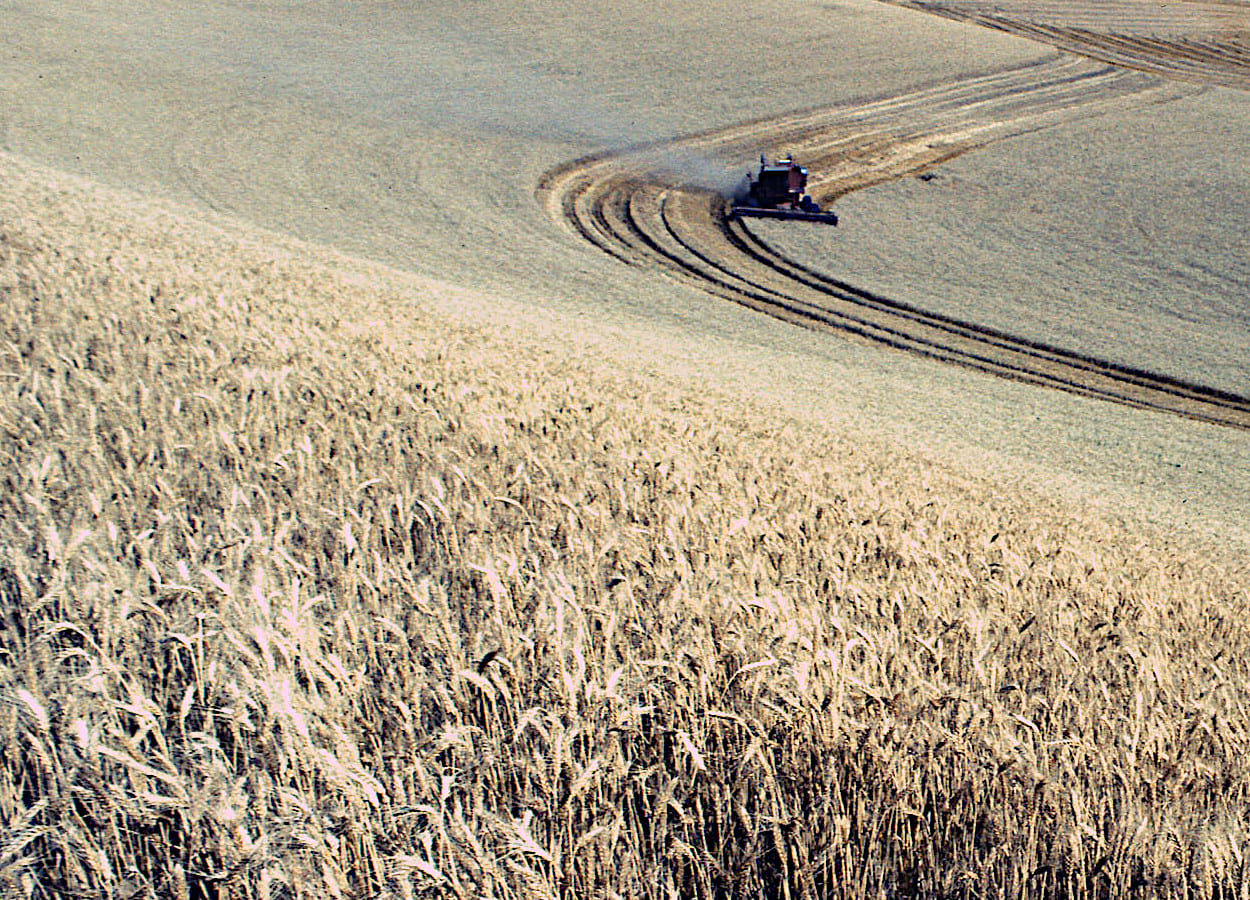
For eight years, scientists have been observing what is happening beneath the surface of a wheat field. In rural Washington state, where dry soil has been present for generations, researchers monitored two parallel worlds: irrigated plots, kept regularly moist, and dryland areas, exposed to the natural regime of scarce rainfall. Both fields grew the same wheat, 'Louise,' year after year. Under the soil, biology followed different paths.
Research led by a team from the United States Department of Agriculture (USDA) took an in-depth look at the bacterial communities associated with wheat roots.
Combining molecular biology, climate modeling and statistics, the study sequenced more than 16 million genetic fragments from the rhizosphere (soil near roots) and endosphere (inner tissue of roots). The data covered 203 samples collected between 2011 and 2018, one of the longest surveys ever conducted on agricultural microbiomes.
The results revealed that sustained irrigation not only benefited wheat productivity — which doubled or quadrupled compared to rainfed crops — but also increased the diversity and stability of bacterial communities. Genera such as Pseudomonas, Variovorax e Chryseobacterium, typical of nutrient-rich environments, maintained stable populations under irrigation.
Already under dry land, bacteria such as burkholderia e Mucilaginibacter showed increasing resilience, adapting to increasingly dry soils.
But not all microorganisms have withstood the passage of time. actinobacteria spp.—a group known to survive in arid environments and form resistant spores—showed progressive declines in both irrigated and dry conditions. Factors other than soil moisture, such as plant aging and prolonged monoculture, appear to have affected these populations.
Inside the roots, the trend was more pronounced. The researchers noted a generalized reduction in endosphere diversity, regardless of water regime.
This suggests that the main controlling factor in this compartment is the wheat itself, whose physiology evolves throughout the growing cycle and over the years. The plant, more than the climate, determines who enters and who stays.
The difference between the rhizosphere and the endosphere is more than spatial. In the rhizosphere, bacterial communities responded more intensely to variations in humidity, especially in summer.
Irrigation induced peaks in diversity and abundance at the soft grain stage, around June. Then, as maturity approached, this diversity declined.
In the dryland, the levels were more stable — and lower.
In the first three years of the experiment, temporal analyses showed that some of the bacteria followed consistent seasonal rhythms.
Genres like Arthrobacter e Massilia predominated at the beginning of the season. Others, such as Bradyrhizobium e Mycobacterium, appeared later, during the maturation of the plant.
Each group appeared to respond to changes in the chemical profile of the roots, which change as the plant grows, absorbs nutrients and releases exudates — compounds that act as signals and food for microorganisms.
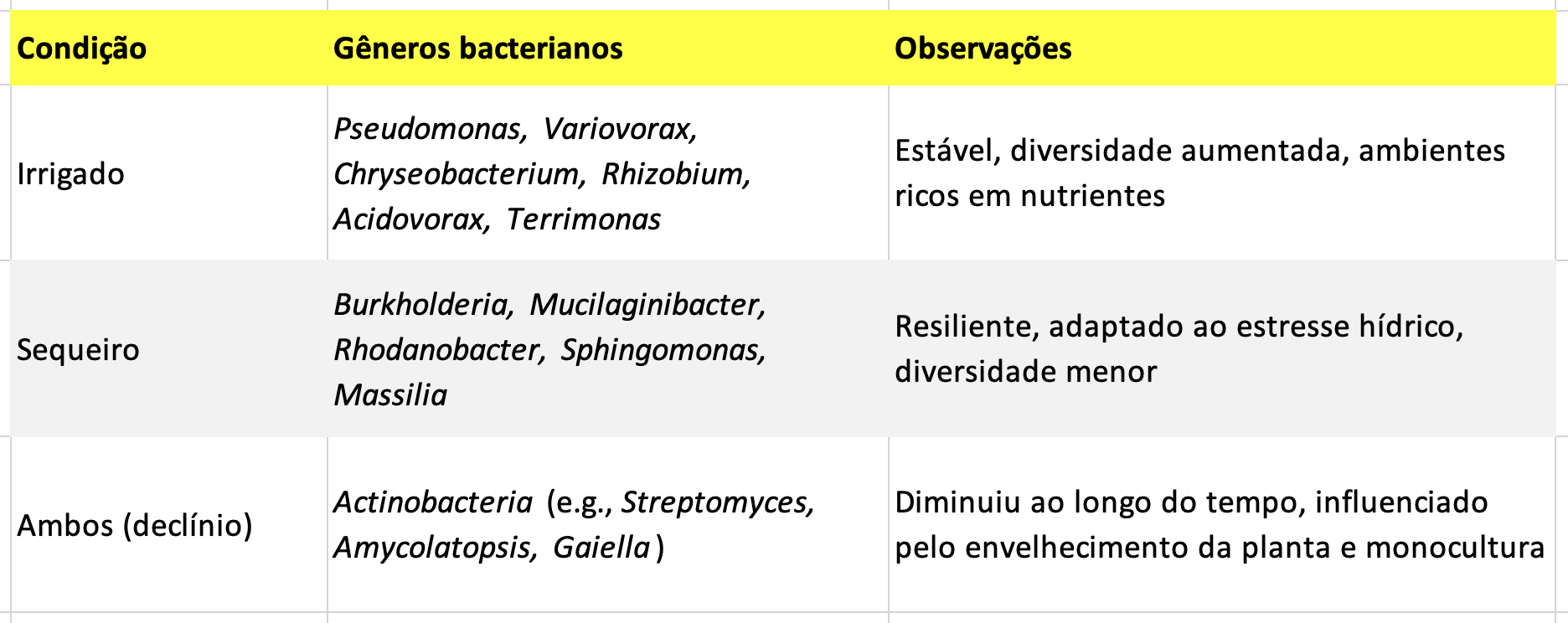
The differences intensified over time. In 2018, the bacterial communities in the two types of management presented markedly different profiles. The dryland system favored microorganisms that are resistant to water stress. Irrigation stimulated species that thrive in more humid environments rich in organic matter. Some bacteria, such as Sphingomonas e Massilia, common in the early years, lost strength over time, indicating that monoculture also acts as an ecological filter.
Analysis of long-term trends revealed four main patterns: bacteria that grew in both dryland and irrigated conditions; others that declined in both; a group that increased in dryland but declined in irrigated conditions; and another that did the opposite.
Among those who have prospered in irrigation are Rhizobium, Acidovorax e Terrimonas, associated with processes such as denitrification and metabolism of organic substrates under anaerobic conditions.
The group adapted to dryland includes burkholderia, Rhodanobacter e Mucilaginibacter, capable of promoting plant growth and withstanding environmental stresses. These bacteria probably use compounds released by the roots under drought conditions to remain active, even with low water availability.
In turn, the endosphere harbored fewer fluctuations. There, the plant exerts tighter control over the microorganisms inside. Fewer groups have grown over the years. Most—including important Actinobacteria such as Streptomyces, Amycolatopsis e Gaiella — declined, suggesting that plant aging and resource depletion directly interfere with the permanence of these organisms.
The most striking finding of the study is that irrigation, by modifying soil moisture and temperature, has lasting effects on the bacterial ecology of wheat roots. Furthermore, it reveals that the impact is not limited to the short term. Year after year, the difference between rainfed and irrigated crops increases, like two species evolving separately from a common ancestor.
More information at doi.org/10.1094/pbiomes-02-24-0028-r
Receive the latest agriculture news by email



Receive the latest agriculture news by email