





Cargo movement grows 19% in Rio Grande do Sul ports
The Port of Rio Grande had the best movement in the last ten years in the first 60 days of 2025
14.03.2025 | 16:11 (UTC -3)
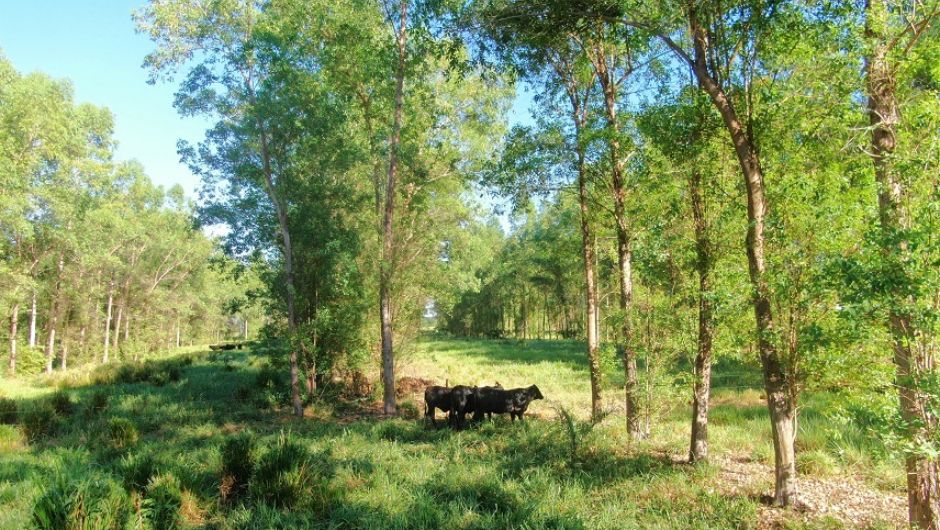
It is possible to increase, on average, the productivity of pastures with Brachiaria by 22% using a bioinput that combines two microorganisms with multifunctional properties (Brazilian Azospirillum e Pseudomonas fluorescens). This technology will be presented by researcher Marco Antonio Nogueira, from Embrapa Soja, at Dinapec, a fair that will take place from March 24 to 26, in Campo Grande (MS). According to Nogueira, in addition to increasing biomass production, this technology increases the absorption of nitrogen (N), phosphorus (P) and potassium (K) by forage.
In a public-private partnership between Embrapa and the company Biotrop, an inoculant with these multifunctional microorganisms was developed. The bioinput is composed of a kit with three products: Biopasto PK (containing the CNPSo 2719 strain of Pseudomonas fluorescens); Pastomax N (containing strains CNPSo 2083 and CNPSo 2084 of Brazilian Azospirillum) and Biopasto Protege, a protective additive, aimed at protecting bacteria against desiccation and sunlight at the time of application.
Nogueira explains that, in the case of the bacteria Azospirillum brasilense, The main processes involved are the synthesis of phytohormones, promoting root growth up to three times; and, although modest, the biological fixation of nitrogen. “Inoculation with these bacteria via seeds or leaves in established pastures resulted, in addition to the increase in biomass, in an average increase of 13% in the concentration of N and 10% in that of K”, explains the researcher.
Furthermore, Nogueira highlights that the Pseudomonas contribute to a set of processes in the soil and in the plant that also result in better nutrition and nutrient utilization. In this case, inoculation via seeds or leaves increased the potassium (K) content by 11% and the phosphorus (P) content by 30%. “I would like to highlight that the development of the technology sought to enable synergy between microorganisms and allows application both in the pasture establishment phase and in already established pastures. Therefore, it is an achievement that also meets the demand of producers who need to improve already established pastures”, he emphasizes.
In Brazil, 180 million hectares are occupied by pastures, 120 million of which are cultivated pastures and 86 million are Brachiaria. According to a survey by Embrapa, around 70% of Brazilian pastures are in some stage of degradation, producing below their potential. “Therefore, it is possible to use the potential of microorganisms to increase the efficiency of the use of fertilizers applied to pastures,” highlights Nogueira.
Since a large contribution of these bacteria occurs through the promotion of root growth, the plants absorb more water and nutrients, making better use of fertilizers. “Today, Brazil imports approximately 80% of the NPK it consumes, so the increase in the efficiency of fertilizer use has a major positive impact, not only economically, but also environmentally, by reducing greenhouse gas emissions,” concludes the researcher.
Dinapec is a biennial technology fair, held by Embrapa, Famasul and the Government of the State of Mato Grosso do Sul, through the State Secretariat for the Environment, Development, Science, Technology and Innovation (Semadesc), in an area of 30 hectares.
Receive the latest agriculture news by email



Receive the latest agriculture news by email