Innovation Policy will promote the development of Brazilian cocoa farming
The objective is to bring innovation through the generation of technologies, products, processes and services to benefit cocoa
27.07.2022 | 16:28 (UTC -3)
Map
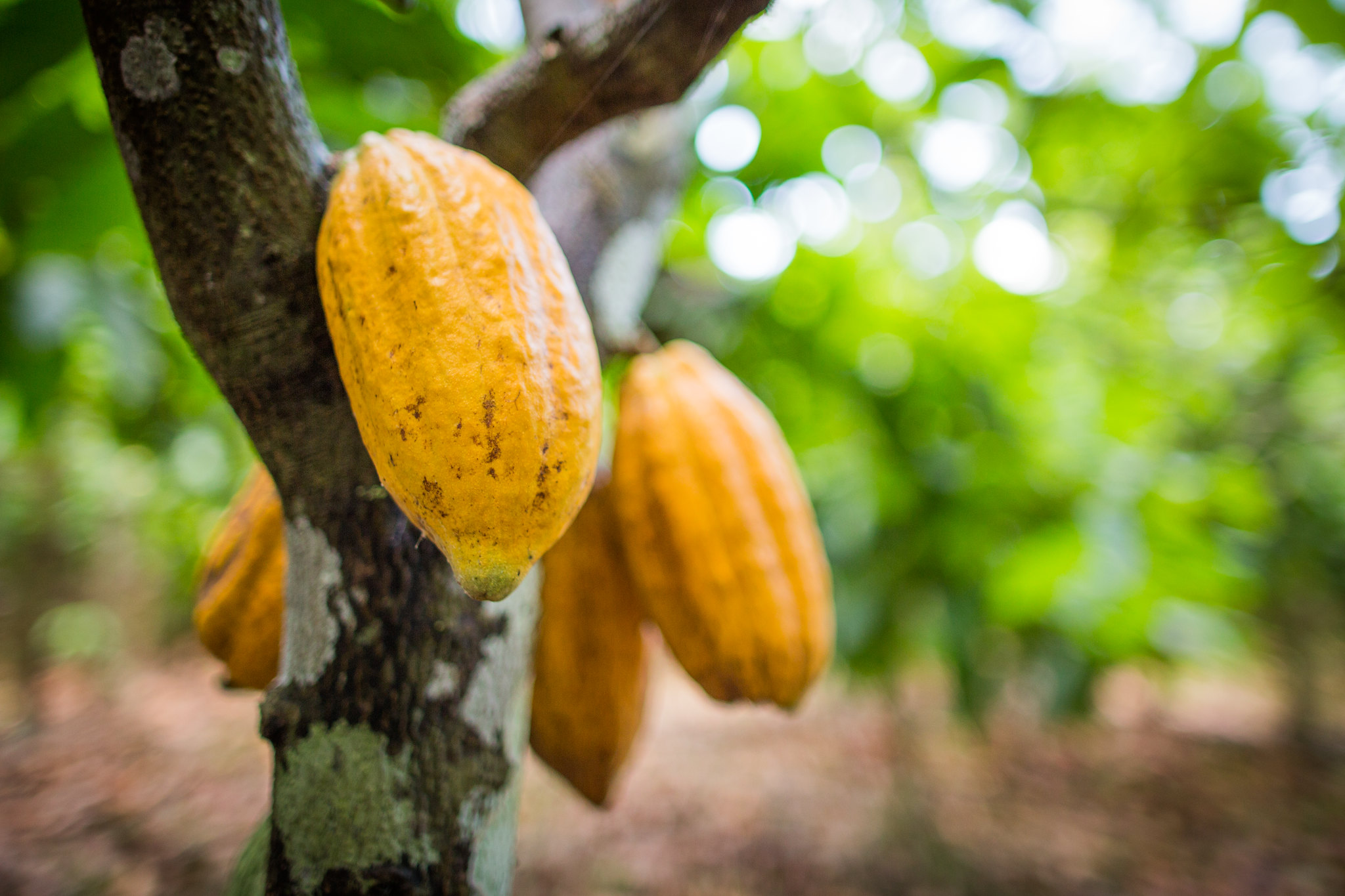
The objective is to bring innovation through the generation of technologies, products, processes and services to benefit cocoa. - Photo: Wenderson Araujo/CNA
From September onwards, the Ordinance No. 462, which deals with the Innovation Policy of the Executive Committee of the Cocoa Farming Plan (Ceplac). The policy will serve to guide the Commission's actions in promoting innovation through the generation of technologies, products, processes and services to benefit Brazilian cocoa farming.
Brazil currently ranks 6th in global cocoa production, according to the International Cocoa Organization (ICCO). According to the 2017 Agricultural Census, there are more than 93 thousand cocoa producing establishments in the country. They are concentrated in Bahia and Pará, which together represent 96% of national production.
The director of Ceplac, Waldeck Araújo, explains that the policy will encourage the search for resources for cocoa research and innovation and the presentation of projects to international organizations.
In 2020, Ceplac was recognized as a Science and Technology Institution (ICT). To become a full ICT, according to the director, it was necessary to publish the innovation policy, in compliance with a legal requirement. With this legal framework, it will be possible to use the Innovation Law, or Law of Good, to develop, for example, a bio-input to combat witches' broom, a pest that most affects cocoa crops.
Ceplac will be responsible for improving institutional mechanisms to stimulate innovation, through specific promotion and induction programs, created and regulated by standards, to assist, support and stimulate activities related to the development, improvement, management and dissemination of solutions in agriculture, and its availability to society.
Furthermore, it will have a Technological Innovation Center (NIT) to promote innovation and adequate protection of inventions generated within the Commission's internal and external spheres, and their transfer to the productive sector, with the aim of contributing to scientific and technological development. .
In 2020, Mapa published the Decree No. 10.253, according to which Ceplac is no longer responsible for promoting Technical Assistance and Rural Extension (ATER). However, Ceplac continues to support ATER indirectly, training technicians from the National Rural Learning Service (Senar) and other institutions from different spheres of government, in addition to cooperatives, through cooperation agreements.
Mechanization process and benefits for the sector
In addition to research and innovation, one of the focuses is to encourage the mechanization of the cocoa industry post-harvest. According to the Commission, Brazil is the only country that brings together the complete cocoa chain in its territory, from production to chocolate for consumption, including the manufacture of cosmetics.
There are two phases of industrialization: first, in pre-processing, when the fruit is harvested and opened, the seeds are removed, there is the extraction of the pulp, the fermentation of the seeds, the drying and storage of the almonds to be transformed into butter. cocoa, liquor or powder. Soon after, comes the chocolate industry, which buys these derivatives and produces chocolate, cosmetics and other products.
In the first phase, the process is done manually, which becomes a bottleneck for production, as it can influence the quality of the product and sufficient labor. Today, the producer harvests the cocoa and breaks the fruit. When fermenting seeds, you need to go to the farm every day to take the fruit out of the trough and place it in another. It is at this point that Ceplac plans to encourage mechanization.
“The post-harvest mechanization, which involves breaking the machete, is risky. We need to put an end to this and thus gain productivity. Another thing is the artisanal drying on top of the troughs. You can add a drying machine, as you already have in the café”, explains the director.
Cocoa expansion
The goal is to achieve self-sufficiency in cocoa production by 2025, with 300 thousand tons per year, and reach 400 thousand tons by 2030, which will allow expanding exports of cocoa, derivatives and chocolate. These values have the potential to elevate Brazil to third place among the largest cocoa producers in the world.
The country also holds another title, that of the largest bank of cocoa genetic material in the world, maintained by the Ceplac Research Center. More than 53 thousand species of cocoa collected over several years are preserved alive at the José Haroldo Cocoa Genetic Resources Station, in Marituba, Pará. Among the 53 thousand plants, around 2,2 thousand have different genotypes, 1,1, XNUMX thousand were generated from seeds and the rest clonally, from seedlings formed with pieces of twig.
But, how will Brazilian productivity expand? According to Ceplac, it will occur in the traditionally producing regions: Pará and Bahia, which together represent 96% of national production, with cultivars that are more productive and more resistant to the moniliasis pest. And it will continue through new areas such as the Cerrado biome; Caatinga: Bahia, Ceará and Sergipe; in Roraima, Amapá, São Paulo and Minas Gerais.