In November, diesel and ethanol prices rise in the South Region
Despite the increase, the region remains the cheapest in the country to fill up with both types of diesel.
03.12.2024 | 16:24 (UTC -3)
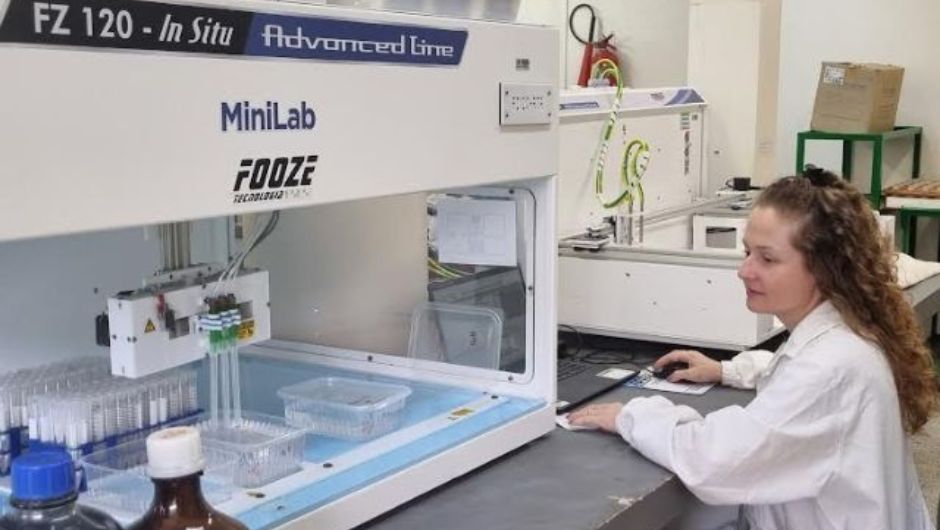
In celebration of World Soil Day, celebrated on December 5, Epagri is showing an important service it has been providing to the people of Santa Catarina for 45 years: soil analysis to assist rural producers seeking greater productivity. The company has laboratories in Chapecó and Ituporanga that, together, have already performed more than one million analyses.
The laboratory in Chapecó is the oldest in operation in Santa Catarina, established in 1979. During this period, it has analyzed more than 750 thousand samples, serving an annual average of seven thousand different producers. The laboratory in Ituporanga has been installed at the Epagri Experimental Station in that municipality since 1990 and has already analyzed around 400 thousand samples.
In Chapecó, the laboratory has eight employees and an analytical capacity of 1200 samples per week. The unit offers basic chemical, micronutrient and physical soil analysis.
In Ituporanga, there are 5 employees, with a capacity of 600 samples per week. According to chemist Cristiano Mora, who coordinates the activities in this laboratory, the numbers may increase according to demand. “In addition to soil analysis, the unit performs analyses of organic fertilizers and leaf tissue to support the research generated at our Experimental Station,” he says.
According to Evandro Spagnollo, coordinator of the soil analysis laboratory at the Epagri Family Farming Research Center (Cepaf), located in Chapecó, the analysis aims to assess the concentration of nutrients in the soil and, with this, determine the amount of fertilizer needed to meet crop demand. “This demand varies according to the yield expectations set by the producer, that is, the higher the expectation, the greater the quantities needed,” he explains.
Spagnollo emphasizes that soil analysis is a tool to help determine how much a property/area can produce of a given crop. “If the analysis shows that the nutrient concentration and pH are low and the farmer does not make the necessary corrections, the expected yield will be very low. On the other hand, if the concentrations are high, the amount of nutrients needed will be low and the farmer will have less expense with the implementation of the crop,” he explains.
For farmers who access agricultural financing, soil analysis (basic chemical analysis and particle size physics) are mandatory information and, to be valid, the chemical analysis must be up to two years old and the physical analysis up to ten years old. For environmental licensing for pig farming, the producer must perform the basic chemical and micronutrient analysis.
The two Epagri laboratories participate in the Soil Analysis Quality Assessment Program of the Official Network of Soil and Plant Tissue Analysis Laboratories of the States of Rio Grande do Sul and Santa Catarina (Rolas).
Anyone can request the service. According to Spagnollo, the unit in Chapecó has been receiving samples from Mato Grosso do Sul, Paraná and Rio Grande do Sul, but the main user is the farmer from Santa Catarina.
Basic chemical analysis costs R$35,00, physical analysis costs R$25,00 and micronutrient analysis (copper, zinc, iron and manganese) costs R$20,00. “These amounts are used to purchase inputs used in the analytical process, as well as to maintain the entire structure. In the case of equipment, most of it is imported, and therefore has a high cost to purchase and maintain,” says Spagnollo.
Samples can be sent in person or by post and must accurately represent the area that will receive the fertilization.
Receive the latest agriculture news by email


Receive the latest agriculture news by email