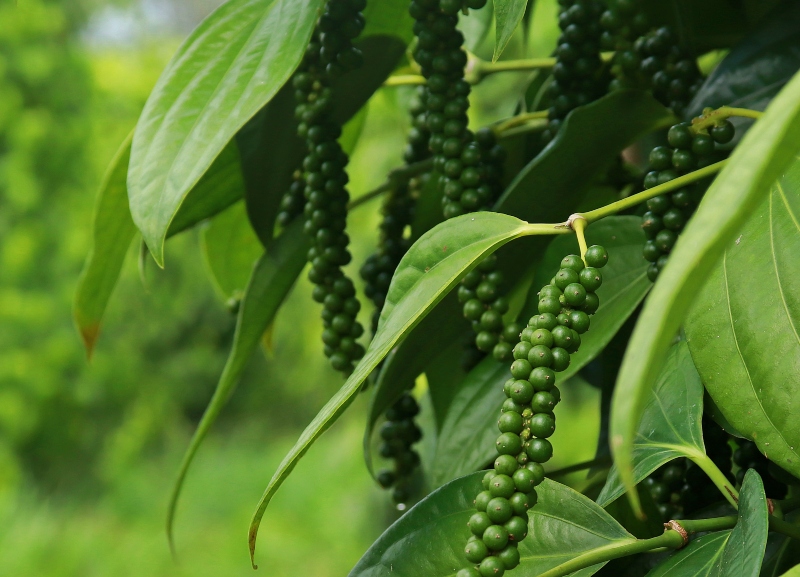
Embrapa encourages the use of gliricidia as a tutor for black pepper
Three new Technological Reference Units (URTs) mark the expansion of the black pepper production system with the use of live gliricidia tutors to replace wooden stakes, in the Pará municipalities of Tomé-Açu, Santarém and Baião
18.03.2022 | 13:38 (UTC -3)
Embrapa
Black pepper in gliricidia tutor. - Photo: Ronaldo Rosa
Three new Technological Reference Units (URTs) mark the expansion of the black pepper production system with the use of live gliricidia tutors to replace wooden stakes, in the municipalities of Tomé-Açu, Santarém and Baião in Pará. URTs are technology demonstration areas located on family farmers' properties and serve as hubs for learning and disseminating knowledge.
One of the units is located on the property of Maciel Ferreira, a farmer in the municipality of Baião, in the Northeast region of Pará. He, who inherited the tradition of pipericulture from his grandfather, currently has four thousand black pepper trees. “I have cocoa, fish and other fruits, but pepper is the main product of my income. I have always invested in pepper and am currently reaping the fruits of this work”, says Maciel.
He says that he implemented the gliricidia tutor (“live” tutor) around three years ago, when he had his first contact with the technology. “In the beginning, without technical guidance, I had difficulties with 'tying' the pepper to the stake and with pruning the gliricidia, but I didn't give up”, says the farmer. Currently, his area is a reference for producers in the region and receives visits from those who want to learn about the benefits of the technology.
“In addition to a production of three kilos of dry pepper per plant, the live stake is better for those who harvest in the summer, as it provides shade. So it’s very good for the plant and for the worker”, highlights Maciel.
Economic and environmental benefits
The replacement of wooden stakes by the gliricidia tree as a tutor for the black pepper tree is a technology that is winning over more and more farmers in the different regions of Pará. The three Technological Reference Units implemented in the state have 0.6 hectares each and approximately thousand plants, 500 on the wooden stake and 500 on the gliricidia stake, which highlights the differences in production systems. The work is carried out in partnership with the companies Tropoc and Pró-Mudas.
Researcher Oriel Lemos, from Embrapa Amazônia Oriental, highlights that there are numerous advantages of using gliricidia as a tutor, among them, “the 27% reduction in the cost of implementing the pepper plantation compared to the traditional system due to the replacement of cuttings and the reduction in the acquisition of fertilizers and fertilizers”, he explains.
Furthermore, as João Paulo Both, an analyst at Embrapa Amazônia Oriental, adds, planting gliricidia avoids cutting down trees, contributes to carbon sequestration, improves the condition of the soil with nitrogen fixation and the incorporation of organic matter. “The use of gliricidia as a tutor is sustainable in several aspects, as it reduces costs and environmental impact, guarantees profitability and improves the environment”, says Both.
The Technological Reference Units established in Tomé-Açu, Santarém and Baião are open to visits by producers and those interested in the topic. In addition to working with the gliricidia tutor, the units present new virus-free black pepper varieties, which will soon be launched by Embrapa Amazônia Oriental in partnership with the Pró-Mudas nursery.
Gliricidia
Gliricidia (Gliricidia sepium) is a fast-growing leguminous tree, native to Central America, which serves as a living tutor (growth support) for the black pepper tree, which is a climbing species.
Black pepper production in Pará
The state of Pará is the second largest national producer of black pepper with a production of 36,1 thousand tons in 2020, according to the Brazilian Institute of Geography and Statistics (IBGE). The largest productions are concentrated in the municipalities of Tomé-Açu, Baião, Mocajuba, Igarapé-Açu and Capitão Poço, and mainly involve family farmers.