In France, bees also suffered from the drought
The 2022 honey harvest is expected to be better than in 2021; but the summer drought greatly reduced the potential
16.10.2022 | 17:00 (UTC -3)
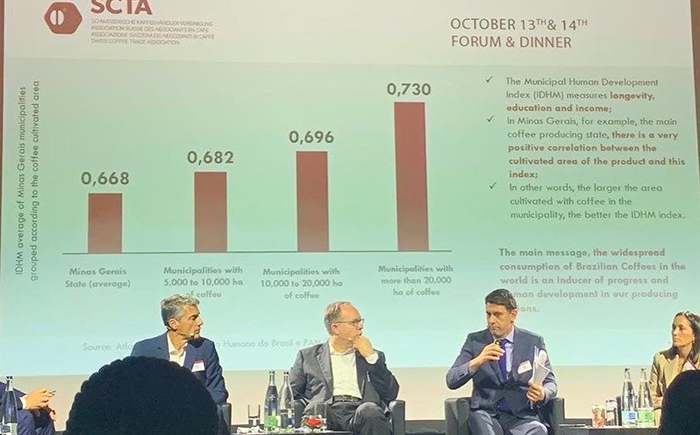
The Brazilian Coffee Exporters Council (Cecafé) participated, on the 13th and 14th of October, in Geneva, Switzerland, in the 13th SCTA Coffee Forum & Dinner, promoted by the Swiss Coffee Trade Association, which addressed, as its main theme, "World of opportunities: resilience and reinvention".
According to Marcos Matos, general director who represented Cecafé at the event, this theme involved the challenges of the impact of the pandemic and the conflict in Ukraine on the production chain; changes associated with production, distribution and consumption; regulatory responses; and the advancement of consumer interest in more sustainable and traceable coffees, bringing this scenario as a possibility of opportunities, as it changes the coffee scenario for the better and will bring benefits to institutions and countries that arrive first.
"Brazil is very well positioned to face the existing challenges. With the perspective of being the largest producer and exporter, as well as the second largest consumer of coffee in the world, we demonstrate the various sustainable actions carried out by the coffee sector in our country. As an example, In times of ESG, we cite the strengthening of Cecafé's concrete actions that encompass producer training, waste monitoring, risk management, carbon balance in coffee farming and traceability in light of regulatory trends, especially in the European Union", he highlights.
Matos also highlighted the social relevance of coffee growing in our country. "Coffee promotes social inclusion. Where the activity is present, the region's Human Development Index (HDI) is higher, in addition to the levels of environmental preservation being above those required by Law (Brazilian Forest Code). In this challenging geopolitical era , we understand that fostering multilateralism will promote international trade with social inclusion, respecting investments, projects and many concrete sustainability activities underway in Brazil", he adds.
According to the general director of Cecafé, global roasters brought their perspective on the challenges related to carbon sequestration and corporate social responsibility to the event. In this sense, he states that the information presented by the Council meets this demand, enabling these players to demonstrate that their private social investments bring benefits to coffee regions, as they generate progress, which is consistent with achieving the goals they have.
“With regard to the green market, for example, our carbon additionality index is the best way to represent regenerative agriculture, because, with investments from these companies, Brazilian coffee farming, which is already carbon negative, retaining 1,6 ton of CO2eq per hectare per year, in its conventional form, can be even more through the adoption of decarbonizing initiatives, as the Cecafé study proved that the inclusion of good agricultural practices increases the level of carbon retention and equivalents to 10,5, XNUMX t/ha/year. In other words, Brazil is able and prepared to receive investments and, consequently, help global companies achieve their goals”, he explains.
Participation in the SCTA Coffee Forum & Dinner, in Switzerland, was another action by Cecafé focused on communication and global promotion of the image of Brazilian coffee. "This was a relevant opportunity to demonstrate our alignment with the most important global organizations in the sector and highlight the commitment of national coffee farming in the face of all environmental and social challenges, which we understand as unique opportunities to place ourselves even more at the forefront of international coffee activity ", concludes Matos.
Receive the latest agriculture news by email


Receive the latest agriculture news by email