Inmet: weather forecast until Monday (July 14th)
An extratropical cyclone is affecting the coast of the Southern region, and rain persists in parts of the North, Central-West, South, and Southeast.
11.09.2026 | 17:04 (UTC -3)
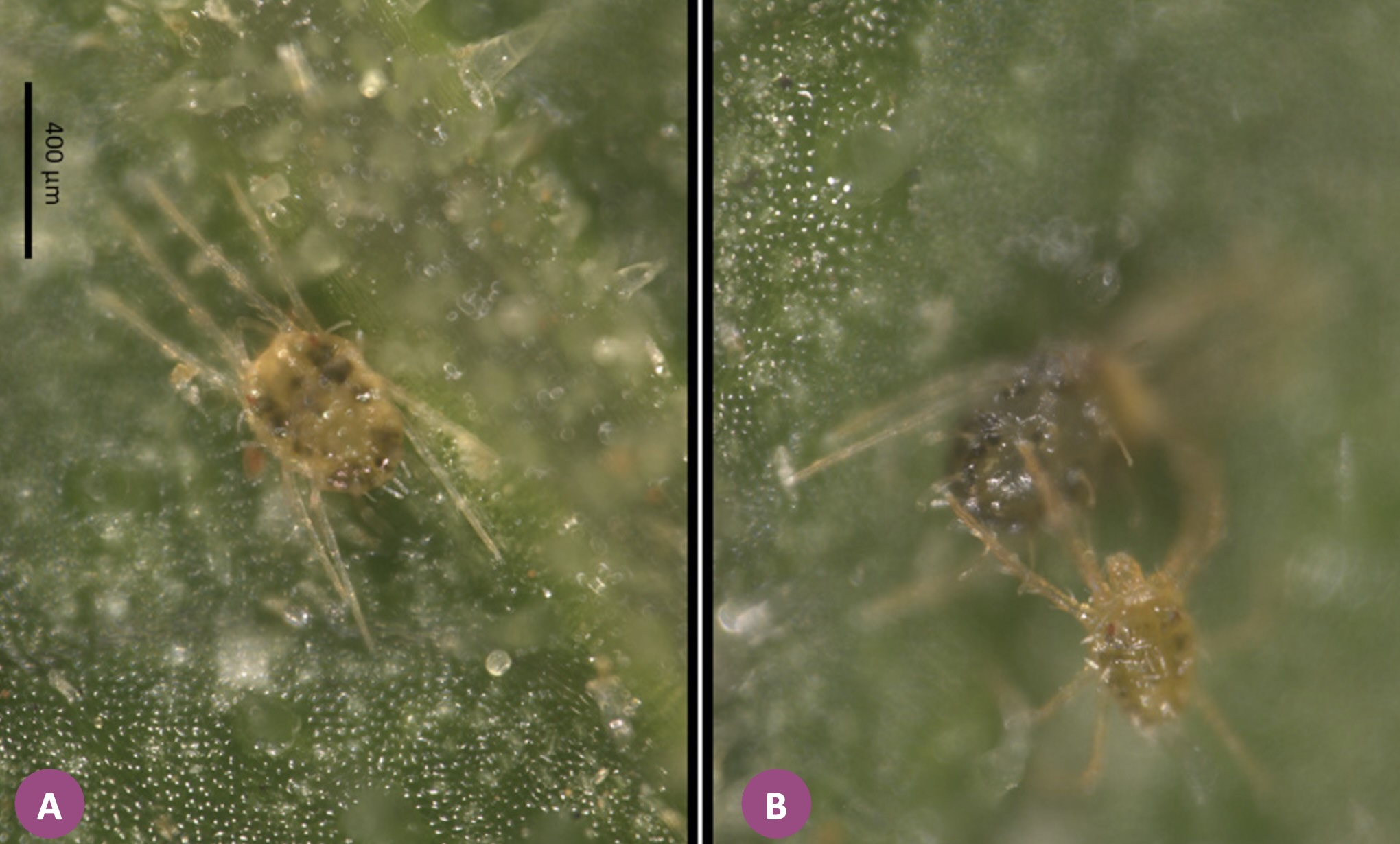
Researchers have recorded for the first time the mite Aponychus schultzi infesting chayote (Sechium edule) plants in Rio Grande do Sul. The occurrence was observed in Lajeado and expands the known distribution of the association between the mite and the crop in Brazil. Until then, records in chayote covered Minas Gerais, São Paulo, and Paraná. The study also described the leaf lesions associated with the infestation (doi 10.37486/2675-1305.ec08037).
The plants evaluated were grown in a home urban garden, without the application of pesticides or fertilizers. The researchers observed a high infestation. The mites occupied several leaves of the plant.
The lesions presented irregular whitish and yellowish spots on the adaxial surface, corresponding to the upper surface of the leaf. The researchers associated the whitish areas with the possible formation of intercellular spaces filled with air. The yellowish spots indicate oxidation of tissues and membranes, a process already observed in soybeans after attack by Tetranychus ludeni.
The team also found specimens of Aponychus schultzi on the abaxial surface of the leaves. However, no visible lesions were detected in this region. The collection focused on the adaxial surface, the location with the highest prevalence of observed damage.
The symptomatic leaves were sent to the Acarology Laboratory at the University of Vale do Taquari, Univates. Researchers collected the mites under a stereoscopic microscope. The specimens were mounted on slides with Hoyer's medium and remained in an incubator for five to six days for fixation and clarification.
Identification was performed using phase-contrast microscopy and dichotomous keys. Species confirmation was based on morphological characteristics of the females. Among the evaluated characters were the shape and size of certain dorsal setae, dorsal striations, and the number of tactile and sensory setae on the legs.
The specimens presented an idiosoma with poorly marked striations and dorsal setae inserted in pronounced tubercles. Some setae exhibited blunt tips and a broadly spatulate shape. The team also analyzed the chaetotaxy of the legs and the anogenital region. The set of characteristics coincided with the diagnostic criteria described for Aponychus schultzi.
This finding expands our knowledge of the distribution of this tetranychid beetle on chayote in Brazil. Aponychus schultzi was already known to occur on papaya, Carica papaya, in Rio Grande do Sul. This new finding demonstrates its association with Sechium edule in the state as well.
The genus Aponychus comprises 20 species, according to the references used in the study. Five have records in Brazil. Before this survey, Rio Grande do Sul had two recorded species of the genus: Aponychus mauritianum and Aponychus schultzi. Brazilian records of Aponychus schultzi also include crops such as beans, hibiscus, papaya, and cassava.
There are few studies on phytophagous mites of the Tetranychidae family related to chayote. The literature cited by the researchers already pointed to an association between the crop and other mites, including Polyphagotarsonemus latus. The new record adds information about the mite fauna linked to the crop and about symptoms related to infestation by Aponychus schultzi.
During sampling, researchers also found the predatory mite Iphiseiodes saopaulus on the plants. Species of Phytoseiidae are used to control mites and small insects. Members of the genus Iphiseiodes include generalist predators capable of developing and reproducing on some phytophagous mites, including tetranychids.
The study does not, however, determine the effect of Iphiseiodes saopaulus on the Aponychus schultzi population in chayote. The researchers indicate the need for further laboratory and field work to evaluate this ecological interaction.
The work was carried out by scientists Julia J. Ferla, Wesley B. Wurlitzer, Julia R. Schneider, Gizele M. Pinheiro, and Noeli J. Ferla.
Receive the latest agriculture news by email


Receive the latest agriculture news by email