Research identifies genes linked to Spodoptera exigua's tolerance to insecticides
Study identifies three genes associated with reduced susceptibility to cyantraniliprole and chlorantraniliprole.
01.11.2026 | 09:36 (UTC -3)
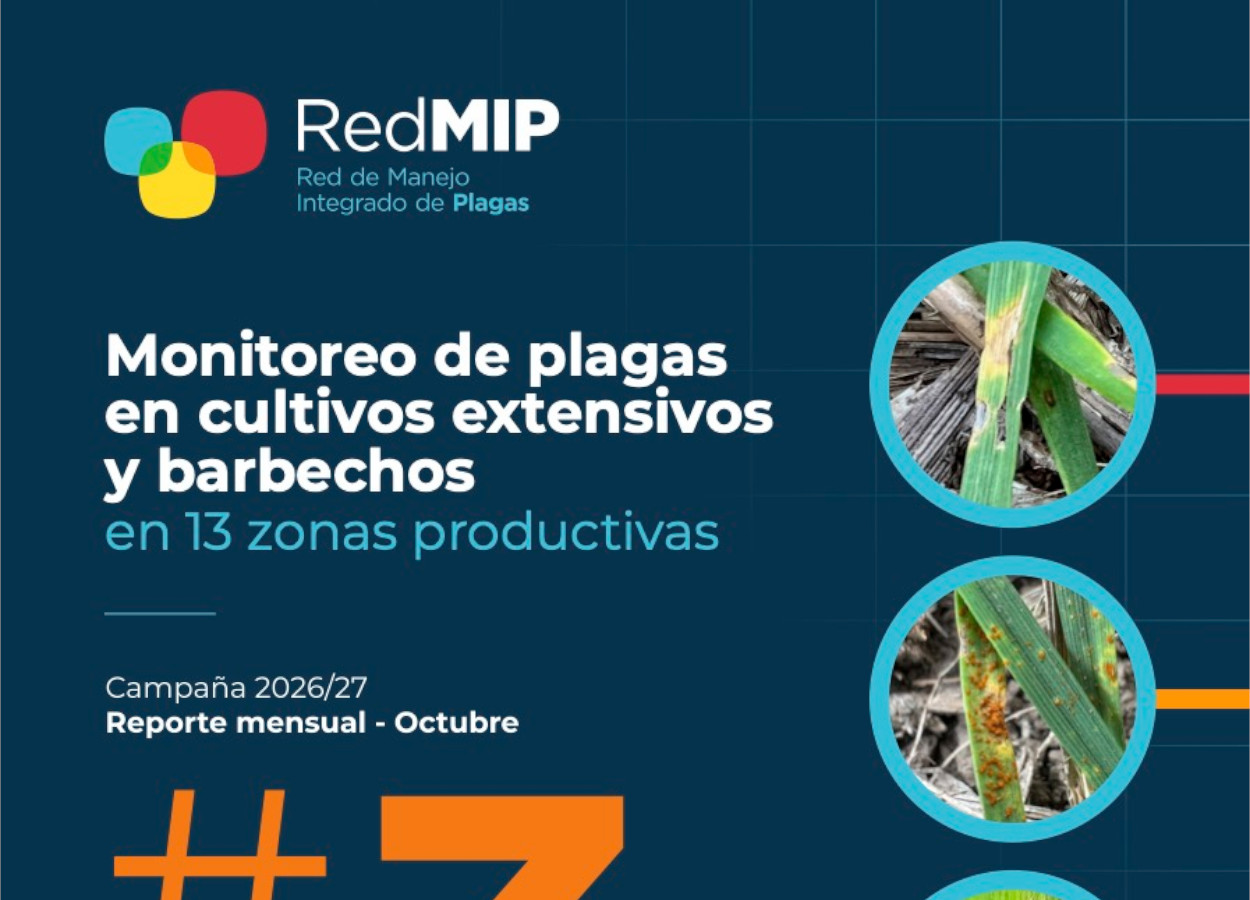
Yellow spot (Drechslera tritici-repentis) and wheat leaf rust (Puccinia triticina), and fall armyworm (Spodoptera frugiperda) in corn are the leading adversities highlighted by the Integrated Pest Management Network (RedMIP) of AAPPCE in its third monthly report for the 2026/27 crop season in Argentina. The October survey covers extensive crops and fallow areas in 13 producing regions, from the Northwest (NOA) to the Southeast of Buenos Aires.
The network assigns high risk to situations with high prevalence and conditions predisposing to the advancement of adversity. In medium risk, isolated attacks may occur.
The yellow cloud cover has reached a high risk level in the south-central region of Santa Fe and a medium risk level in eight other regions, including Córdoba North Central, Entre Ríos, southern Santa Fe, and the four metropolitan areas of Buenos Aires.
Leaf rust poses a high risk in the Central region of Santa Fe and the western region of Buenos Aires. In the Central region of Santa Fe, stem rust (Puccinia graminis f. sp. tritici) also reaches a high risk level. Yellow rust (Puccinia striiformis) appears in 11 of the 13 regions, with a high risk in western Buenos Aires and a medium risk in the other nine.
In barley, net blotch (Drechslera teres) and ramularia (Ramularia collo-cygni) present a high risk in the Southwest and Southeast of Buenos Aires.
The fall armyworm poses a high risk to corn in eastern Santiago del Estero and northern Santa Fe, and in central Santa Fe, as well as a medium risk in Entre Ríos. The corn leafhopper (Dalbulus maidis) remains a low risk in the four regions where the pest has been recorded, including volunteer corn plants in the NOA region. The wheat stink bug complex appears as a medium risk in Córdoba North Central and in south-central and southern Santa Fe. In southeastern Buenos Aires, the slug Milax gagates poses a high risk to sunflowers.
Among weeds, the Santa Fe Center region presents a high risk for Sorghum halepense in fallow fields and for Palmer amaranth (Amaranthus palmeri and Amaranthus hybridus) and crabgrass (Digitaria sanguinalis) in corn and sunflower fields. In northern Buenos Aires, horseweed (Conyza bonariensis and Conyza sumatrensis) and ryegrass (Lolium spp.) reach a high risk in fallow fields. The southeastern part of the province has a high risk for ryegrass, Bassia scoparia, Brassica rapa, and Raphanus sativus in fallow fields, barley, and wheat. Bassia scoparia and Euphorbia davidii register a high risk in fallow fields in western Buenos Aires; horseweed and Brassica rapa, in the southwest.
The climatic conditions appear as good in 12 regions, where crops are meeting environmental demands without complications. In the NOA (Normal Environmental Assessment), the regular classification indicates increasing difficulties for crops in meeting water demands.
Receive the latest agriculture news by email



Receive the latest agriculture news by email