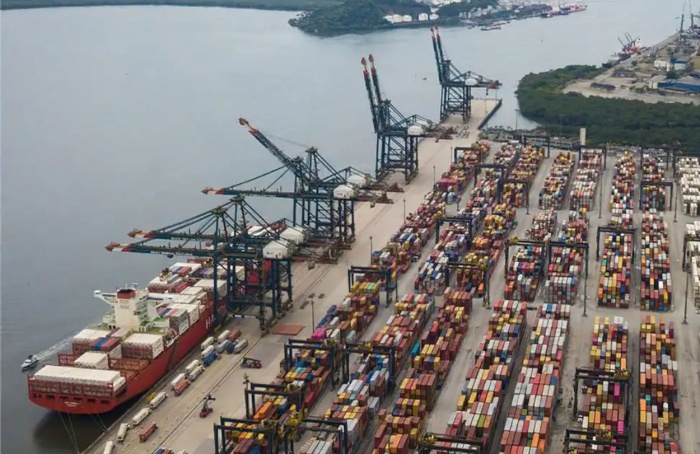
São Paulo's agricultural sector registers a surplus of US$16,8 billion in exports
Exports totaled US$21,15 billion, reaching 40,3% of the state's total exports
14.10.2025 | 16:59 (UTC -3)

Brazilian companies that emit CO₂ and need to offset part of their emissions, as well as those developing projects capable of generating credits, now have access to a unique infrastructure: the RCGI-USP Carbon Registry. The initiative was launched by the University of São Paulo through the Center for Research and Innovation in Greenhouse Gases (RCGI) and is Brazil's first national carbon credit registry. Until now, Brazilian companies wanting to operate in this market had to rely on international registry companies, with costs denominated in dollars and methodologies not always adapted to the national context.
"A carbon registry becomes more robust when it combines two essential elements: science and public interest—and that's what USP brings to the process. The RCGI-USP Carbon Registry is already established with its own methodologies, continuously audited, which should strengthen the integrity of Brazilian credits and align them with international best practices," says Julio Meneghini, scientific director of RCGI-USP.
In practice, a registry works as follows: it validates, issues, and tracks each carbon credit, ensuring that it is unique, verifiable, and traceable. Without registration, the credit doesn't exist—neither for those who need to meet decarbonization targets nor for those who want to sell their environmental results. The cycle involves five main actors: project proponent and developer, independent verifier (audit), registry (validation, registration, and traceability), and buyers and sellers.
This operation explains the central role of registry companies in the carbon market. This is where the RCGI-USP Carbon Registry comes in, offering a unique proposal in Brazil—and whose unique features help explain why it represents a milestone for the sector.
This is the first Brazilian registrar affiliated with a public university, ensuring academic neutrality, an independent structure, and scientific rigor. Another distinguishing feature is the use of methodologies tailored to the national context, which consider the specific characteristics of Brazilian industry and biomes—the Amazon, Cerrado, Caatinga, Pantanal, and Atlantic Forest—without sacrificing alignment with international standards, such as those of the UNFCCC (United Nations Framework Convention on Climate Change). This model should contribute to the valorization of carbon credits generated in the country.
The initiative also reduces barriers by charging in Brazilian reais and offering affordable costs, with analysis times of up to 90 days—well below the up to 12 months observed at international registries. In addition to credit registration, the registry offers a platform to support companies in preparing greenhouse gas emissions inventories, according to the international GHG Protocol standard. Micro and small businesses can use a simple, guided self-reporting system that covers direct emissions and purchased energy. Large companies can benefit from specialized technical support, including the ability to map indirect emissions.
Another central element is the CCB-SS (Climate, Community, Biodiversity, Science & Social) model, which makes it mandatory to allocate part of the carbon credits to an exclusive fund, aimed at financing scientific research initiatives, social projects and environmental preservation.
The RCGI-USP Carbon Registry will be operated by a startup with a USP DNA. The University will be responsible for developing its own scientific methodologies and certifying the adequacy of external methodologies, always subject to review and audit by an independent technical committee coordinated by RCGI-USP—ensuring that scientific rigor is present at every stage.
This rigor isn't circumstantial: it's built on the solid foundation built by RCGI-USP, established in 2015 and now recognized as one of the largest energy transition research centers in the country. Bringing together around 800 researchers, the center conducts dozens of projects in areas ranging from nature-based solutions and carbon capture to innovation in energy systems and decarbonization. This structure has already enabled pioneering initiatives, such as the world's first pilot plant for hydrogen production from ethanol and advances in green methanol obtained from CO₂ capture.
Currently, the carbon market in Brazil operates voluntarily, allowing companies to maintain inventories and offset emissions on their own initiative. A World Bank study (2023) showed that the country accounted for almost half of the credits issued in Latin America and the Caribbean between 2005 and 2023—314 million tCO₂e. Despite its leading volume, average prices remain below the ideal level for fostering low-carbon projects.
The report highlights weaknesses that directly affect the valuation of credits in the region: recent criticism of the integrity of forestry and REDD+ projects (reducing emissions from deforestation and forest degradation) has reduced market confidence and put pressure on prices. Among the problems cited are risks of leakage (when deforestation pressure is merely shifted to another area), non-permanence (such as fires or land-use changes that re-release stored carbon), and flaws in MRV systems—monitoring, reporting, and verification. Without robust quality and verifiability mechanisms, the document warns, Latin American credits risk losing international credibility.
It is in this context that the RCGI-USP Carbon Registry aims to operate. Using methodologies tailored to the Brazilian reality, continuously audited, and aligned with international standards, the registry seeks to raise the bar on integrity, strengthen trust in the voluntary market, and prepare the country for the future regulated market. Under the SBCE's design, companies emitting more than 10 tCO₂e/year must monitor and report their emissions; those emitting more than 25 tCO₂e/year must also submit quotas equivalent to their emissions.
Receive the latest agriculture news by email



Receive the latest agriculture news by email