Two genes explain the breakdown in wheat resistance to powdery mildew.
Research identifies a dual mechanism that allows the pathogen to bypass the Pm4 gene.
13.01.2026 | 13:59 (UTC -3)
Cultivar Magazine
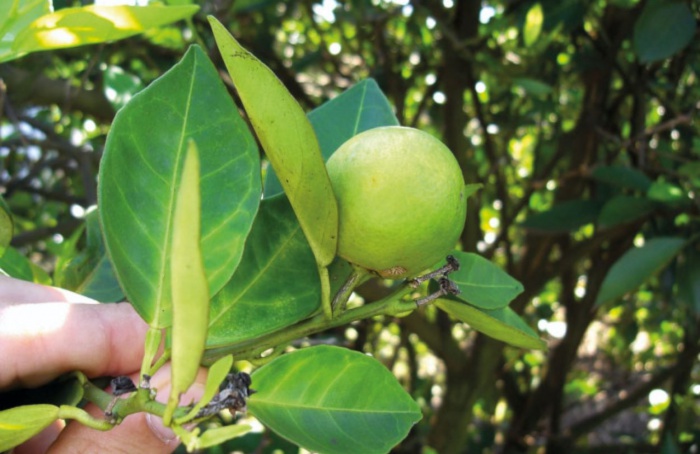
Photo: Gerald Holmes, Cal Poly San Luis Obispo
Wheat resistance to powdery mildew depends on a more complex mechanism than previously thought. A study identified that the virulence of the fungus... Blumeria graminis f.sp. tritici Resistance against the Pm4 gene results from the combined action of two distinct effectors. One activates the plant's defense, while the other blocks this response. This work shows how this interaction allows the pathogen to overcome one of the main genetic sources of resistance used in wheat breeding programs worldwide.
The Pm4 gene has gained prominence for conferring specific resistance to powdery mildew races and also to the wheat blast pathogen. Unlike most resistance genes already described in the crop, Pm4 does not encode an NLR-type receptor. It encodes a fusion protein with kinase activity. This characteristic places Pm4 in a special class of immune receptors present in cereals.
AvrPm4 Effector
Researchers identified the AvrPm4 effector as the fungal signal directly recognized by the Pm4 protein. This identification occurred after ultraviolet radiation mutagenesis in a fungal isolate initially unable to infect plants with Pm4. Six mutants then began infecting these plants. All exhibited mutations in the same fungal gene, designated Bgt-55142. This gene was subsequently defined as AvrPm4.
AvrPm4 encodes a protein that is atypical for the known pattern of powdery mildew effectors. It has 372 amino acids. It contains an RNase-like domain in the initial region. It also presents a carboxy-terminal domain called MEA, absent in other previously described effectors of the pathogen. This domain includes nuclear localization signals and repetitive regions. The study indicates that this structure may have an important functional role during infection.
Tests on wheat protoplasts confirmed that the expression of AvrPm4, in the presence of Pm4, induces cell death. This response does not occur when mutant versions of the effector are used. The result confirms that AvrPm4 functions as an avirulence factor, activating the plant's defense when recognized.
Kinase activity
Research has advanced by demonstrating that the Pm4 protein not only recognizes the effector but also physically interacts with it. Experiments have shown that Pm4 exhibits kinase activity. It phosphorylates AvrPm4 upon contact. This phosphorylation depends on the integrity of the kinase domain. Pm4 mutants lacking enzymatic activity lose their resistance capacity.
Despite this, the mere presence of AvrPm4 does not explain the virulence observed in natural populations of the fungus. Analyzing 78 isolates from different regions of the world, the authors found no correlation between variations in AvrPm4 and the ability to infect plants with Pm4. This indicated the existence of another genetic factor involved.
Gene SvrPm4
Genome-wide association studies and QTL mapping have revealed a second crucial locus on chromosome 8 of the fungus. At this location, researchers identified a gene that acts as a suppressor of the Pm4-mediated immune response. The gene was named SvrPm4.
SvrPm4 encodes an effector that does not activate defense in the plant. Its function is to block cell death induced by AvrPm4. Functional assays have shown that only active variants of SvrPm4 are able to suppress the immune response. Isolates of the fungus carrying these variants become virulent even in the presence of functional AvrPm4.
The study also revealed an additional aspect. SvrPm4 had previously been described as an avirulence gene recognized by another wheat resistance gene, Pm1a. The research confirms that the active variant of SvrPm4 suppresses Pm4, but triggers an immune response when wheat carries Pm1a. Inactive variants, on the other hand, escape recognition by Pm1a and do not suppress Pm4.
This result describes a two-component genetic system. AvrPm4 activates the defense. SvrPm4 decides whether this defense will be blocked. The combination defines the outcome of the interaction between wheat and fungus. According to the authors, this arrangement helps explain the limited durability of resistances based on a single gene.
More information at doi.org/10.1038/s41477-025-02180-w