João Martins is sworn in for a new term at the CNA.
A ceremony in Brasilia marked the inauguration of the board of directors and the Fiscal Council for the period 2025-2029.
10.12.2025 | 16:46 (UTC -3)
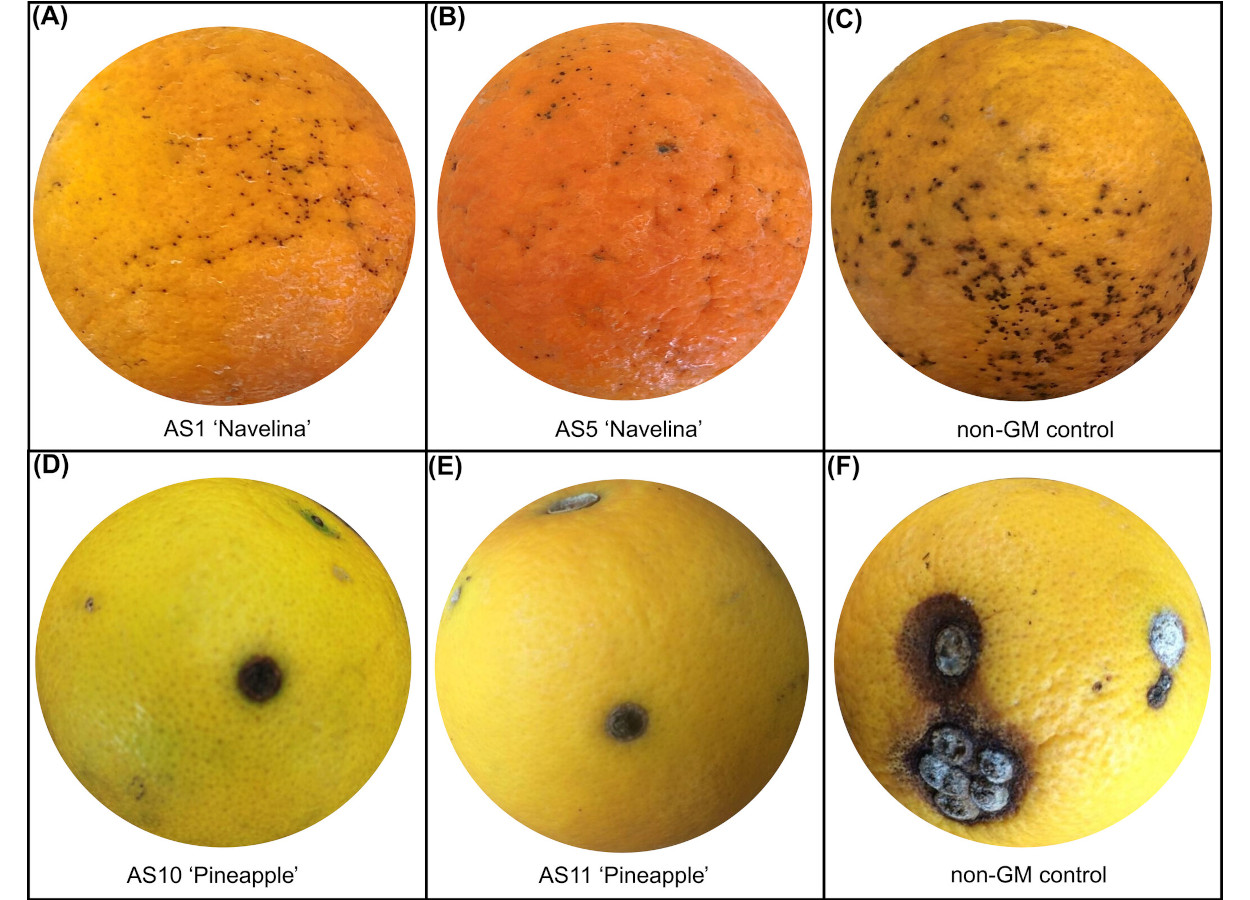
Research conducted in the interior of São Paulo demonstrated that fruits from transgenic orange trees 'Navelina' and 'Pineapple' exhibit partial resistance to black spot disease (caused by Phyllosticta citricarpa) and citrus canker (caused by Xanthomonas citriThe plants evaluated possess a gene that reduces the production of D-limonene, a compound abundant in the bark, and increases the concentration of monoterpene alcohols, mainly linalool.
In the 'Navelina' cultivar, the severity of black spot on the fruit was reduced by up to 45% in two consecutive harvests. This reduction coincided with a decrease of up to 98% in D-limonene levels and an increase of up to 7 times in the concentration of linalool in the peel. The compound showed antifungal potential, even when disease symptoms exceeded 90% incidence in all plants.
In the 'Pineapple' cultivar, the incidence of citrus canker was reduced by more than 68% in the fruits of the AS10 and AS11 transgenic lines. The concentration of D-limonene in these fruits was reduced by up to 99%, while monoterpene alcohols doubled. The lower incidence suggests that the accumulation of linalool hindered the initial adhesion of the bacteria. However, the number of lesions per fruit did not decrease consistently, indicating that other mechanisms still need to be activated to contain the spread of the infection.
Genetic modification was performed on the CitMTSE1 gene, which is responsible for the synthesis of D-limoneneInserting the gene in an antisense orientation reprogrammed the metabolism of terpenes in the fruit, without altering productivity, shape, flavor, soluble solids content, or vitamin C.
The plants were grown in an experimental orchard in Ibaté, authorized by CTNBio. During fruit development, no bactericides or fungicides were applied, in order to favor natural infection. In the case of black spot, artificial inoculation was performed to ensure the appearance of symptoms.
Despite the differences in results between cultivars, researchers highlight that the observed resistance has the potential to be incorporated into integrated disease management. Applications of copper and strobilurins, currently essential, can be reduced with the use of transgenic plants. Previous studies indicate that adjusting the number of sprayings can generate savings of up to US$14,3 million per crop season in the citrus belt of São Paulo alone.
The authors suggest that the accumulation of linalool stimulates the expression of genes related to plant defense, even though D-limonene, by itself, does not have a direct antimicrobial effect. They also indicate that the terpene profile in the bark may be more decisive than the simple reduction of D-limonene in protection against pathogens.
Future research should evaluate the durability of resistance in other regions and cultivars, as well as test combinations with other genes that activate defense compounds, such as flavonoids. The metabolic modulation strategy may offer new sustainable solutions for citrus farming, especially in the face of challenges posed by climate change and international trade.
The work was conducted by researchers Geraldo José Silva-Junior, Thiago de Aguiar Carraro, Rafael Angelo Gonçalves Smirne, Rafaele Regina Moreira, Nelson Arno Wulff, Leandro Peña, Rodrigo Facchini Magnani, Takehiko Shimada, and Franklin Behlau.
Further information at doi.org/10.1002/ps.70421
Receive the latest agriculture news by email


Receive the latest agriculture news by email