Cold weather persists in the South, Southeast, and Midwest regions of Brazil.
In the South, Southeast, and Central-West regions, stable weather predominates.
27.05.2026 | 18:26 (UTC -3)
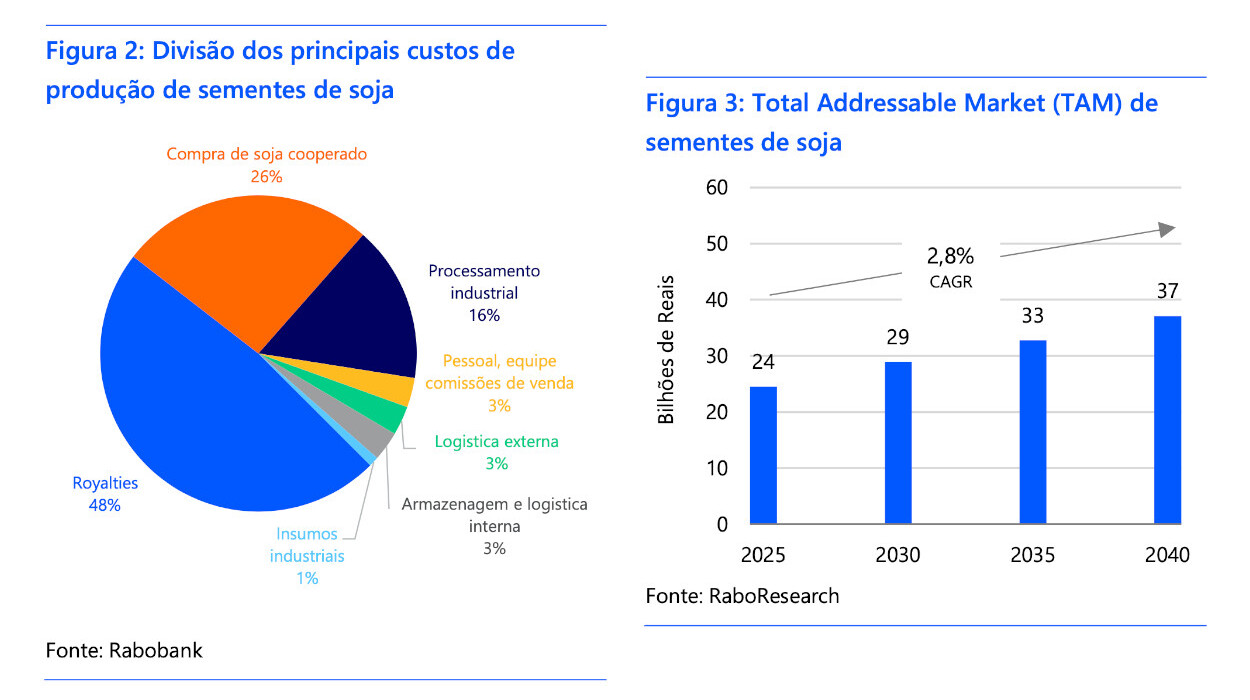
The Brazilian soybean seed market is expected to continue growing in the coming years, but at a slower pace and under pressure from high inventories, tight margins, and increased competition among companies. A study by RaboResearch estimates a total addressable market of approximately R$24,5 billion by the end of the 2024/25 crop season. This value could reach R$37 billion by 2040, with a compound annual growth rate of 2,8%.
The analysis points to a change in the sector's cycle. The growth in the area planted with soybeans has sustained the expansion of the seed market in recent decades. Between 2000 and 2025, the area dedicated to soybeans in Brazil grew at a compound annual growth rate of 5,1%. For the coming years, RaboResearch projects a slower pace, closer to 1,5% per year, given the crisis in producers' margins.
The cost of seeds is also expected to rise. The study predicts greater incorporation of technology into the seeds used by Brazilian producers. As a result, the cost per hectare should increase by at least 20% by 2040. The share of seeds in operational costs is likely to exceed the historical average of 11%.
The survey attributes part of the growth in Brazilian soybean production to seed improvements. National production increased from 32 million tons in the 1999/00 harvest to just over 170 million tons in 2024/25. The accumulated increase reached 430% in 25 years. In addition to the expansion of area, the study cites no-till farming, soil management, fertilization, pest and disease control, and genetic improvement as factors contributing to increased productivity.
Brazil also stood out in productivity. Between 2006 and 2025, Brazilian soybean productivity grew at a compound annual growth rate of 2,04%. In the United States, the increase was 1,07% during the same period. According to the study, varieties better adapted to Brazilian regions allowed for better expression of the genetic potential of the seeds.
Despite this history, the sector faces oversupply. The document points to two main factors. The first involves increased seed production and the entry of new participants between 2020 and 2023, a period marked by high margins. The second involves a change in demand. Many producers began to seek lower-cost seeds, while the market had prepared to sell higher-quality materials at higher prices.
The soybean seed supply chain in Brazil remains fragmented. According to data from the National Seed Production Registry cited in the study, the country has over 900 registrations for soybean seed production and 535 registrations for seed processing. The replication link brings together the largest number of participants, as it presents the lowest barrier to entry. Germplasm and biotechnology remain more concentrated.
The structure includes germplasm companies, responsible for the base genetics; biotechnology companies, responsible for transgenic events; replicators; cooperative members; processors; seed producers; and retailers. Seed producers operate under their own brand and can produce, process, and sell seeds. They can also hire cooperative members and processors to complete the operation.
A comparison with the United States shows that the Brazilian market is in the initial stages of consolidation. In the United States, the leading company holds close to 30% of the seed market. The four largest companies account for approximately 65%. In Brazil, the largest seed replication and sales company holds less than 10% of the market.
The study, however, suggests that Brazilian consolidation should not follow an immediate national model. Interviews with industry stakeholders indicated a greater likelihood of regional consolidation in the first phase. Efficient companies tend to gain market share in their areas of operation. A second phase could involve the formation of larger national groups.
Regional knowledge emerges as a decisive factor. The study cites the choice of varieties, producers' preferences, commercial relationships, and differences between local consumer markets. Growth strategies also vary by region. Mato Grosso shows a more aggressive profile among seed producers, in contrast to Bahia and Goiás.
Profitability explains part of the producers' entry into the activity. For cooperative members, the cost of producing soybean seed is close to the cost of soybean grain. The difference involves additional care to reduce grain damage and waste. The premium paid to cooperative members is usually around 10% above the market price of soybeans.
In the seed industry, the barrier to entry is rising. The activity requires working capital, technology, infrastructure, and feasibility analysis. The study points to royalties as the main cost in soybean seed production, accounting for almost 50% of the total. The purchase of soybeans from cooperative members accounts for 26%. Industrial processing represents 16%. Together, these items account for 90% of the costs.
Historical profit margins for seed companies range between 20% and 25%, according to RaboResearch. This level, coupled with the search for diversification, has attracted new entrants. This movement has increased fragmentation and raised the supply of seeds on the market.
The report also identifies a dilemma between scale and quality. Companies focused on quality may need to expand their portfolio as they grow. Larger seed companies cannot always deliver only the highest quality seeds. Companies focused on lower prices depend on scale and efficiency, but may need to invest in quality in regions with higher demands.
Germplasm and biotechnology may also undergo changes. The study points to the use of artificial intelligence and gene editing as factors capable of reducing development time and costs. This movement could lower barriers to entry in the medium and long term. Gene editing, however, still requires debate, according to the document.
The sector also faces short-term challenges. Credit management has gained importance. The seed market used to operate primarily on a cash basis. Financial pressure from producers has pushed some seed companies towards installment sales. This movement creates new risks for companies without a consolidated credit structure.
Seed piracy remains a significant problem. The study cites data from CropLife Brasil, according to which 11% of the national soybean market consists of pirated seeds.
Climate change completes the list of critical points. Companies must adapt varieties to warmer and drier environments without reducing the productivity expected by the producer. The report states that varieties already exist that are more resistant to abiotic stresses caused by lack of rain and high temperatures.
Receive the latest agriculture news by email


Receive the latest agriculture news by email