Honeybees dominate flowers and drive away other pollinators
Study identifies direct competition of Apis mellifera for shared floral resources
13.09.2026 | 15:52 (UTC -3)
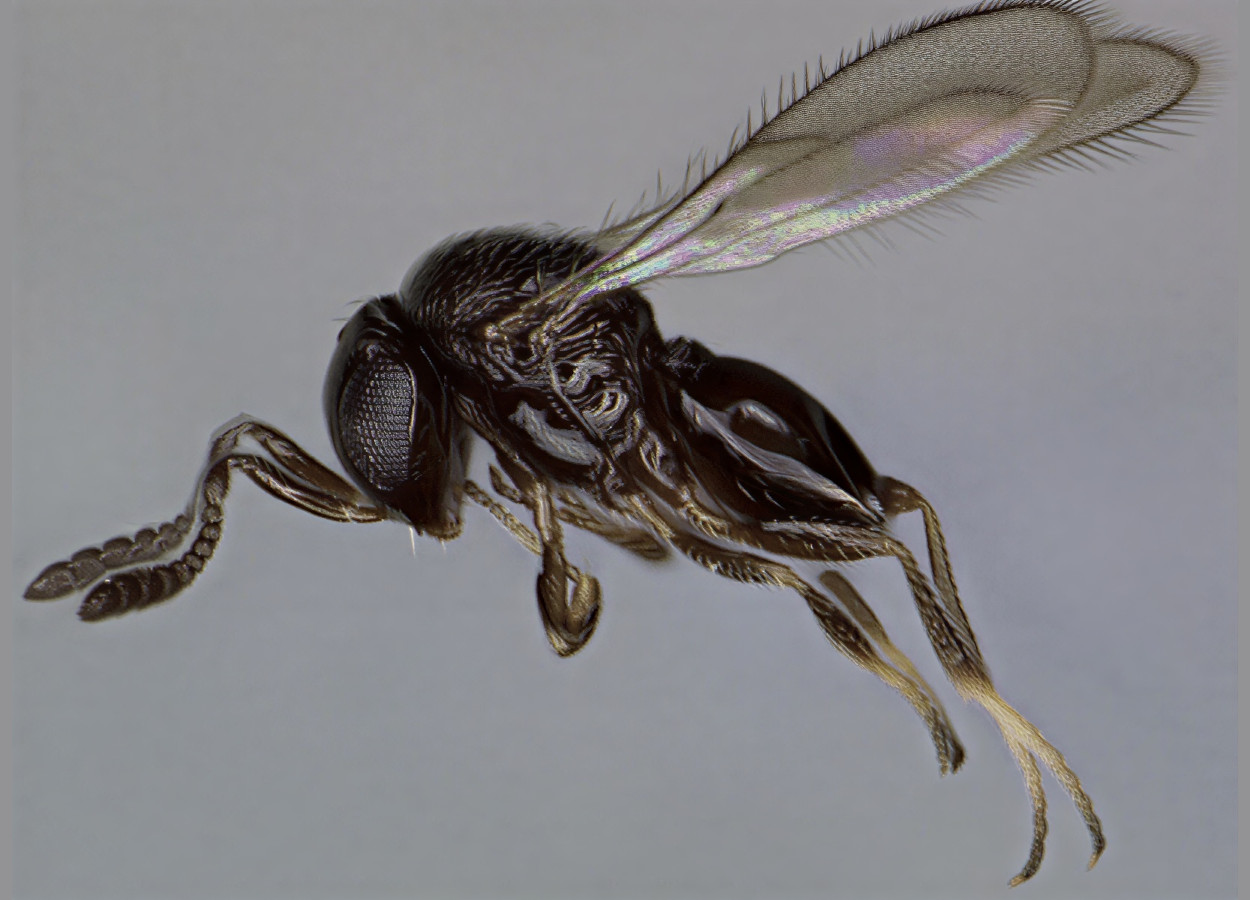
Telenomus remus showed a greater capacity for parasitism of Spodoptera frugiperda eggs compared to Trichogramma dendrolimi and Trichogramma chilonis. The study measured a rate of 70,25% for Telenomus remus. The values reached 41,54% for Trichogramma dendrolimi and 36,45% for Trichogramma chilonis.
The researchers who conducted the study evaluated the competition between the three species of egg parasitoids of the fall armyworm (doi 10.1002/ps.70997). The tests indicated the best performance of Telenomus remus. The species also generated a greater number of offspring and presented a higher proportion of females.
The team developed a molecular assay based on the ITS2 region for specific identification of parasitoids. The method allowed them to analyze competitive interactions and quantify parasitism potential.
Exponential regression models linked ITS2 gene expression levels to parasitism rates. According to the study, this approach allows for direct molecular assessment of parasitoid activity.
Receive the latest agriculture news by email


Receive the latest agriculture news by email