Guilherme Terribili takes on new role at EuroChem
Executive will now be responsible for the commercial and operations department of Cerrado, reinforcing the company's presence in the region
22.10.2025 | 17:39 (UTC -3)
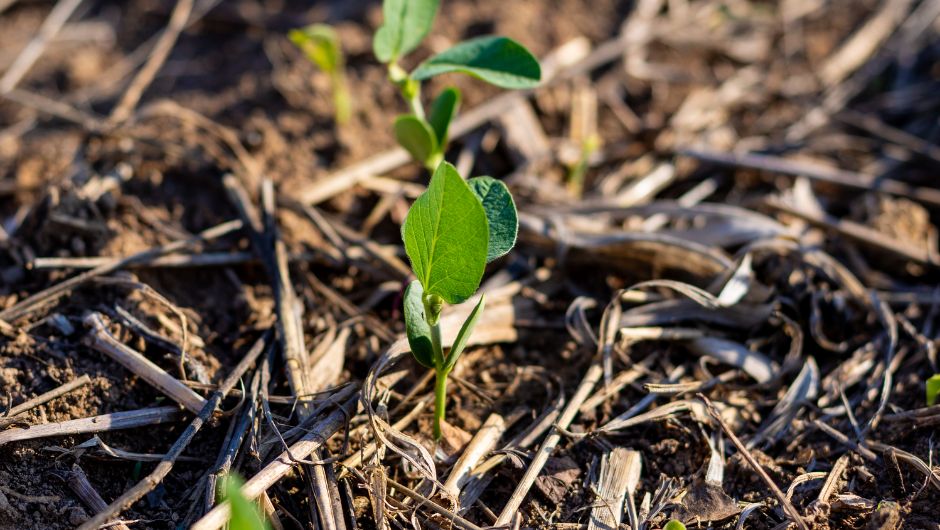
This Thursday (October 23rd) marks National No-Till Day, an agricultural system that has revolutionized soil management in Brazil since the 1970s and made the country a global benchmark for productivity while maintaining environmental conservation. In times of growing global food demand, preserving soil is more than a technique; it's a commitment to the future, advocated and encouraged by the Mato Grosso Soybean and Corn Producers Association (Aprosoja MT).
The No-Till System (NTS) consists of sowing crops directly onto the previous harvest's straw, without disturbing the soil. This system preserves soil fertility, reduces erosion, increases water infiltration, and retains carbon. For Jorge Diego Giacomelli, 2nd Administrative Director of Aprosoja MT, no-till farming is one of the pillars of sustainable agriculture in Mato Grosso.
"This is a revolution for Mato Grosso, because the Cerrado soils are very poor in fertility, and no-till farming significantly increases this fertility and allows for crop succession. To grow two crops, we usually use no-till farming: soybeans on corn straw and corn on soybean straw. This contributes to increased productivity, carbon sequestration in the crop, and producer profitability," he stated.
According to Giacomelli, Aprosoja MT has been strengthening the use of no-till farming through the Parecis and Araguaia Technology Centers (CTecnos), research units maintained by the organization. "The CTecnos conduct research directly related to no-till farming. The Research Centers study the best mulch for soil cover and, immediately after, disseminate the results of these studies to producers. Technical Rounds are also held in all centers throughout Mato Grosso, demonstrating the results and encouraging producers to apply these techniques on their properties. This makes Mato Grosso agriculture more sustainable and economically profitable," he explained.
According to Giacomelli, the entity's next steps involve intensifying research and expanding the adoption of the system, aiming to keep Mato Grosso at the forefront of sustainable production.
"Aprosoja MT, through CTecnos, will continue to promote research and Technical Rounds to exchange ideas with producers, because much progress happens on farms. Producers are teachers, scientists who are there day-to-day, introducing techniques that improve activities and production. And when they do this, they share them with others and with the organization itself so that we can further develop these practices on Mato Grosso's farms. This is already the present and will certainly be the future of Mato Grosso's agriculture. No-till farming is directly linked to production, soil conservation, profitability, and sustainability," the director added.
The West Vice President of Aprosoja MT and rural producer, Gilson Antunes de Melo, is one of those who adopted the system on his property and says that the change brought noticeable gains.
"No-till farming is one of the best things to happen in agriculture recently, because it's a win-win for those who use this system. You don't turn the soil, so the environment benefits. You have safer planting because you have a layer of straw on the soil that keeps more moisture and lowers the soil temperature, favoring the emergence of the plants you're growing. And of course, there's less machinery, less fuel, and even a reduction in production costs. We use no-till farming on 100% of our land because we understand it's the best way to produce safely and help the environment," he stated.
In addition to the productivity gains, Gilson highlights the positive environmental impact and the concern of Mato Grosso's rural producers for the environment. "More than just crop improvements, producers are also concerned about the environment. The figures for no-till farming show that it sequesters almost two tons of carbon dioxide. And this concern is widespread throughout the state, demonstrating the concern farmers have for the environment and nature," he concluded.
Receive the latest agriculture news by email



Receive the latest agriculture news by email