Greening threatens lemon supply and requires attention to orchards.
An incurable disease that compromises plants requires monitoring and control of the psyllid vector.
24.08.2026 | 17:10 (UTC -3)
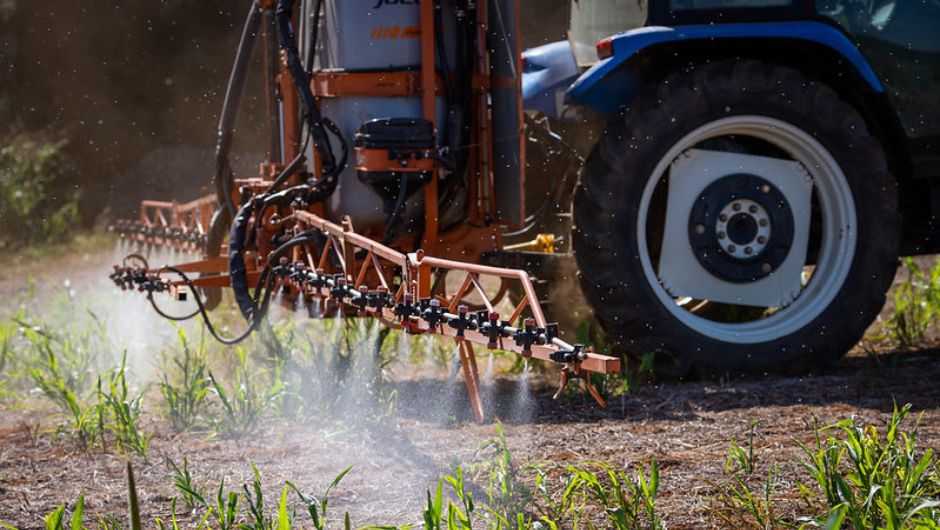
The Federation of Agriculture and Livestock of Mato Grosso (Famato) acted as amicus curiae in the judgment of the Direct Action of Unconstitutionality (ADI) that discussed the constitutionality of State Law No. 12.859/2025, which establishes criteria for the terrestrial application of pesticides in Mato Grosso. During the process, the entity presented legal arguments and technical information to the Court of Justice of Mato Grosso (TJMT) regarding agricultural activity, application technologies, and drift reduction measures.
The decision by the TJMT represents an important advance for the productive sector by recognizing the constitutionality of state legislation and, consequently, admitting differentiated criteria for minimum distances in the application of agricultural pesticides. Before the enactment of the law, the regulation of the Institute of Agricultural Defense (Indea) prevailed, which generally established a minimum distance of 90 meters, without the differentiation subsequently introduced by the legislator. With the judgment this Tuesday (25), the Court maintained the 90-meter distance for large properties, recognized the 25-meter distance for small and medium-sized properties and established, for small properties, specific treatment according to the application method.
In practice, the new scenario brings a regulation more suited to different productive realities. On small farms, up to four fiscal modules (a unit of measurement expressed in hectares, established by the National Institute for Colonization and Agrarian Reform for each municipality), manual or backpack spraying may be carried out without a minimum distance, provided that other legal and technical requirements are observed. For mechanized or tractor-mounted spraying on these properties, the TJMT (Court of Justice of Mato Grosso) has set a minimum distance of 25 meters.
Thus, although the ruling established this specific limitation for mechanized application on small farms, the overall result is positive, as it overcomes the old logic of indiscriminate application of the 90-meter rule and consolidates, in a law recognized as constitutional by the Court, criteria proportional to the size of the property and the method of application.
Therefore, before applying pesticides, the producer must verify the size of the property and which method will be used. For large properties, the requirement remains 90 meters; for medium-sized properties, 25 meters; and for small properties, the distance will depend on the application method. If the operation is manual or backpack sprayer, there is no minimum distance established by the decision. If it is carried out with a machine or tractor, 25 meters must be observed.
The producer must also observe the requirements stipulated in the product leaflets and labels, registrations, licenses, and other applicable federal, state, and municipal regulations. If there is a more restrictive requirement, it must be respected.
Another important point is that the safety of the application does not depend solely on physical distance. During its participation in the process, the entity presented technical arguments demonstrating that factors such as droplet size, spray nozzle type, equipment pressure, weather conditions, machinery calibration, technology used, and operator training directly influence the potential for drift.
Drift occurs when droplets or particles of the product move outside the area being treated. Therefore, even when the minimum distance stipulated in the decision is being met, the producer must plan the operation considering conditions such as wind speed and direction, temperature, humidity, droplet size, pressure and height of the spray boom, as well as the maintenance and adjustment conditions of the equipment.
According to Famato's legal manager, Rodrigo Bressane, the organization argues that the regulation of pesticide application should consider technological advancements and best practices adopted in the field. Modern equipment, air-induction spray nozzles, drift control systems, meteorological sensors, and precision agriculture technologies are tools that can contribute to greater control of application and reduced dispersion to non-target areas.
“Famato’s involvement in the process sought to contribute to a discussion that considered not only environmental protection, but also the reality of agricultural production and available technological advancements. It also argued that legislation should reconcile environmental protection, new technologies, and the social function of property with sustainable economic development, guaranteeing operational and legal security for the use of pesticides,” explains Bressane.
The decision by the TJMT (Court of Justice of Mato Grosso) reinforces the importance of establishing criteria that reconcile environmental protection and safety with the reality of agricultural production. The entity argues that regulations on the use of pesticides should be based on scientific evidence, technical criteria, and advances in application technologies, considering that risk reduction depends not only on distances but also on adequate equipment, weather conditions, operator training, and good agricultural practices.
"The Federation will continue to monitor the developments of the decision and work to ensure that the regulations applicable to the sector promote legal certainty for producers, environmental protection, and conditions for the continuation of responsible production in Mato Grosso," the manager emphasizes.
Receive the latest agriculture news by email



Receive the latest agriculture news by email