Research identifies genes linked to Spodoptera exigua's tolerance to insecticides
Study identifies three genes associated with reduced susceptibility to cyantraniliprole and chlorantraniliprole.
01.11.2026 | 09:36 (UTC -3)
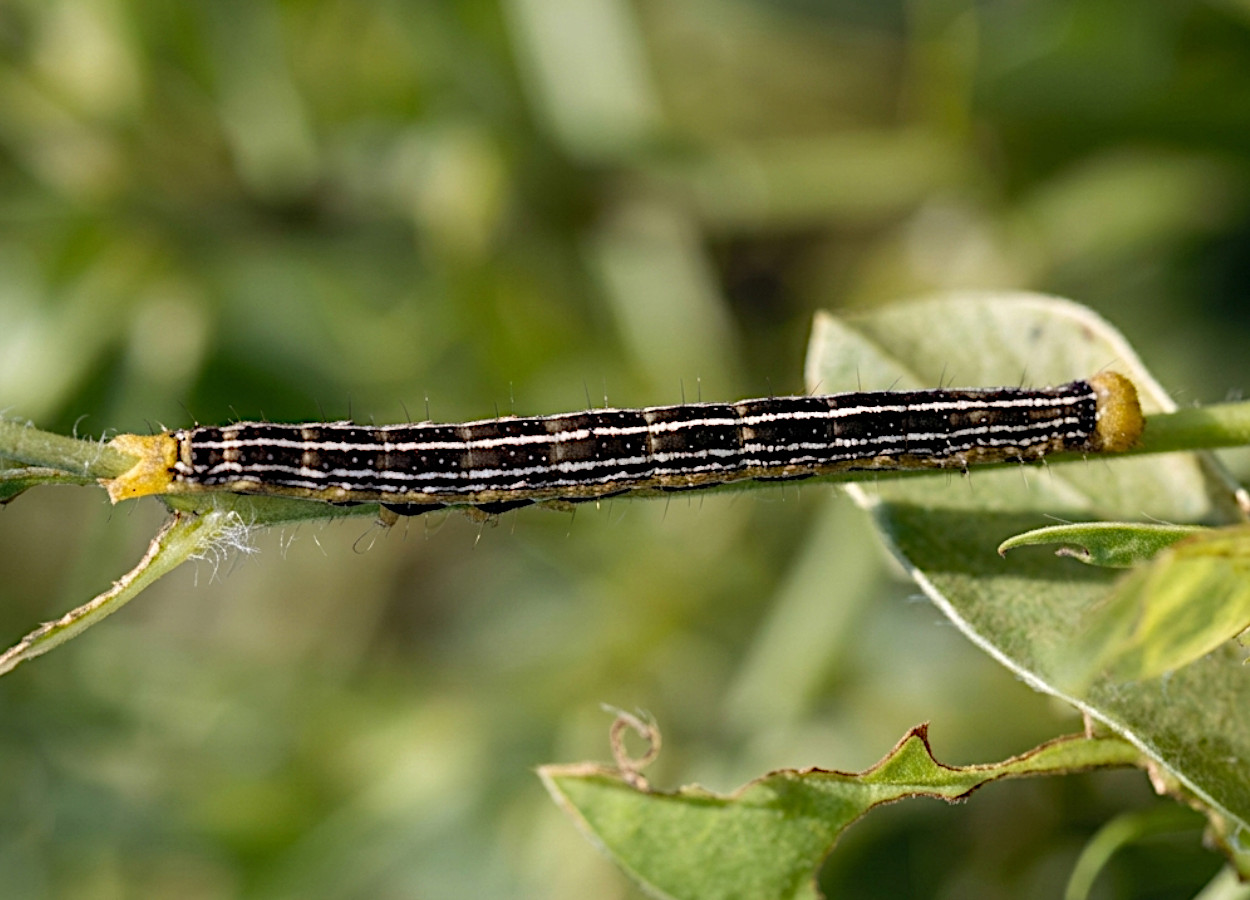
Researchers from the Federal University of Viçosa (UFV) and the University of Vale do Taquari (Univates) have identified the potential of a synthetic peptide for controlling the soybean caterpillar (Anticarsia gemmatalis). The GORE3 molecule reduced leaf consumption by the pest by approximately 73% under laboratory conditions. The treatment also compromised digestive enzymes, caused oxidative stress, and decreased caterpillar survival.
The study evaluated the ability of GORE3 to inhibit trypsin-like enzymes, responsible for protein digestion in the insect gut. The team compared its effects with those of benzamidine, a synthetic inhibitor, and the Kunitz trypsin inhibitor from soybeans (SKTI), a protein involved in plant defense.
The experiment used 400 third-instar caterpillars, distributed among four treatments. The researchers incorporated the inhibitors into the artificial diet at a concentration of 0,1% and monitored physiological responses after 24, 48, 72, and 96 hours of exposure.
In leaf consumption trials, caterpillars received corn leaves (Zea mays) treated with the compounds. After 30 hours, the control group consumed an average of 10,6 square centimeters of leaf area. Consumption decreased to 6,03 square centimeters with benzamidine and 5,11 square centimeters with SKTI. GORE3 showed the greatest effect, with an average consumption of 2,91 square centimeters.
All treatments significantly reduced feeding. The results also indicated a lower preference of the caterpillars for the treated substrates. The reduction in consumption represents a relevant effect for management strategies, as it limits leaf damage even without causing immediate mortality.
GORE3 is a pentapeptide developed through rational molecular design, based on characteristics of the trypsin regulatory region. Its structure incorporates hydrophobic regions and a terminal tyrosine residue to promote interactions with digestive enzymes.
Computer simulations indicated favorable interactions between GORE3 and three trypsin isoforms from Anticarsia gemmatalis. The estimated average binding energy reached -8,82 kilocalories per mole, compared to -5,68 kilocalories per mole for benzamidine.
The researchers emphasized the predictive nature of these values. The computational estimates do not represent direct experimental measures of affinity.
Biochemical assays confirmed distinct mechanisms of inhibition. Benzamidine exhibited competitive behavior, with an inhibition constant of 0,042 millimoles per liter. GORE3 showed mixed inhibition, with a constant of 0,26 millimoles per liter.
This mechanism allows GORE3 to interfere with enzymatic activity without relying exclusively on competition with the substrate for the catalytic site. The action modifies parameters related to the reaction rate and the apparent affinity of the enzyme for the substrate.
Protease activity also varied according to exposure time. After 48 hours, GORE3 and benzamidine reduced total proteolytic activity. The effect of GORE3 persisted after 72 hours. After 96 hours, all treatments showed lower activity than the control group.
The behavior of SKTI revealed initial compensatory responses, with increased proteolytic activity at certain times. This adaptation indicates attempts by the insect to preserve digestion in the face of inhibitors.
The research identified effects beyond digestion. Exposure to the inhibitors altered the activity of antioxidant and detoxification enzymes, including catalase, superoxide dismutase, glutathione S-transferase, and peroxidase.
The treatments also altered indicators of oxidative stress. Among these, the researchers evaluated hydrogen peroxide, nitric oxide, lipid peroxidation, and the formation of protein carbonyls.
Responses varied depending on the compound and the exposure period. Initially, caterpillars activated antioxidant mechanisms to compensate for the increase in reactive oxygen species. Prolonged exposure, especially to GORE3, caused an accumulation of indicators of cellular damage.
The combination of impaired digestion and oxidative imbalance can increase the metabolic cost of insect defense responses. According to researchers, this condition helps explain the reduction in feeding and biological performance.
The survival analysis involved 160 caterpillars, with 40 individuals per treatment. Only GORE3 caused a statistically significant reduction in survival compared to the control. Benzamidine and SKTI did not show significant differences in this parameter.
The results indicate the potential of GORE3 as a molecule for the development of management strategies based on the inhibition of digestive proteases.
The research, however, used controlled laboratory conditions. The results do not demonstrate agronomic efficacy in soybean crops. The study also does not present field evaluations, selectivity on non-target organisms, or performance of commercial formulations (doi 10.1002/ps.71448).
The work was carried out by scientists Daniel Guimarães Silva Paulo, Eulálio Gutemberg Dias dos Santos, Pablo Fernandes Braga, Geisiane Aparecida Mariano, Wesley Borges Wurlitzer, Julia Renata Shnneider, Milena Godoi Lima, Tauanne Gonçalves Ferreira, Guilherme Faria dos Santos, Rafael Júnior de Andrade, Noeli Juarez Ferla, José Eduardo Serrão, Neilier Rodrigues da Silva Júnior, Humberto Josué Ramos de Oliveira, and Maria Goreti de Almeida Oliveira.
Receive the latest agriculture news by email



Receive the latest agriculture news by email