Mosaic reports a loss of US$72 million in the third quarter
The result contrasts with a profit of US$411 million in 2025; Brazilian operations register a drop in sales
03.11.2026 | 19:01 (UTC -3)
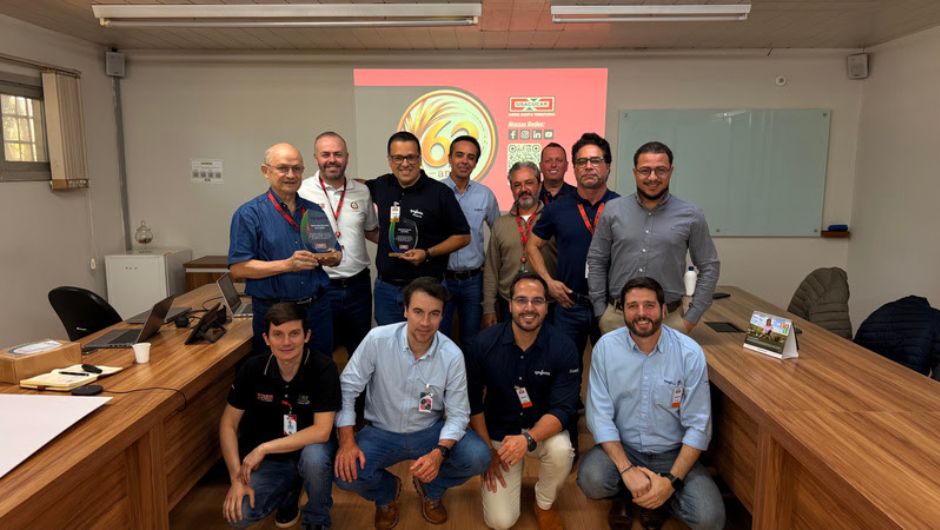
Syngenta and Usina Santa Terezinha, from Maringá (PR), concluded a pioneering operation involving Decarbonization Credits (CBIOs). The transaction was aimed at acquiring chemical and biological inputs for crop protection destined for sugarcane production, connecting biofuel production, generation of environmental credits, and investment in technologies for the field. In total, the transaction corresponded to R$ 370 in orders.
This model operates through a CBIOs (Carbon Credits) Operational Agreement focused on the commercialization of innovative crop protection technologies. These credits are traded on the stock exchange, issued by biofuel producers proportionally to the amount of emissions they avoid compared to fossil fuels. Each credit is equivalent to one ton of carbon dioxide that was prevented from entering the atmosphere. In the partnership between the agricultural giant and the sugar mill, each transaction is detailed in a specific adhesion agreement, which defines the commercial conditions and the volume of credits to be liquidated to contribute to the acquisition of Syngenta products.
The model demonstrates how the goals and mechanisms of the National Biofuels Policy (RenovaBio) can be translated into practical operational decisions. Under this dynamic, the commercialization of credits generated by the production of renewable fuel directly finances sustainable solutions for agriculture itself, creating a continuous cycle of innovation and environmental efficiency.
According to Henrique Franco, Commercial Director for sugarcane at Syngenta, the objective of the partnership is to integrate crop protection technologies with decarbonization incentives, promoting the use of innovative solutions to enhance the sustainable sugarcane cycle. This was Syngenta's first CBIO (Brazilian Carbon Credit) transaction in the sugarcane sector and represents an important step in building connections between biofuel production, agriculture, and the decarbonization agenda. "By enabling the acquisition of agricultural innovations through CBIOs, we demonstrate how environmental efficiency can be transformed into investment applied to production," says the executive.
According to Syngenta's Sustainability Coordinator, Gabriel Moura, the initiative works to bridge the gap between biofuel production, the generation of environmental credits, and investment in agricultural technologies. "By using CBIOs (Environmental Credits) as a payment method, we are reinforcing the importance of financial instruments in the transition to a low-carbon economy, opening opportunities for new discussions about the strategic use of this type of credit in the sector," he explains.
Beyond the financial dimension, the initiative leads to a differentiation strategy in the sector, as pointed out by Leandro Boncompagni, Marketing and Crops Manager at Syngenta. “We are experiencing a new era in sugarcane cultivation, marked by major launches and constant innovations. In this scenario, the CBIO (Brazilian Carbon Credit) modality acts as a true catalyst, accelerating the adoption and dissemination of these innovations.”
For Paulo Meneguetti, CEO of Usina Santa Terezinha, the partnership opens strategic avenues in the management of its assets. “CBIOs materialize, in economic value, part of the environmental results achieved in biofuel production. This partnership expands the possibilities for using this asset by allowing the credits generated by our operation to be converted into investment in the agricultural activity itself, through the acquisition of technologies and inputs for sugarcane production. It's a dynamic that connects environmental efficiency, innovation, and value creation, while also contributing to the development and consolidation of the CBIO market,” he emphasizes.
By demonstrating the practical viability of this model with CBIOs, the companies aim to stimulate a new perspective on the strategic use of credits throughout the renewable fuels chain, reaching both sugarcane and corn ethanol producers. “The integration between the environmental capital market and agricultural supply reinforces how innovation can drive the transition towards a low-carbon economy in agribusiness. Syngenta's purpose is to bring disruptive innovations to farmers in all fields. This new development is a great example of this mission,” celebrates Franco.
Receive the latest agriculture news by email



Receive the latest agriculture news by email