Brazil's Supreme Court upholds the Soy Moratorium and ends lawsuits regarding the agreement
The court also upholds laws in Mato Grosso and Rondônia that restrict incentives for companies that adhere to environmental agreements
13.08.2026 | 08:57 (UTC -3)
Cezar Camilo, Cultivar Magazine edition
Photo: Antonio Augusto
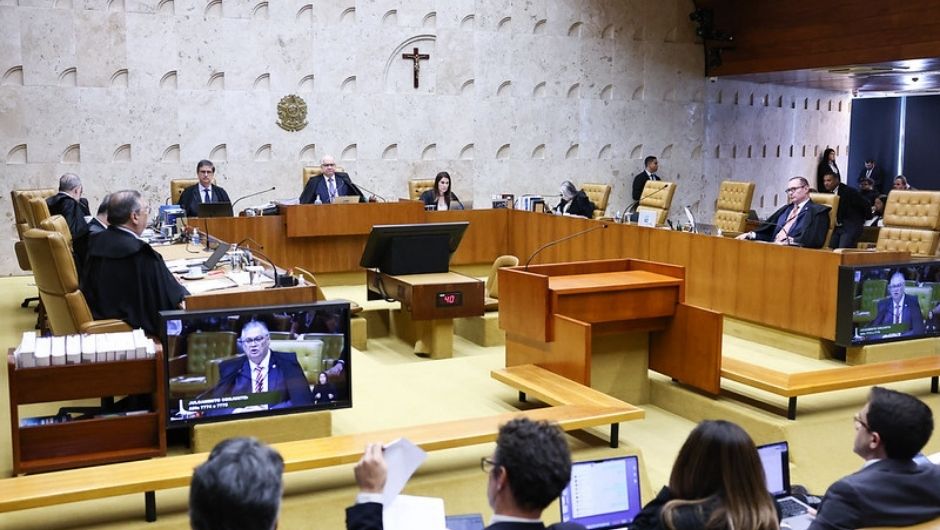
The Plenary of the Supreme Federal Court (STF) recognized, by majority vote, the constitutionality of the Soy Moratorium and ordered the dismissal of judicial and administrative proceedings questioning the legality of the agreement that restricts the purchase of soy produced in deforested areas of the Amazon. The decision was made this Wednesday (August 12), during the joint trial of Direct Actions of Unconstitutionality (ADIs) 7774 and 7775.
The Court also deemed constitutional the laws of Mato Grosso and Rondônia that restrict the granting of tax benefits and other public incentives to companies that participate in agreements with environmental rules that are more stringent than those stipulated in the legislation.
Soy Moratorium
Created in 2006, the Soy Moratorium is a voluntary agreement signed by companies in the sector that commit to not purchasing soy produced in areas of the Amazon biome deforested after July 2008. The objective is to decouple soybean production from deforestation in the region.
In ADI 7774, reported by Minister Flávio Dino, political parties challenged Law 12.709/2024 of Mato Grosso. This law prevents the granting of tax incentives and public land to companies participating in agreements aimed at restricting agricultural expansion in areas not protected by environmental legislation.
Meanwhile, ADI 7775, reported by Minister Dias Toffoli, deals with a similar rule provided for in Law 5.837/2024 of Rondônia.
The parties argued that the state regulations would harm companies that voluntarily adopt stricter environmental standards than those required by law, by removing incentives for participants in agreements such as the Soy Moratorium.
Free Initiative
In the ruling, Minister Flávio Dino's understanding prevailed that the Soy Moratorium is compatible with the Federal Constitution.
According to Dino, companies can establish stricter environmental criteria for selecting their suppliers, without the government being obliged to adopt the same parameters when granting incentives. For the minister, the moratorium results from the exercise of private autonomy and free enterprise combined with environmental protection.
Dino also highlighted that the decision seeks to increase legal certainty for the sector and prevent the continuation of processes that could generate liabilities in the billions, with impacts on credit, investments, and exports.
Minister Dias Toffoli dissented regarding the validity of the Soy Moratorium and the dismissal of lawsuits related to the agreement. In his assessment, the Direct Actions of Unconstitutionality (ADIs) should be limited to the analysis of state laws, while any anti-competitive practices should be examined by the Administrative Council for Economic Defense (Cade). On this point, Toffoli was joined by Ministers André Mendonça and Luiz Fux.
State laws
By majority vote, the Supreme Federal Court (STF) upheld the validity of the laws of Mato Grosso and Rondônia that establish conditions for granting tax benefits and public land.
The plenary session, however, established limits for the withdrawal or reduction of tax benefits. Unanimously, the ministers determined that any changes can only take effect after the tax deadlines stipulated in the Constitution have been met. As a rule, this means application in the following fiscal year and/or after 90 days, as the case may be.
The Court also preserved exemptions granted under conditions already agreed to by the taxpayer, as established by Precedent 544 of the Supreme Federal Court (STF). The adjustment was proposed by Toffoli and incorporated by Dino into the winning vote.
Environmental standards
The president of the Supreme Federal Court (STF), Justice Edson Fachin, deemed the state laws entirely unconstitutional, arguing that they harm companies that adopt higher standards of environmental protection.
Fachin, however, agreed with Dino regarding the compatibility of the Soy Moratorium with the Constitution and the dismissal of lawsuits related to the agreement.
The trial of the two ADIs began in March of this year. After the oral arguments, the controversy was referred to the Supreme Court's Center for Consensual Conflict Resolution (Nusol), but the attempt at conciliation ended without an agreement.
Famato expresses concern about the decision.
The Federation of Agriculture and Livestock of Mato Grosso (Famato) received part of the Supreme Court's decision with respect, but also with concern. The organization considers the preservation of states' autonomy to establish criteria for granting tax incentives to be positive, but questions the recognition of the validity of the Soy Moratorium and, especially, the dismissal of the proceedings discussing the agreement, including the procedure underway at the Administrative Council for Economic Defense (Cade).
According to Famato, any potential impacts of the Moratorium on free enterprise and free competition should be technically analyzed by Cade (Brazil's antitrust authority). The organization states that it will continue to monitor the issue and defend the right of producers who comply with the legislation to have legal security and be able to produce and market their products without additional restrictions imposed by private mechanisms. According to the Federation, in the Amazon biome, producers are subject to the requirement to preserve up to 80% of their rural properties, and compliance with the legislation must ensure equal treatment for the sector.