New baculovirus controls Cydia pomonella in orchard
CypoNPV showed high pathogenicity in the laboratory and control of up to 77,78% in the field
06.09.2026 | 16:14 (UTC -3)
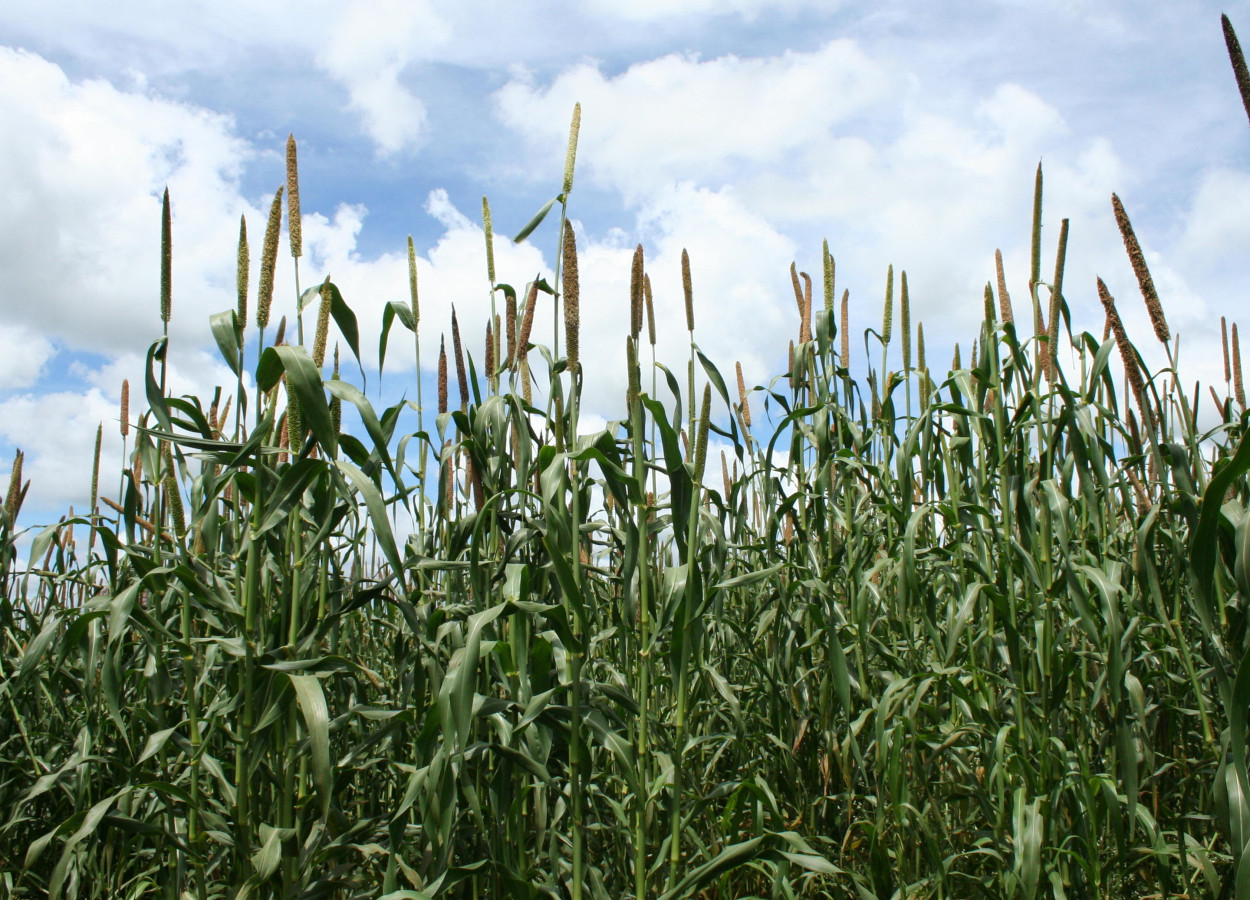
Millet (Pennisetum glaucum) seeds can carry phytopathogenic fungi and transmit the inoculum to seedlings. Researchers from the Federal University of Tocantins and Embrapa Maize and Sorghum confirmed the transmission of the genera Curvularia, Exserohilum, and Fusarium in four cultivars. The tests also indicated differences in virulence between isolates and greater susceptibility of the ADR 300 cultivar to some of the pathogens evaluated.
The study evaluated BRS 1501, BRS 1502, BRS 1503, and ADR 300. Sanitary analysis detected 11 genera of fungi in the seeds. The group included five genera associated with storage: Cladosporium, Nigrospora, Aspergillus, Penicillium, and Mucor. Six others showed phytopathogenic importance: Alternaria, Colletotrichum, Sclerotium, Exserohilum, Curvularia, and Fusarium (doi 10.3390/seeds5050056).
The total incidence of fungi reached high levels in seeds without surface disinfection. BRS 1502 showed an incidence of 91%. BRS 1501 registered 76%. Disinfestation reduced the occurrence of fungi in all cultivars. Even after treatment, some genera remained in the seeds. The result suggests internal colonization or a closer association with the tissues.
Six genera appeared in both disinfected and untreated seeds: Exserohilum, Cladosporium, Curvularia, Fusarium, Alternaria, and Aspergillus. The persistence of these fungi reinforces the limitations of procedures focused solely on the seed surface.
The researchers applied 50% ethanol for 30 seconds and 1% sodium hypochlorite for 40 seconds for surface disinfection. Afterwards, they washed the seeds three times with sterile distilled water. The procedure reduced contamination but did not eliminate all detected fungi.
Exserohilum and Curvularia occurred in all four cultivars, with or without pest control. Among the untreated seeds, BRS 1502 showed the highest incidence of Exserohilum. BRS 1503 showed the highest incidence of Curvularia. Statistical analysis indicated the influence of the cultivar, pest control, and the interaction between the two factors on the incidence of these genera.
The study progressed from seed detection to evaluating transmission to plants. Researchers sowed disinfected and non-disinfested seeds in sterilized sand. After sowing, they monitored the plants for 25 days. Curvularia, Exserohilum, and Fusarium passed from seeds to seedlings under both conditions evaluated. Curvularia and Exserohilum caused leaf spots. Fusarium caused wilting.
The highest transmission rate of Exserohilum occurred in ADR 300 without disinfestation, at 24%. In the same cultivar, Fusarium reached 18% and Curvularia, 11%. After disinfestation, the rates dropped to 13%, 10%, and 8%, respectively.
BRS 1502 showed transmission rates of 18% for Fusarium, 13% for Exserohilum, and 10% for Curvularia in non-disinfested seeds. BRS 1501 registered 13% for Exserohilum and Fusarium and 11% for Curvularia. In BRS 1503, the values reached 11% for Exserohilum and Fusarium and 9% for Curvularia.
Germination varied among cultivars. BRS 1503 reached 98% in both treatments. BRS 1502 registered 92% in seeds without disinfestation and 91% in disinfested seeds. BRS 1501 showed 88% and 87%. ADR 300 reached 85% and 80%.
Virulence assays showed differences between isolates. Ten isolates of Exserohilum and ten of Curvularia were evaluated in the ADR 300 cultivar. For Exserohilum, isolates 1 and 2 produced the highest severity indices. Isolate 2 reached 63%. For Curvularia, isolates 6 and 9 showed the highest values. Isolate 9 reached 63%.
The response also varied among cultivars. For Exserohilum, ADR 300 showed a severity index of up to 60% and had the highest susceptibility among the materials evaluated. BRS 1503 registered the lowest level, around 45%, but remained classified as susceptible according to the scale adopted in the study.
For Curvularia, ADR 300 and BRS 1501 reached 56% severity with one of the isolates and received a high susceptibility classification. BRS 1502 presented the lowest index in this assay, with 27%, a range classified as moderately susceptible.
The results indicate an epidemiological role for millet seeds as a primary inoculum source. The risk becomes more significant in crop rotation and cover cropping systems. Infected seeds can introduce pathogens into the area. These fungi can also remain in crop residues or in the soil and reach subsequent crops.
Researchers recommend sanitary seed analysis, use of pathogen-free seed lots, seed treatment, and integrated disease management. The study highlights another limitation: the identification of fungi occurred at the genus level, based on morphological characteristics. The researchers point to the need for molecular identification at the species level and additional evaluations in greenhouses and in the field.
The research was conducted by Manuel A. Gonzalez, Osmany M. Herrera, Bruna L. Dias, Ildon R. Nascimento, Marcos V. Giongo, Dalmarcia S. Mourão, Paulo R. Fernandes, Leandro A. Souza, Marcos G. Silva, Maria J. Gonzalez, Rodrigo V. da Costa, Dagma D. Araújo, Luciano V. Cota, Gil R. Santos, and Luis O. Viteri.
Receive the latest agriculture news by email


Receive the latest agriculture news by email