Field Day of the AgroBrasília 2023 Soybean Cultivar Competition receives 580 people
The traditional Field Day was attended by 24 companies and 75 materials
27.02.2023 | 15:51 (UTC -3)
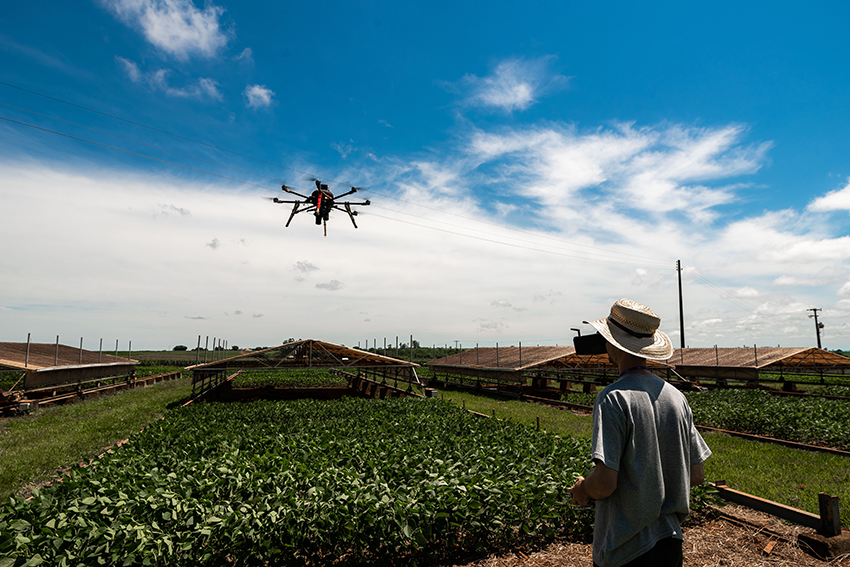
The traditional summer Field Day, promoted by Embrapa Soja, in partnership with the Southern Research Support Foundation, will be held on March 03, from 8am to 12pm, at the Embrapa Soja Technology Showcase, in Londrina (PR). The program will cover themes divided into five technical stations: Soybean spraying with agricultural drones, Bioinputs in the production system, Benefits of Block Technology in the management of stink bugs, Bean Cultivars and Soybean Cultivars.
Embrapa Soja researchers are carrying out several studies to evaluate the performance of agricultural drones as spraying vehicles to control pests, diseases and weeds. Some results will be presented to Field Day participants, as well as the drone spraying demonstration.
Researcher Rafael Soares explains that drones have been compared with other methods, such as tractors and knapsack sprayers, for applying chemical and biological products. Soares has been evaluating technical parameters for the use of drones to control Asian rust. With the aim of evaluating the spraying of fungicides to control Asian rust, Soares has been comparing different application methods: drone, trailed tractor and CO2-pressurized backpack.
In pest control, applications have already been evaluated for brown stink bug and the Rachiplusia nu caterpillar. Regarding stink bugs, researcher Samuel Roggia explains that the use of drones is capable of reaching the pest in parts of soybean plants that are not normally reached by traditional spraying methods, such as the interior of the canopy (aerial part of the plant). Roggia has also been researching the different applications of the biological insecticide baculovirus in controlling the caterpillar Rachiplusia nu, which has not been efficiently controlled by Bt soybeans (genetically modified with genes from the bacteria Bacillus thuringiensis), due to the insect's resistance. According to the researcher, the application of baculovirus requires specific environmental conditions and an appropriate developmental stage of the caterpillars. “In this context, spraying with a drone represents an important operational advantage, because it allows applications to be carried out in situations where there are restrictions on spraying using a tractor, for example, right after a rain, such as very wet soil”, he highlights.
Another highlight on Field Day will be the presentation of the use of bioinputs in different production systems. Researchers Mariangela Virgínia and Marco Antonio Nogueira, from Embrapa Soja, will demonstrate the advantages of adopting inoculants in soybean, corn and brachiaria crops. In soybeans, the co-inoculation of seeds with the bacteria Rhizobium fixing nitrogen (N) and Azospirillum which promote the increase of the root system, provides several benefits, such as greater use of fertilizers, favors the plant in situations of water stress, promoting an increase in productivity due to greater nutrient and water absorption capacity by the roots.
In the case of corn, research results indicate that seeds inoculated with the bacterium Azospirillum brasilense (strains Ab-V5 and Ab-V6) have the possibility of reducing nitrogen top dressing by 25%, considering a dose of 90 kilograms (kg) per hectare of Nitrogen. It also allows an average increase of 3,1% in grain productivity.
On the other hand, pasture inoculation technology combines microorganisms with multifunctional properties (Azospirillum brasilense and Pseudomonas fluorescens) and has the potential to increase the production of pastures with brachiaria by an average of 22%. In the case of the Azospirillum bacterium, inoculation via seeds or leaves resulted in an average increase of 13% in the concentration of N and 10% in K. In turn, inoculation with Pseudomonas via seeds or leaves resulted in an increase in biomass , 11% in potassium (K) and 30% in phosphorus (P).
Cultivars with Block genetics, which have greater tolerance to stink bugs, a pest that sucks soybean pods and grains, will also be presented at Field Day. The technology minimizes the destructive action of this pest and is compatible with the use of insecticides, allowing better coexistence with insects in the field. The adoption of tolerant cultivars increases the various tactics used in Integrated Pest Management (IPM-Soja). Researcher Clara Beatriz Hoffmann explains that soybean cultivars tolerant to stink bugs, when compared to susceptible cultivars - subjected to the same pest population - present less loss (yield, grain quality, among others).
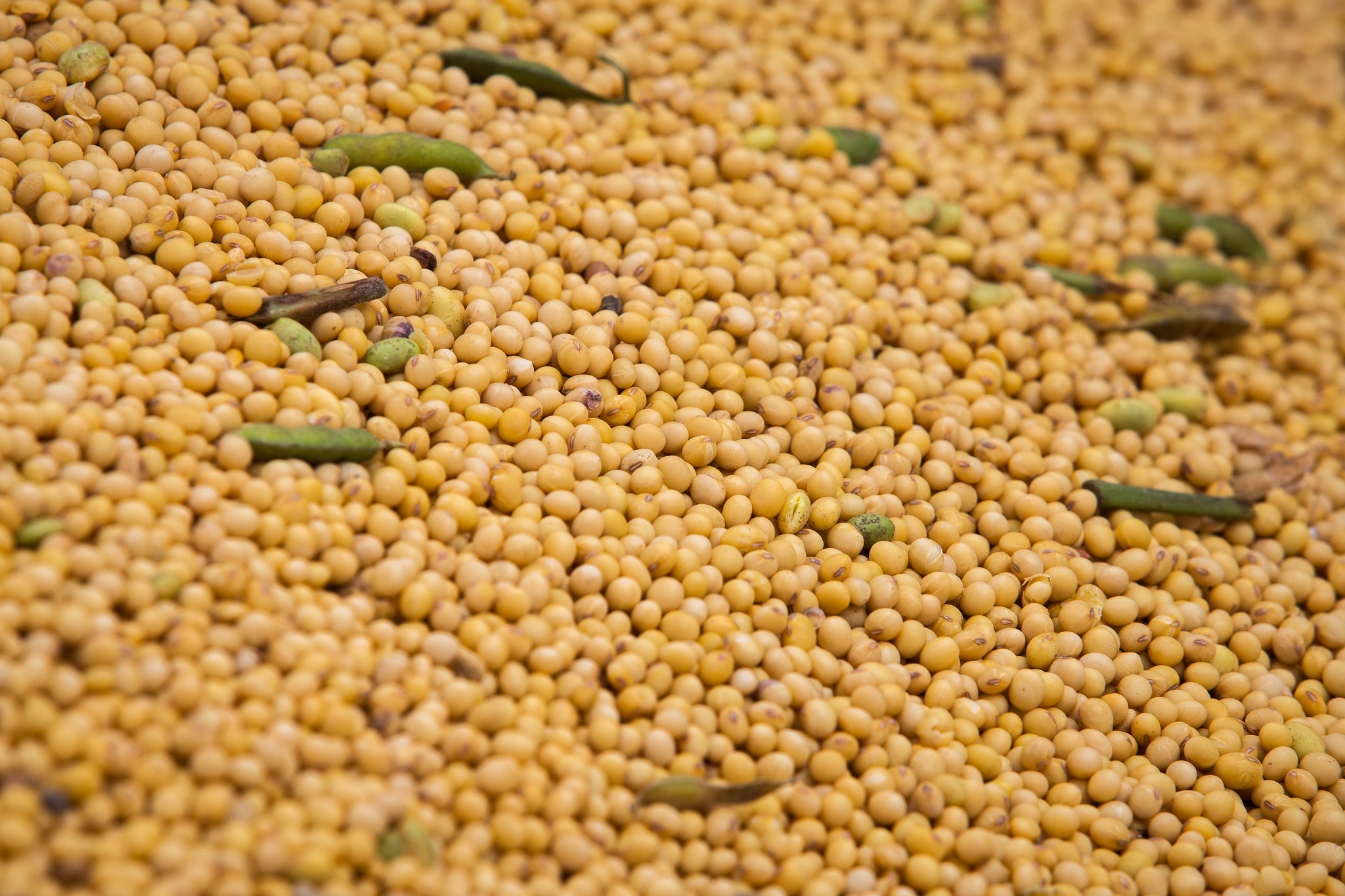
Among the soybean cultivars, four conventional cultivars (BRS 539, BRS 511, BRS 546 and BRS 317) and 10 transgenic cultivars (BRS 1054 IPRO, BRS 1061IPRO, BRS 1064 IPRO, BRS 1003 IPRO, BRS 1056 IPRO, BRS 388RR) will be on display. , BRS 559RR, BRS 2562 XTD, BRS 2560XTD, BRS 2558 XTD).
Embrapa will also be demonstrating the bean cultivars for Paraná: BRS Estilo, BRS FC310, BRS FC415, BRS FC402, BRS FS311, BRS FP403.
Bioinputs in the production system;
Benefits of Block Technology in managing bedbugs;
Soybean spraying with agricultural drones – Samuel/Rafael;
Bean Cultivars;
Soybean Cultivars.
Service
Summer Field Day
Order date: March 3
Open Hours: 8 am - 12 pm
Location: Embrapa Soja Technologies Showcase – Rod. Carlos João Strass, s/n, Warta District, Londrina (Paraná).
Registration fee: official website
In case of rain, the event will be held at the Embrapa Soja Auditorium
Receive the latest agriculture news by email


Receive the latest agriculture news by email