Inmet: weather forecast between February 16th and March 23nd.
A frontal system is expected to cause instability in the South between Tuesday and Thursday.
16.03.2026 | 16:13 (UTC -3)
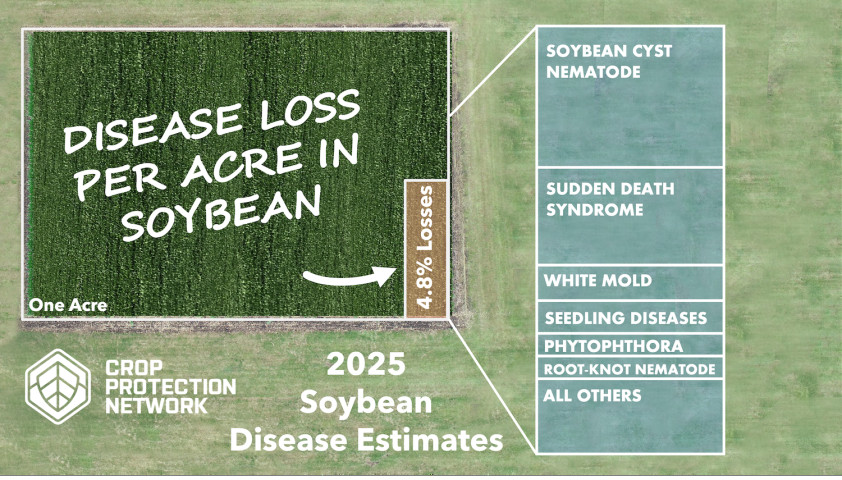
The 2025 soybean crop registered a 4,8% loss in yield potential in the United States. In Ontario, Canada, the loss reached 4,5%. The survey covered 29 US states. The data comes from the Crop Protection Network, a collaborative entity between agricultural universities in the US and Canada.
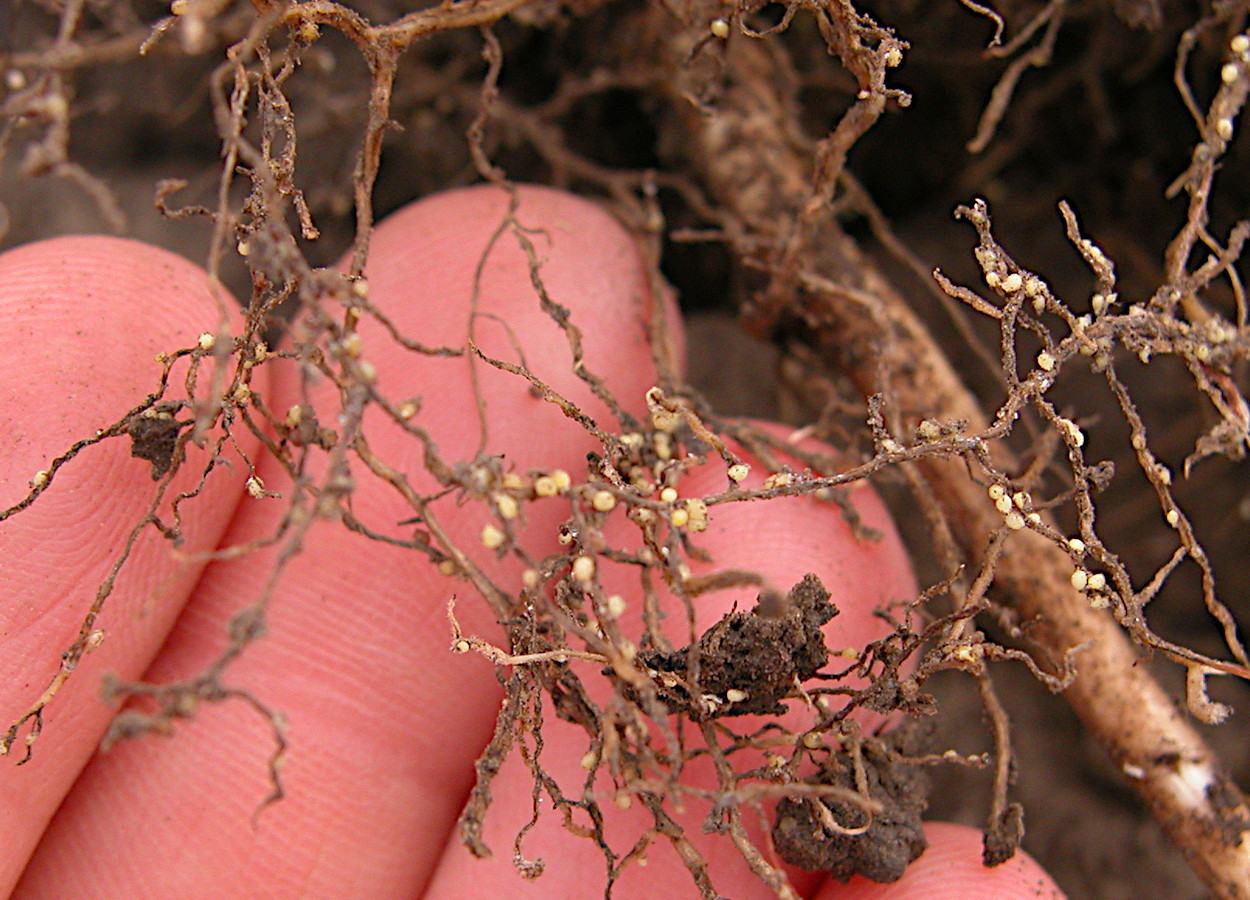
The soybean cyst nematode (Heterodera glycinesThe pathogen led the losses. It caused a reduction of 70,1 million bushels. Sudden death syndrome, associated with Fusarium virguliforme, occupied the second position. White mold, caused by Sclerotinia sclerotiorum, appears next.
Seedling diseases also reduced yield. The complex involves Fusarium spp., Pythium spp., Phomopsis spp. And rhizoctonia spp.. Losses totaled 16,1 million bushels.
Red root rot, associated with Calonectria ilicicolaIt continued. The damage reached 7,7 million bushels. Illinois and Indiana suffered the greatest impacts.
Climatic conditions influenced the scenario. Damp soils limited the reproduction of Heterodera glycinesThe same environment favored Fusarium virguliforme.
Northern states accounted for 79% of the losses. The region concentrated a large part of the production. Foliar diseases were not among the main factors reducing yield in this area.
Further information can be found at doi.org/10.31274/cpn-20260306-0
Early disease management utilizes seed treatment with different active ingredients. Evaluations consider compounds such as azoxystrobin, carboxin, etaboxam, fludioxonil, fluopiram, fluxapyroxad, ipconazole, mefenoxam, metalaxyl, oxathiapiproline, penflufen, pydiflumetofen, sedaxane, and thiabendazole.
Effectiveness varies depending on the pathogen. Compounds such as mefenoxam and metalaxyl show high effectiveness against... Pythium spp. And Phytophthora soyae.
Fludioxonil and sedaxane perform well against rhizoctonia Fluxapyroxad and pydiflumetofen contribute to the control of spp. Fusarium spp..
The response depends on the dose and placement. The rate applied to the seed alters performance. Less sensitive populations reduce the effectiveness of some active ingredients.
The combination of active ingredients broadens the spectrum. The strategy seeks simultaneous control of different soil pathogens.
More information at doi.org/10.31274/cpn-20190620-015
Chemical control of foliar diseases utilizes active ingredients from different groups. Among them: azoxystrobin, pyraclostrobin, fluxapyroxad, bixafen, prothioconazole, difenoconazole, tebuconazole, flutriafol, boscalid, and fluazinam.
Efficiency depends on the timing of application. The level of disease in the field affects the outcome.
Diseases such as target spot (Corynespora cassiicola), cercosporiosis (Cercospora kikuchii) and brown spot (Septoria glycones) exhibit variable responses to fungicides.
Pathogen resistance reduces the performance of QoI group fungicides. This effect occurs in populations of Cercospora kikuchii e Corynespora cassiicola.
Controlling white mold (Sclerotinia sclerotiorumThis requires application between R1 and R2. Late applications reduce efficiency.
Cercospora leaf spot requires precise adjustments. Applications outside the ideal timeframe reduce control.
The results are based on a single application at the recommended dose. Performance varies depending on environment and disease pressure.
Further data can be found at doi.org/10.31274/cpn-20190620-014
Receive the latest agriculture news by email


Receive the latest agriculture news by email