External risks increase volatility for agricultural commodities
Rabobank forecasts rising oil prices, exchange rate uncertainty, and a slowdown in the Brazilian economy in 2026
25.08.2026 | 17:57 (UTC -3)
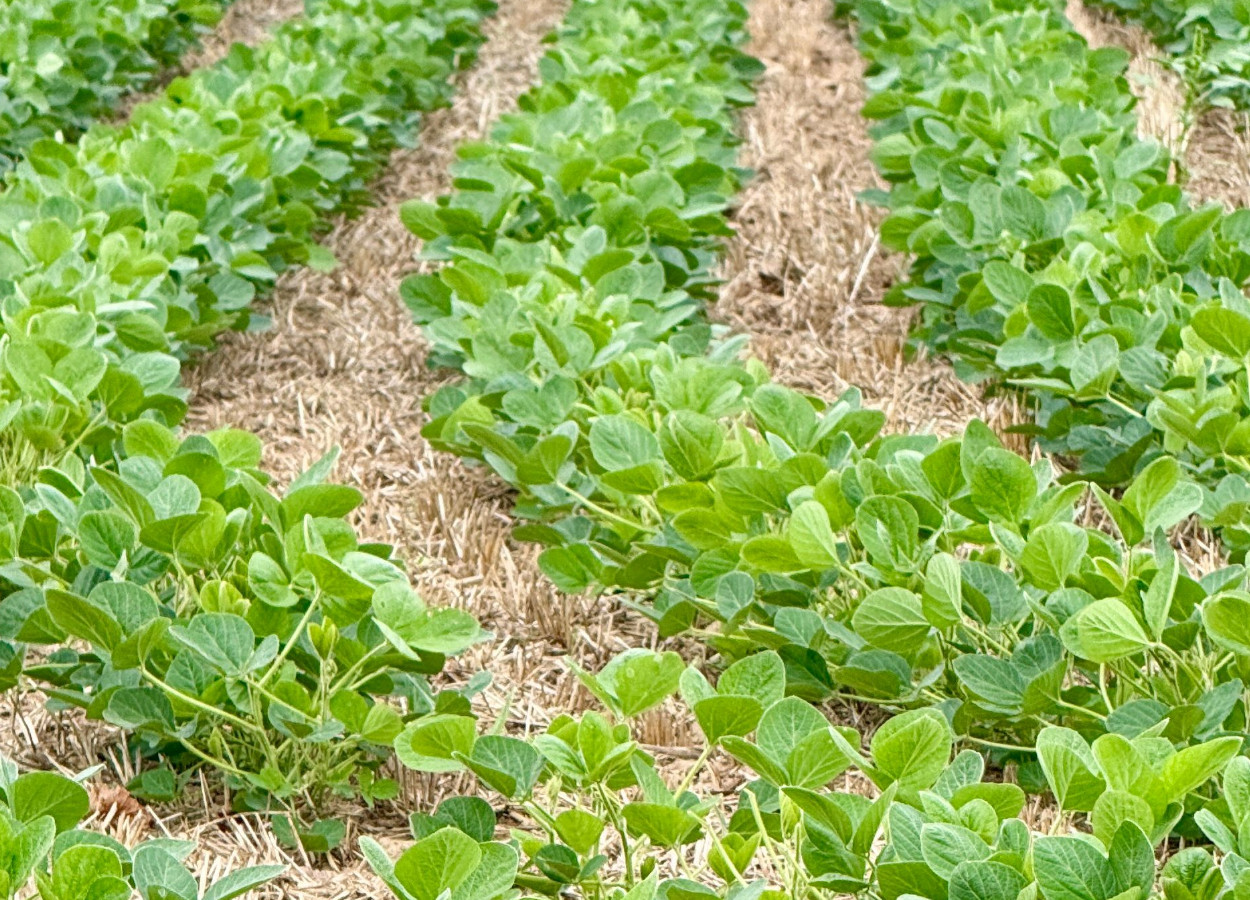
Decades of soybean breeding have modified the architecture of the root system, along with productivity gains. Modern cultivars have larger, more branched roots in the topsoil layer, with shallower angles. This process occurred even without direct selection for root characteristics.
Researchers evaluated 24 cultivars from maturity group IV, released in the United States between 1930 and 2005. The trials took place at two locations during 2016 and 2017. The team excavated root crowns within a 0,20-meter radius to approximately 0,20 meters deep and measured root characteristics in this layer, as well as nodulation and grain yield. Nothing was evaluated below this limit.
The complexity of the root crown increased from 1,72 to 2,66 when comparing cultivars released before 1950 with materials released after 2000. The 0,94 point increase corresponds to 31,3% of the range of the visual scale, which goes from 1 to 4. The total root length increased by 28,3%. The area covered by the crown, measured as convex area, increased by 16,1%, and the fraction of this area effectively filled by roots increased by 16,7%.
The improvement also increased the number of lateral roots and root tips. The number of tips grew by 42,7%. At the same time, the crown angle of the lateral roots decreased by 5,2%. The result indicates greater horizontal growth and exploration of the upper soil layers.
The nodulation followed the changes. The size of the nodules increased by 20% over the analyzed period. The density of nodules increased by 46%.
Responses varied across the four environments tested. The reduction in lateral root angle was significant in only one of them, crown occupancy did not respond in the 2017 trials, and second-order lateral root density only increased in the 2016 trials. Scientists treat these traits as context-dependent phenotypes, shaped by the interaction between genotype and environment.
Productivity showed an estimated gain of 18,13 kilograms per hectare per year. Characteristics related to root size and branching showed an association with this increase. The researchers emphasize: the observed relationships do not demonstrate causality.
The statistical model retained crown complexity, lateral root angle, total length, crown occupancy, and average root diameter among the variables most associated with productivity. In cross-validation, the ensemble predicted 67% of the yield variation, a performance classified by the scientists as moderate.
The results point to root architecture as a possible target for programs focused on productivity, acquisition of soil resources, and adaptation to different environments (doi 10.1002/csc2.70355). The researchers add that future gains may depend on the balance between exploration of the surface layer and the ability of roots to penetrate deeper.
Receive the latest agriculture news by email


Receive the latest agriculture news by email