Bahia government extends Proalba until 2028.
Bahia Cotton Producers Association celebrates decision published in the DOEBA this Tuesday (June 30th)
30.06.2026 | 17:40 (UTC -3)
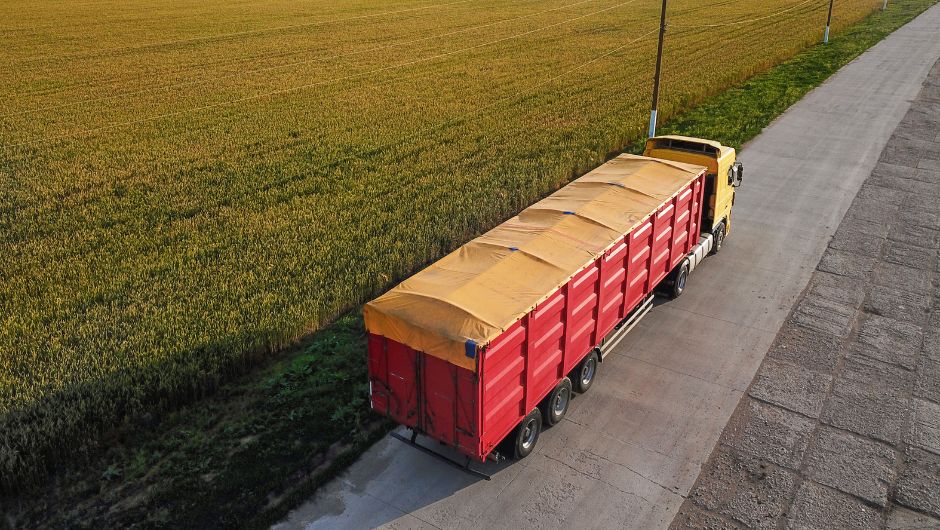
The prospect of a record harvest is keeping agricultural product transportation prices high on important routes. According to the June edition of the Logistics Bulletin, published this Tuesday (June 30th) by the National Supply Company, the market situation for road freight continued to be heated, even with the end of the peak harvest of important first-crop products, such as soybeans.
“At this time, a drop in prices would be expected, since a decrease in demand for the outflow of first-crop harvests is anticipated, and considering that work related to the outflow of second-crop harvests will be intensified. However, prices are remaining at a high level, quite close to that obtained at the peak of the harvest, between February and March, and on important routes,” explains the company's Superintendent of Operational Logistics, Thomé Guth. “The record soybean production, with an increase of 8,8 million tons over the previous production, keeps the demand for grain transportation high,” he reinforces.
In Mato Grosso, the country's main grain-producing state, price variations were quite specific compared to the previous month, with very small fluctuations and remaining close to stability. However, the prices remain at high levels, close to those recorded between February and March.
The road freight market in Mato Grosso do Sul maintained strong logistical pressure and a trend of price support in May, even in the face of seasonal adjustments in volumes moved after the end of the summer harvest. The maintenance of a robust flow of goods and the support of external negotiations kept the demand for road transport of grains firm.
In the Federal District, agricultural freight prices showed a moderate increase throughout May, mainly driven by the high cost of diesel and the continued outflow of the soybean and corn harvest from the Central-West region. Conab also observed price increases in the markets analyzed in Maranhão. In the state of Maranhão, the soybean harvest in May reached 92% of the area, while the corn harvest reached 27% of the production area.
Thus, grain movement was marked by the progress of the harvest and strong logistical pressure, with road and rail transport to the domestic market and for export through the Port of Itaqui. In this scenario, freight rates showed a slight increase of approximately 1,20% when comparing April and May.
In Paraná, freight logistics showed occasional variations compared to April, maintaining pressure on costs in specific routes, a scenario influenced by the high price of S-10 diesel, quoted at an average of R$ 6,38/liter, and by the strong concentration of demand in road transport infrastructure.
On the other hand, in Goiás and Bahia, the logistics scenario in May pointed to a slowdown in demand and freight movement. This temporal deceleration in grain transportation was justified by the current harvest calendar of the state's two main crops: the completion of the soybean harvest and the off-season and development period that precedes the entry of the second corn crop into the market.
A similar scenario was found in Piauí. In that state, a slight decrease in prices was observed compared to April, explained by the drop in soybean exports, which reduced their exported volume by 22%, representing a value of 64 tons in absolute terms. Freight rates also continued to fall in the surveyed areas of São Paulo, after the increases at the beginning of the year. This was mainly the result of a combination of reduced diesel costs and cooling industrial demand, even in a still-heated agribusiness scenario.
Cumulative corn shipments through May of this year reached 7,5 million tons, compared to 6,1 million tons in the same period of 2025, according to data from the Ministry of Development, Industry, Trade and Services (MDIC). Of this total, 33,5% were shipped through the ports of the Northern Arc, while the Port of Santos registered 26,5% of the shipped volumes, 9,6% of the national total through the port of Paranaguá, and 19,5% through Rio Grande.
Soybean exports reached 55,1 million tons in the accumulated period up to May. The ports of the Northern Arc also appear as the main port chosen by producers, having handled 38,5% of the volume. Shipments of the oilseed through Santos total 36,8% of national exports. The port of Paranaguá handled 14,2% of the national volume, while the port of São Francisco do Sul handled 4,5%.
The report also details Brazilian fertilizer imports. According to the document, May saw the lowest purchases made during this period since 2022. Despite the significant opportunities arising from the increased Brazilian supply of commodities, the high cost of this input, the continued uncertainty regarding developments in the Middle East, and the already confirmed expectation of the El Niño climate phenomenon—with experts considering the likelihood of it intensifying in the second half of the year, raising average temperatures and altering rainfall patterns—represent risks for crops worldwide.
From January to May 2026, Brazilian fertilizer imports reached 15,05 million tons, compared to 15,27 million tons during the same period last year.
Receive the latest agriculture news by email



Receive the latest agriculture news by email