External risks increase volatility for agricultural commodities
Rabobank forecasts rising oil prices, exchange rate uncertainty, and a slowdown in the Brazilian economy in 2026
25.08.2026 | 17:57 (UTC -3)
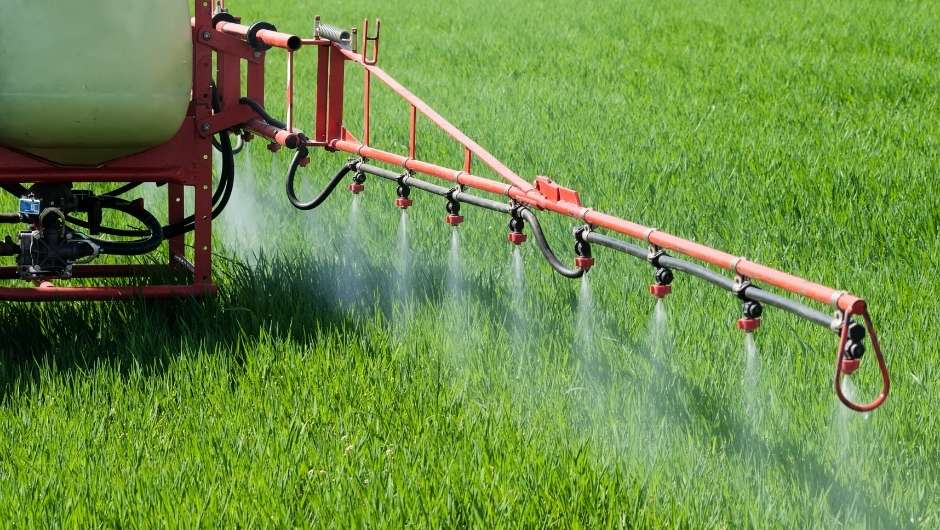
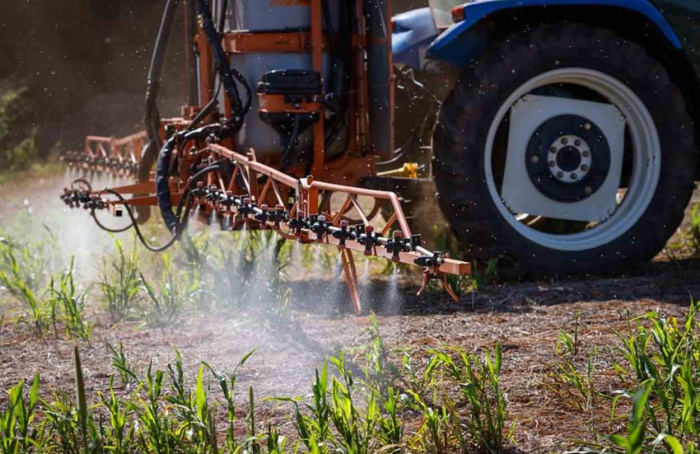
The use and application of pesticides containing the active ingredient 2,4-D will be prohibited in exclusion zones delimited in the municipalities of Dom Pedrito, Santana do Livramento and Jaguari, in Rio Grande do Sul. The measure is provided for in Normative Instruction 8/2026 of the State Secretariat of Agriculture (Seapi), published on Monday (August 24) in the State Official Gazette (DOE).
According to Seapi, the objective is to reduce the risk of drift associated with the use of the herbicide, especially in viticultural areas. In the exclusion zones, the use and application of pesticides containing 2,4-D, alone or in mixture with other active ingredients, will be prohibited. The issuance of agronomic prescriptions indicating an area located within the exclusion perimeters as the application site will also be prohibited.
The boundaries of Dom Pedrito and Santana do Livramento were defined based on the vineyard polygons registered in the Agricultural Defense System (SDA) of Seapi until July 2026, plus a two-kilometer strip from the outer limits. In Jaguari, the delimitation considers the polygon that concentrates the vineyard crops registered in the locality of Chapadão, with the addition of a ten-kilometer strip.
The definition of the zones takes into account the persistence of occurrences of herbicide drift based on 2,4-D. The regulation also considers the need to preserve expanding viticulture, crop diversity, the safety of agricultural production, and the state's agricultural matrix.
In areas within the restricted polygons, the use of the active ingredient 2,4-D is prohibited. On rural properties partially located within an exclusion zone, the prohibition will only apply to the portion located within the perimeter. In areas outside the restricted zone, the use of 2,4-D will be permitted provided that the requirements stipulated in the standard are met.
The field intended for application must be previously identified by a georeferenced polygon. The technical manager must send the polygon and the agronomic prescription to Seapi, accompanied by the Risk and Responsibility Consent Form, signed by the producer and the technical manager.
The maps, descriptive reports, geographic coordinates, and digital files of the perimeters will be made available on the Secretariat's official website.
Receive the latest agriculture news by email



Receive the latest agriculture news by email