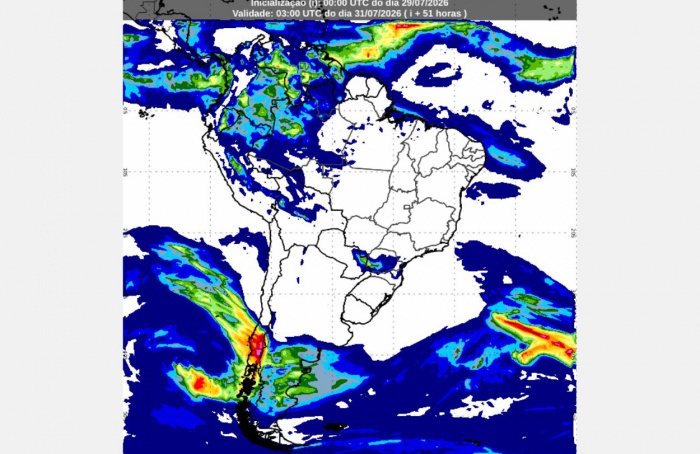
Inmet forecasts dry weather and a longer window for harvesting.
Conditions favor operations with corn, cotton, and coffee in producing regions.
29.07.2026 | 18:22 (UTC -3)
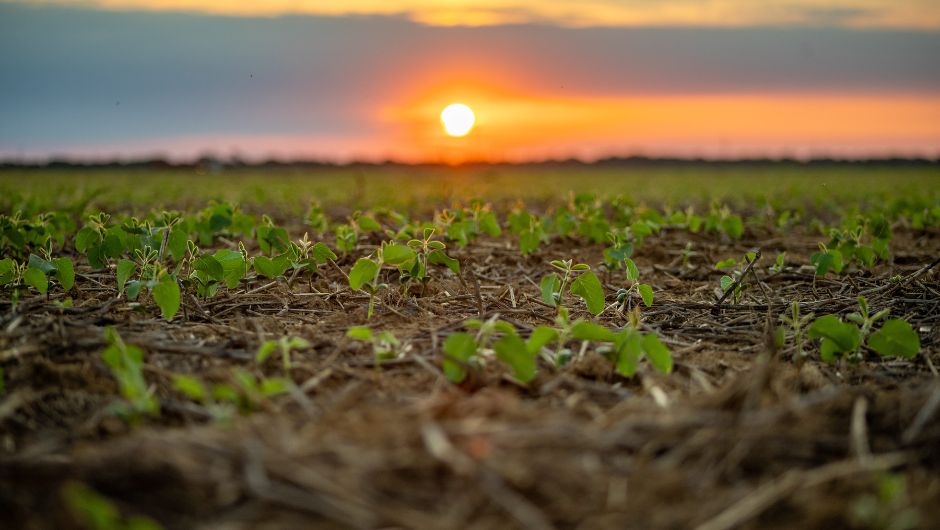
The possibility of a "Super El Niño" forming this year is already raising alarm bells in the productive sector, especially for agriculture in Mato Grosso. The phenomenon, characterized by the abnormal warming of the waters of the Pacific Ocean, can cause significant changes in rainfall patterns, raise temperatures, and directly influence the development of crops in the state.
Based on data and projections presented in the report by the consultant for the Mato Grosso Soybean and Corn Producers Association (Aprosoja MT), Clyde Fraisse, the climate scenario demands increased attention from rural producers, as it can affect everything from planning the planting of the 2026/27 crop to defining management strategies throughout the production cycle.
According to the consultant's assessment, although there are still uncertainties regarding the intensity of the phenomenon, the scenario indicates a probability of climate changes in the Midwest, requiring advance planning and strategies aimed at reducing risks in the next harvest.
"The impacts of El Niño on the 2026/27 harvest will depend not only on the intensity of the warming of the Pacific Ocean, but also on the interaction with other climatic systems, especially the Tropical Atlantic and atmospheric patterns over South America. However, the consensus among the main international meteorological centers indicates that the phenomenon significantly increases the probability of delays in the start of the rainy season in Central Brazil. For producers in Mato Grosso, this reinforces the need for a preventive strategy based on risk reduction," stated the consultant.
Given this scenario, Clyde Fraisse emphasizes that constant monitoring of weather forecasts and the adoption of management practices are fundamental to reducing the impacts of possible rainfall delays and ensuring greater stability to the production system.
"Continuously monitor medium- and long-term climate forecasts; avoid planting after isolated rainfall events, waiting for the rainy season to consolidate; maintain high soil cover through the No-Till System and cover crops; stagger planting to reduce exposure to climate risk; use cultivars adapted to different planting windows and review the second crop plan considering possible delays in soybean planting; intensify phytosanitary monitoring, since changes in temperature and humidity regimes can alter the dynamics of diseases and pests," advised Clyde Fraisse.
The consultant also emphasizes that climatic events of this magnitude can have repercussions at different stages of production, affecting everything from crop planting to logistics and grain marketing. Therefore, the use of technical information and climate studies becomes an important tool to guide decisions within the farm.
"For Mato Grosso, these factors represent a high risk, especially during soybean emergence, a phase in which water availability is crucial for plant stand formation. The climatic response depends on the interaction between various modes of climate variability. Climatology based on historical events is one of the most robust tools for estimating agricultural risks. Studies conducted by the Center for Weather Forecasting and Climate Studies, the National Institute of Meteorology, and the Brazilian Agricultural Research Corporation demonstrate a high recurrence of certain regional patterns. These patterns help guide decisions related to planting schedules, cultivar selection, soil cover management, sowing staggering, and climate risk mitigation strategies," he said.
Given this scenario, rural producers are already beginning to evaluate possible adjustments to their next harvest planning. Anticipating these decisions can be crucial to minimizing losses and ensuring greater production security. According to Diego Dall Asta, Vice-President of Aprosoja MT's Eastern Region, closely monitoring weather projections is essential for producers to make more informed decisions in the face of greater climate uncertainty and high production costs.
"Every producer follows the climate projections very closely because they are fundamental for planning the next harvest. In a year like this, when the costs of chemical fertilizers and seeds are at historically high levels, the producer needs, more than ever, to make an assertive planting decision. How they will adapt for the next harvest depends a lot on these projections. The trend is towards more cautious planting, reducing, for example, the planted area at the beginning of the calendar, when there is still little moisture. The producer will not risk planting with dry soil, scattered rains, or very early precipitation," he stated.
According to Diego Dall Asta, given the climate projections, planning for the next harvest requires even more attention, from choosing the varieties to determining the right time to start planting, seeking to reduce risks and preserve the productive potential of the crops.
"Planning needs to be comprehensive: planting only when there is sufficient moisture to ensure good germination and secure crop establishment, considering a two- to three-week interval in which the plant can withstand the lack of rain. Furthermore, it is essential to choose materials adapted to dry spells, which can occur between October, November, and December. The trend is for a year with less moisture, especially at the beginning of the season, and with higher temperatures. Therefore, the way forward is to adapt: choose varieties carefully, avoid planting in risky conditions, and always work with greater safety," advises the Vice-President of Aprosoja MT for the East region.
Aprosoja Mato Grosso, along with experts, emphasizes that given the possibility of significant climate changes in the next harvest, advance planning will be one of the main allies of rural producers.
Receive the latest agriculture news by email



Receive the latest agriculture news by email