American study indicates lower soybean production costs in Brazil
Research indicates lower total cost in the country, despite higher spending on fertilizers and pesticides
02.11.2026 | 16:26 (UTC -3)

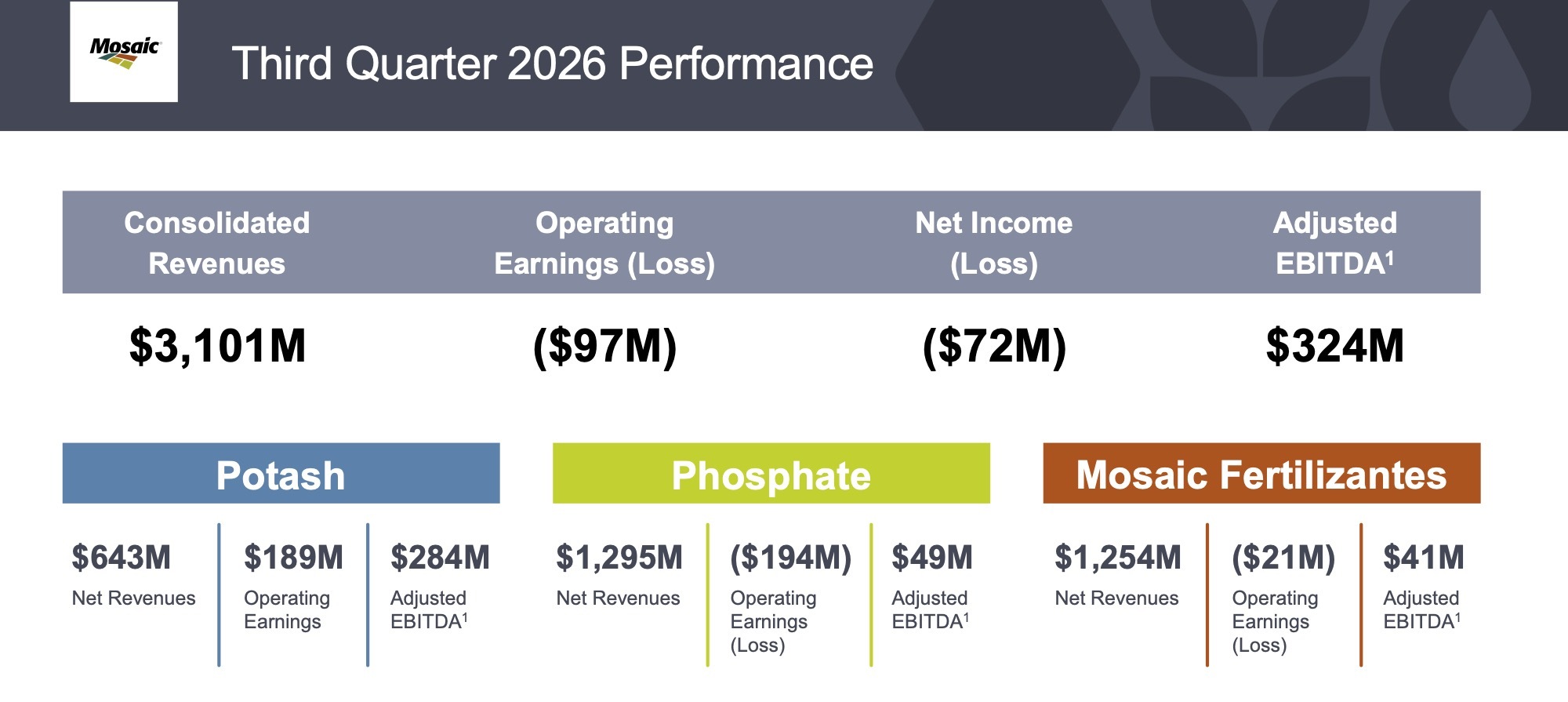
Mosaic reported a net loss of US$72 million in the third quarter of 2026, compared to a profit of US$411 million in the same period of the previous year. Net revenue reached US$3,1 billion, down from US$3,5 billion in 2025. Operating income was negative US$97 million, compared to a profit of US$340 million a year earlier. The company released the figures on Tuesday (November 3).
Adjusted EBITDA totaled US$324 million, a 59,8% decrease compared to the US$806 million recorded in the third quarter of 2025. The company attributed the performance to decreased sales volumes in its three segments and increased raw material costs in its phosphate and Mosaic Fertilizantes operations. Higher phosphate fertilizer prices offset some of these pressures.
The result included $53 million in negative extraordinary effects before taxes. These included adjustments to environmental provisions, facility closure expenses, and restructuring costs. Gains related to the Ma'aden stake and exchange rate variations offset some of these effects.
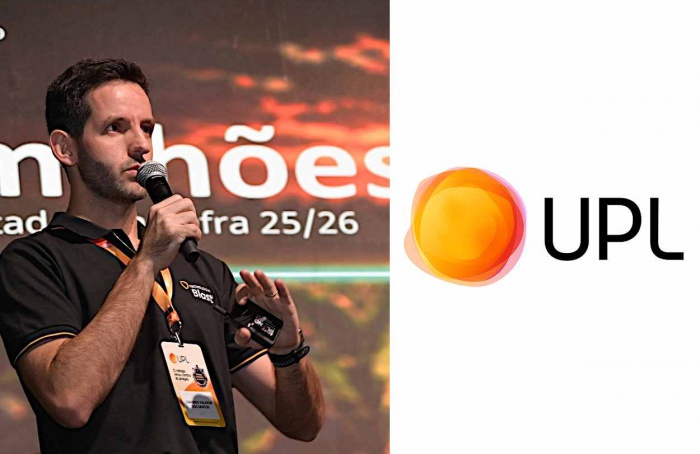
According to Bruce Bodine (pictured), president and CEO of Mosaic, the company has made progress in adapting phosphate production to the availability of sulfur at competitive prices, reduced costs, and strengthened its financial position.
Mosaic Fertilizantes, responsible for Brazilian operations, reported net revenue of US$1,254 billion in the third quarter, a 21,2% decrease compared to the US$1,592 billion recorded a year earlier.
The segment posted an operating loss of US$21 million, reversing the profit of US$96 million in the third quarter of 2025. Adjusted EBITDA fell from US$241 million to US$41 million, a reduction of approximately 83%.
The volume traded fell from 2,8 million to 1,9 million tons. The 32,1% decrease was mainly due to reduced production by the company in the country and restrictions on customer access to credit.
The average selling price of finished products increased from US$518 to US$625 per ton. However, the lower utilization of industrial capacity raised unit production costs.
The cost of converting phosphates increased from US$99 to US$147 per ton. The company attributed the increase to lower absorption of fixed costs and the continuation of dicalcium phosphate operations destined for animal feed in Cajati.
Expenses related to idle capacity, industrial shutdowns, and unabsorbed fixed costs reached US$70 million, compared to US$27 million in the third quarter of 2025.
Despite reduced volumes, Mosaic Fertilizantes recorded a seasonal improvement in distribution margins, which returned to normal levels. The reduction in Mosaic Fertilizantes' inventories also freed up working capital.
For the fourth quarter, the company forecasts adjusted EBITDA lower than that recorded between July and September. The projection takes into account the effects of reduced production and market seasonality.
The phosphate segment posted an operating loss of US$194 million, compared to a profit of US$102 million in the third quarter of 2025. Adjusted EBITDA fell from US$280 million to US$49 million.
Sales totaled 1,4 million tons, down from 1,6 million tons sold a year earlier. Mosaic reduced production due to limited availability of sulfur at economically viable prices.
The average price of diammonium phosphate (DAP) reached US$838 per ton, compared to US$714 in the equivalent period of 2025.
Sulfur had an average realized cost of US$715 per long ton in the third quarter. For the last three months of the year, the company closed a supply contract at US$615 per long ton. The reduction should initially benefit cash flow, with more significant effects on accounting results in the first quarter of 2027.
In the potassium segment, operating profit reached US$189 million, compared to US$229 million in the previous year. Sales fell from 2,3 million to 2,1 million tons.
The company revised its annual potassium production forecast to 8,6 million tons. Unfavorable geological conditions at the Esterhazy mine in Canada reduced the grades of the extracted ore.
Mosaic sees signs of recovery in Brazilian demand for phosphate fertilizers. According to the company, national stocks of these products are heading towards their lowest level in the last eight years.
The improved exchange rates for soybeans and corn for fertilizers also favor consumption prospects. For the company, this scenario paves the way for a short-term recovery in pent-up import demand, driven by the need to replenish soil nutrients.
In the international market, Mosaic points to restrictions in the supply of phosphates due to sulfur costs and production limitations. Chinese exports of DAP and MAP were minimal in the third quarter, and the company does not expect significant shipments until the Northern Hemisphere spring.
The company also projects a new record for global potassium demand in 2026, supported by farmers' ability to purchase the nutrient.
Mosaic forecasts investments of US$1,2 billion in 2026 and intends to reduce disbursements to less than US$1 billion in 2027.
In Brazil, the company is continuing the sale process of its Araxá (MG) unit, as part of a strategic review of its asset portfolio. Land sales since the beginning of the year have totaled US$67 million.
Consolidated operating cash flow reached US$284 million in the third quarter, up from US$229 million a year earlier. Reduced finished goods inventory contributed to this result.
In the area of biological solutions, Mosaic Biosciences projects annual revenue of US$135 million, approximately double the result for 2025. The platform launched six products in the first nine months of the year, including Mbio Floresce, Refirma Cybellion, and BioBlend in Brazil.
Receive the latest agriculture news by email



Receive the latest agriculture news by email