Models indicate areas for Drosophila suzukii control in the USA
Study combines climate and phenology to guide releases of two parasitoids
08.09.2026 | 10:39 (UTC -3)
Cultivar Magazine
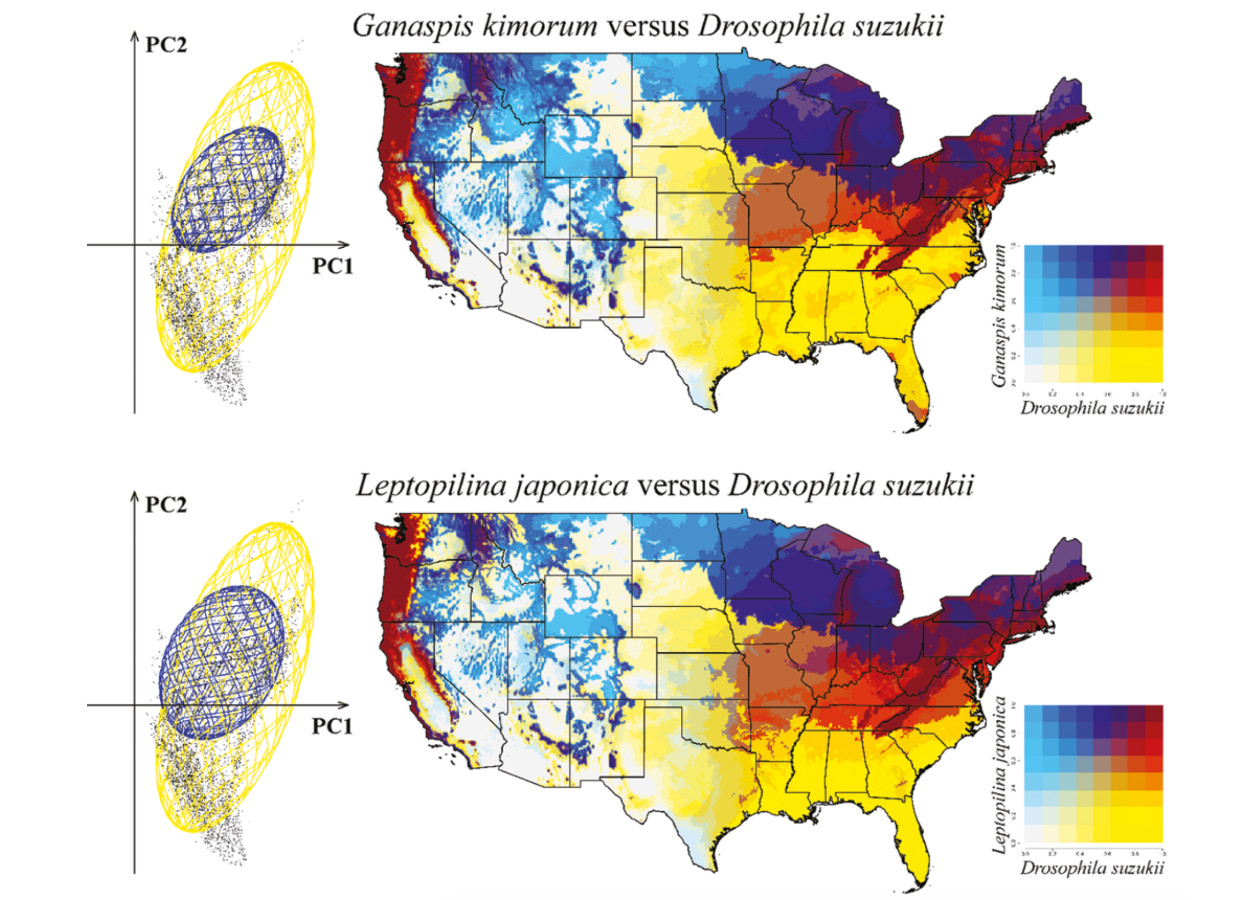
Habitat suitability and phenology models indicated greater potential for biological control of Drosophila suzukii in the Pacific Northwest and the Northeastern United States. The study evaluated the spatial and temporal coincidence of the pest with the parasitoids Ganaspis kimorum and Leptopilina japonica.
The two natural enemies occupy smaller realized niches compared to Drosophila suzukii. This difference may limit establishment in parts of North America. The models also indicated greater sensitivity of the parasitoids to hot and dry environments (doi 10.1127/entomologia/4365).
Evaluation by states
Oregon and Washington showed high predicted overlap. The same occurred in northeastern states, including Connecticut, Delaware, Maryland, Massachusetts, New Jersey, New York, Pennsylvania, and Rhode Island. Ohio and West Virginia also recorded favorable conditions.
In the Midwest and parts of the Southeast, the predicted overlap was at an intermediate level, as was the case in Illinois, Indiana, Michigan, Wisconsin, Kentucky, North Carolina, Tennessee, and Virginia. However, much of the Southeast is highly suitable for *Drosophila suzukii* and poorly suitable for parasitoids. In areas where habitat overlap, the lag in the onset of seasonal activity may still reduce control efficiency. In much of the United States, *Drosophila suzukii* begins activity two to four weeks before parasitoids.
Situation of parasitoids
Ganaspis kimorum acts as a specialist parasitoid of Drosophila suzukii and has received authorization for releases in the United States. Leptopilina japonica has a wider host range and already maintains established populations without intentional introduction in several regions, in addition to being under evaluation for intentional release.
The model validation gathered data from 134 locations in nine states, including 87 for Drosophila suzukii, 41 for Leptopilina japonica, and only 6 for Ganaspis kimorum. Researchers acknowledge that the low number of data points limits validation for the latter species. Field records indicated the first detection of the insects between 40 and 50 days after the predicted dates, but part of this difference is attributed to the sampling itself, since detection depends on population density and the efficiency of the capture method. Scientists highlight the combined use of climatic suitability and phenology as a tool to define locations and release periods in biological control programs.