AGCO appoints Ederson Soares as Marketing Manager.
Manager expands his role within the company and will now be responsible for Massey Ferguson's product strategy
02.09.2026 | 17:30 (UTC -3)
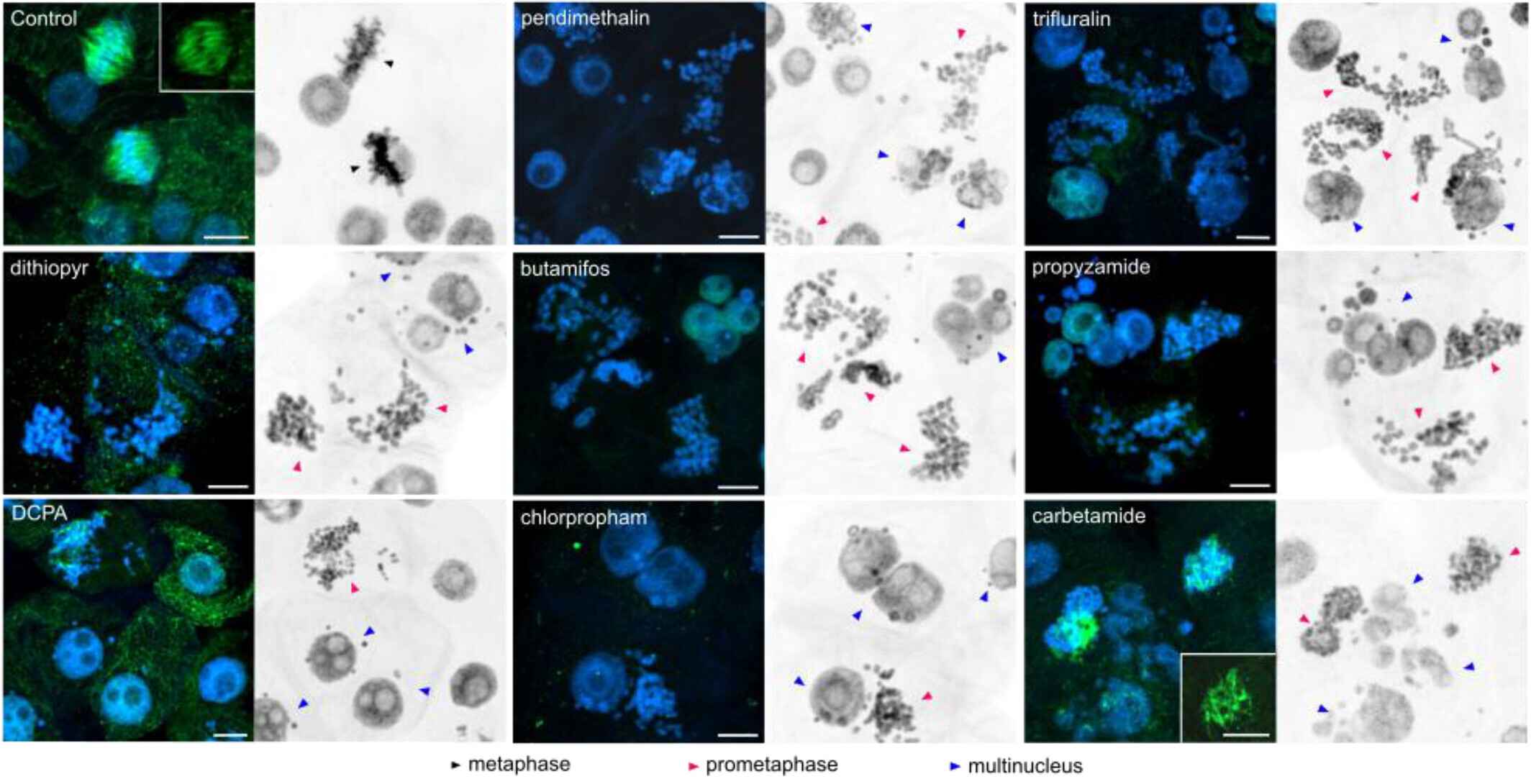
Microtubule-inhibiting herbicides produce similar cellular effects but exhibit distinct resistance profiles. This finding reinforces a revision in the classification of the Herbicide Resistance Action Committee (HRAC). Group 3 now includes compounds linked to alpha-tubulin. Propyzamide left this group and moved to Group 23, which is intended for herbicides that interfere with microtubules and whose site of action is not yet clear.
Researchers evaluated 15 herbicides from different chemical families (doi 10.1002/ps.71261). The analysis combined subcellular phenotyping in Nicotiana tabacum cultivar Bright Yellow 2 cells and resistance tests in Eleusine indica and Chlamydomonas reinhardtii. The work sought to compare the products under the same experimental system.
The previous classification separated compounds into microtubule assembly inhibitors, in Group 3, and microtubule organization inhibitors, in Group 23. This division considered observed differences in cellular architecture. Carbamates such as chlorpropham and carbetamide, for example, had been associated with the formation of multipolar spindles without evident microtubule depolymerization.
The new assays did not support this separation based on cellular phenotype. All herbicides evaluated produced a similar sequence of changes according to the dose. At lower concentrations, mitotic spindles with abnormal organization appeared. Intermediate doses induced multipolar spindles. Increasing the concentration led to a reduction in the number and length of microtubules. The highest doses promoted intense depolymerization.
The treatments also reduced the occurrence of normal mitotic phases. The cells accumulated alterations such as interruption of division in prometaphase and the formation of multinucleated cells. Anaphase appeared infrequently in the treatments. According to the researchers, the similarity of the effects prevents a reliable classification of the herbicides based solely on the subcellular response.
The potency of the compounds varied. Oryzalin showed the highest activity in the cell growth assay. Its estimated mean inhibitory concentration reached 0,28 micromol per liter. Other products required higher concentrations to produce comparable responses. This difference led the team to individually adjust the doses used in the microtubule analysis.
Resistance profiles showed a clearer distinction between herbicides. In Eleusine indica, the T239I mutation in alpha-tubulin conferred strong resistance to the dinitroanilines pendimethalin, trifluralin, prodiamine, butralin, benfluralin, and oryzalin. The same pattern appeared with dithiopyr, thiazopyr, butamifos, and DCPA.
The T239I mutation did not confer resistance to propyzamide. The mutant plants maintained sensitivity similar to the wild-type population. The same occurred with the carbamates carbetamide and barban. For chlorpropham, the study recorded slight hypersensitivity at some concentrations. The set of results indicates a shared site of action among the current members of Group 3 and a different behavior for propyzamide and carbamates.
The team expanded the analysis to include mutations in the beta-tubulin of Chlamydomonas reinhardtii. The substitutions E198K, I236N, K350E, and I368F were evaluated. All conferred strong resistance to propyzamide. No other herbicide showed this same pattern for all mutations.
Responses to other compounds varied according to the alteration in beta-tubulin. Some mutations increased resistance to trifluralin, pendimethalin, and dithiopyr. Others increased sensitivity. The researchers attribute this complexity to the influence of mutations on the formation of the heterodimer composed of alpha and beta-tubulin.
The data support redefining Group 3 as microtubule assembly inhibitors with alpha-tubulin binding. They also support transferring propyzamide to Group 23. In this group, HRAC came to include herbicides linked to microtubule interference, but without a precisely defined site of action.
For resistance management, the study highlights the importance of the site of action. Herbicides capable of generating the same cellular effect may interact with different targets within the microtubule system. Thus, the visual similarity of cellular damage does not, in itself, imply the same resistance profile.
Receive the latest agriculture news by email


Receive the latest agriculture news by email