Mosaic reports a loss of US$72 million in the third quarter
The result contrasts with a profit of US$411 million in 2025; Brazilian operations register a drop in sales
03.11.2026 | 19:01 (UTC -3)
A market of millions of consumers, new business opportunities, and the possibility of expanding production and generating jobs. After more than 25 years of negotiations, the trade agreement between Mercosur and the European Union is beginning to transform the prospects for foreign trade in Goiás. A study by the Federation of Industries of the State of Goiás (Fieg) estimates that the gradual reduction of tariffs between the two blocs could add US$208 million per year to Goiás' exports, with the potential to generate around 23 jobs.
The projections were presented on Thursday (October 29th), during the 3rd Expoind – Business and Solutions Fair for the Goian Industry, in Goiânia. Prepared by the Industrial Development Management (Gedin) of Fieg, the survey analyzes the effects of trade liberalization on the state's economy, identifies sectors with the greatest growth potential, and points out the challenges that companies will need to face to gain space in the European market.
The Provisional Trade Agreement between Mercosur and the European Union, in effect since May 1, 2026, initiated the reduction of trade barriers. The removal of tariffs will occur in stages, with different deadlines for certain products and sectors, allowing companies to adapt to the new competitive conditions.
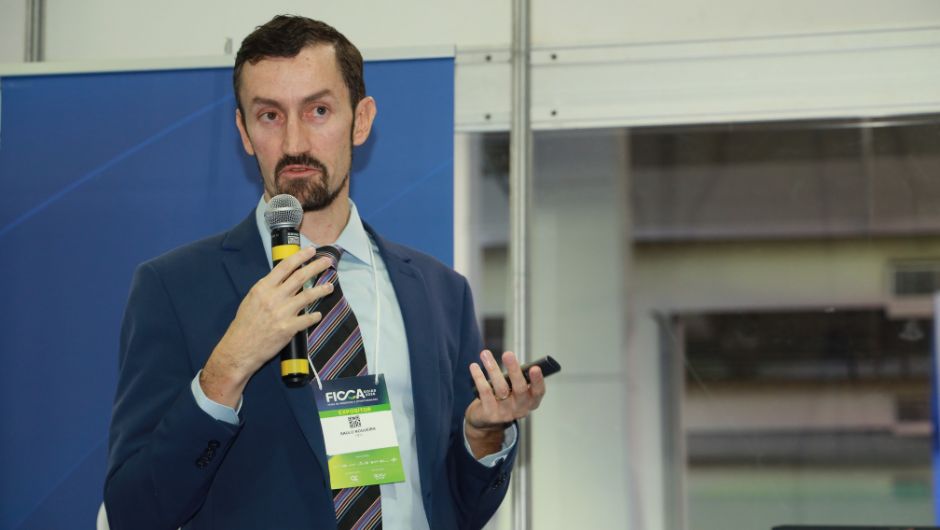
According to Saulo Nogueira (pictured), industrial development analyst at Fieg and responsible for the study, the outcome tends to be favorable for the economy of Goiás, especially due to the possibility of expanding sales to European consumers. "The agreement as a whole will be more positive for Goiás than negative, because it opens up a huge market with millions of consumers with high purchasing power. These are new frontiers for our exports," he emphasized.
To assess the opportunities, the study analyzed 40 products from 12 industrial subsectors, representing 99% of the exports considered in the survey. Among the segments with expansion prospects are beef and chicken, sugar, ethanol, leather, food, and chemical products.
One example is whole frozen poultry, a category for which Fieg estimates a potential of US$8,85 million annually in additional exports after four years of tariff reduction. Currently, Goiás does not export this product to the European Union, although there is demand in countries such as Spain, France, and Germany.
The growth in exports could also benefit other activities in the production chain. With the increased demand for products from Goiás, the trend is for greater demand for suppliers, raw materials, services, and labor, a movement that helps explain the potential for job creation highlighted by the study.
“When we have more people buying our product, we have a demand and a need that increases production. With that, there is an increase in the hiring of people,” explained Saulo.
The estimates consider the complete and phased removal of trade barriers, as foreseen in the treaty. Therefore, the results are not immediate and will depend on the companies' ability to expand production, meet the demands of the European market, and take advantage of the opportunities opened up by the tariff reduction.
While the agreement expands export opportunities, it also facilitates the entry of European products into the Brazilian market. According to a study by Fieg, imports to Goiás could grow by approximately US$190 million per year after the full implementation of tariff reductions, mainly in the pharmaceutical, industrial machinery and equipment, and transportation equipment sectors.
For industries, the opening could mean access to imported machinery, technologies, and inputs at lower costs, favoring the modernization of production processes. Consumers, in turn, may find more competitive prices on certain European products.
Juliana Tormin, internationalization manager at Fieg, believes that the change could contribute to increasing the productivity and competitiveness of companies in Goiás. "A very positive point is that our industry will be able to import more machinery and more supplies to make its products more competitive, in addition to adding more innovation and technology to Goiás' production," she stated.
Trade liberalization, however, also brings challenges. While many European industries already have a consolidated presence in foreign trade, some companies in Goiás still concentrate their sales in the domestic market. For Juliana, taking advantage of new opportunities will require investments in innovation, product adaptation, and compliance with the technical and sanitary standards required by European countries.
Among the sectors with potential for expansion, the manager highlights agribusiness, clothing, cosmetics, and leather goods. According to her, the reduction in tariffs could encourage companies that do not yet export to seek their first international clients and incentivize those already operating abroad to diversify their markets.
To help industries in Goiás take advantage of the opportunities opened up by the agreement, Fieg is preparing to launch an internationalization program in November. The initiative will include training, consulting, market studies, trade missions, and business matchmaking sessions.
The proposal is to offer support tailored to each company's profile and experience in international trade. The work will begin with a diagnostic assessment to identify the stage of internationalization of the business, encompassing industries that do not yet export as well as those that already sell their products in other countries.
"Within this profile, we were able to develop an internationalization path, guiding the company step-by-step from the beginning until the first export is finalized," explained Juliana.
The initiative aims to prepare companies to identify buyers, adapt products, understand the demands of target markets, and negotiate under more favorable conditions. The goal is to transform the possibilities foreseen in the agreement into concrete business deals for the industry in Goiás.
Titled "The Mercosur-European Union Agreement: Impacts on the Industry of Goiás," the Fieg survey is divided into four parts. The first examines the economic and commercial impacts of the treaty; the second presents estimates of export growth by product; the third analyzes trade rules and regulatory issues; and the fourth addresses sustainability, intellectual property, investments, and international cooperation.
The document also draws attention to sanitary, environmental, and technical requirements that could hinder access for products from Goiás to the European market. Among the points analyzed are rules of origin, trade defense mechanisms, government procurement, and sustainability-related standards.
Another aspect highlighted is the difference in the pace of tariff reductions. While the European Union began removing barriers for thousands of products in May, Brazil will have a longer adaptation period, with a significant portion of the reductions planned for the coming years.
Fieg intends to monitor the implementation of the agreement, identify difficulties faced by companies, and contribute to solving problems related to tariffs, quotas, regulatory requirements, and potential new trade barriers.
The first stage of the study was released in May, when the provisional agreement came into effect. The full presentation took place during the third edition of Expoind, held from October 27 to 29 at the Goiânia Convention Center. The fair brought together more than 80 exhibitors and a program focused on innovation, technology, business, and foreign trade.
Receive the latest agriculture news by email



Receive the latest agriculture news by email