American study indicates lower soybean production costs in Brazil
Research indicates lower total cost in the country, despite higher spending on fertilizers and pesticides
02.11.2026 | 16:26 (UTC -3)
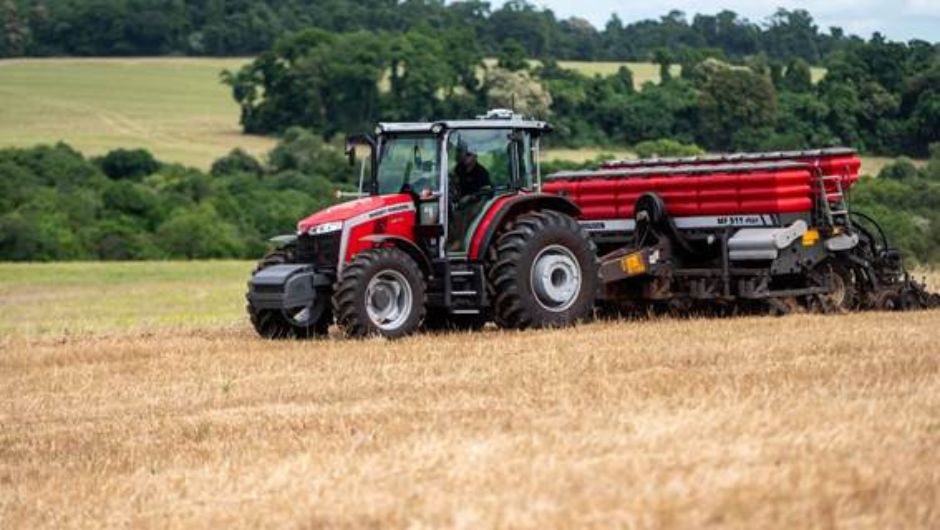
Wheat cultivation involves a sequence of operations ranging from land preparation and sowing to crop management and harvesting. At each stage, the choice of equipment and machine settings help adapt the work to the characteristics of the crop, the terrain, and the climatic conditions. On National Wheat Day, celebrated on November 10th, mechanization takes center stage among the factors contributing to the planning of wheat production in Brazil.
According to the National Supply Company (Conab), Brazilian wheat production is estimated at 5,7 million tons in 2026. To manage the crop, the producer needs to organize operations according to soil conditions, area characteristics, and the available labor capacity on the property.
The choice of equipment should consider the necessary power, the demands of the implements, and the requirements of each operation. The MF 5M tractors, with models ranging from 105 hp to 145 hp, and the MF 6M series, in versions of 170 hp and 190 hp, can be used in combination for different field activities, depending on the configuration used and the needs of the property.
The MF 5M series offers a 12x12 transmission, with options for a mechanical reverser or Power Shuttle, which facilitates changes in direction during maneuvers. The MF 6M tractors feature a synchronized Dyna-3 transmission and a hydraulic system with flow options of 150 or 205 liters per minute, meeting the different demands of implements. Both series have an autopilot system and a telemetry solution for remote machine monitoring.
“Planning operations begins with choosing a set of machines compatible with the needs of the property. Tractor power, implement demands, and terrain conditions need to be evaluated together so that the work is carried out according to the characteristics of each area,” explains Lucas Zanetti, Product Marketing Manager at Massey Ferguson.
In sowing, the MF 600 planter was developed to work with fine grains, such as wheat. Its articulated rows follow the variations in terrain, helping to maintain the depth of seed placement in irregular areas or with the presence of straw. The seed and fertilizer metering devices allow adjusting the distribution of inputs, while the larger capacity reservoirs reduce the frequency of stops for refilling.
“During sowing, adjusting the planter is crucial to maintain the correct seed placement depth and promote uniform emergence. Since soil conditions and the amount of straw vary between areas, it is important to adjust the equipment according to the characteristics of each operation,” says Zanetti.
During crop development, the MF 8225 HD and MF 500R sprayers can be used for applying pesticides, according to the needs of the crop and agronomic recommendations. The MF 8225 HD features a 174 hp AGCO Power engine, 4x4 hydrostatic drive with a ramp capacity of up to 34%, and spray booms with options up to 30 meters. The equipment has autopilot, automatic section control, and systems that help control application and avoid overlaps.
The MF 500R series features a six-cylinder AGCO Power engine, a spray tank with a capacity of up to 3.000 liters in the MF 530R and 3.500 liters in the MF 535R, as well as boom options up to 42 meters, which expand the working range. The LiquidLogic system maintains continuous product recirculation in the booms, helping to prevent residue buildup and maintain application uniformity. The models offer high application quality and operational efficiency, allowing the product to be applied at the right time and place, protecting the crop, increasing productive potential with cost reduction and sustainability.
In harvesting, the MF 9005S series of axial combine harvesters includes models from classes 5 to 8. One of the highlights is the variable-speed hydraulic spreader, which can be adjusted directly from the cab. The operator can adapt the straw distribution to the harvesting conditions and the volume of material processed, even in operations with platforms up to 45 feet.
The series also features a chopper with accelerator and variable speed hydraulic transmission. The system helps to fragment the straw and promote its spreading along the working path, reducing distribution gaps and the risk of residue accumulation in certain parts of the area.
“The uniform distribution of straw helps protect the soil surface from direct sunlight and conserve moisture, as well as facilitating subsequent operations, especially in areas managed under no-till farming. To achieve this result, the combine harvester settings must consider the volume of residue, the width of the platform, and the crop conditions,” explains Zanetti.
The planning and adjustment of equipment must be tailored to the needs of each stage of cultivation, from sowing conditions to residue management at harvest. Adapting the machinery to the characteristics of the area contributes to the execution of operations and to preparing the soil for the next cycle.
Receive the latest agriculture news by email



Receive the latest agriculture news by email