Viruses and parasitoid venom alter arthropods
Field trial links components of Cotesia glomerata to herbivore and parasitoid colonization
09.08.2026 | 14:26 (UTC -3)
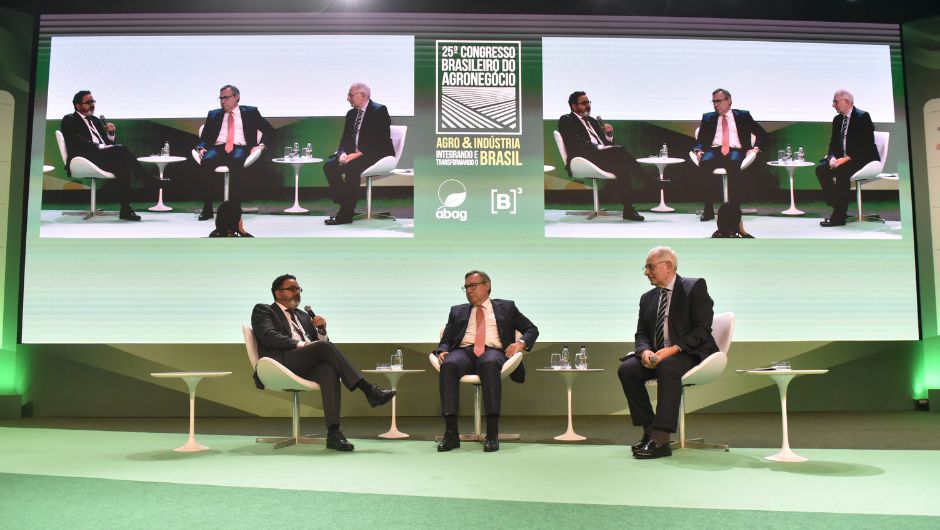
Brazil needs to prepare for a new geopolitical environment without abandoning its ability to pragmatically engage with different partners. For agribusiness, this means transforming the current global economic reorganization into an opportunity to expand markets, diversify destinations, and add value to Brazilian production, reducing vulnerabilities in the face of potential changes in demand or trade relations between major powers.
“The multilateral structure created after the war, including institutions like the WTO, has lost some of its capacity to reflect the current distribution of power. At the same time, the United States remains a central power, while China maintains its expansion trajectory. India and Russia are also part of this complex landscape of disputes and alliances,” explained Alexandre Parola, Brazil's ambassador to the Kingdom of Morocco, during the Roundtable “Agribusiness in Geopolitics,” at the historic 25th edition of the Brazilian Agribusiness Congress (CBA), promoted by the Brazilian Agribusiness Association (Abag), in partnership with B3, this Monday (August 10), in São Paulo.
He assessed that Brazil needs to abandon a purely short-term planning approach and build a medium- and long-term strategy, considering that the period of relative "benign neglect" towards the country has ended. "Strategic security has increasingly influenced the economic and commercial decisions of major powers. For Brazil and agribusiness, this reality opens up opportunities, but also demands adaptation," he stated.
According to Braz Baracuhy, a diplomat and geopolitics expert, Brazil maintains common interests with various powers and also opportunities for relationships with other regions of the world. He advocated for a combination of private sector capacity and long-term state policy, particularly in the areas of food and energy security, and drew attention to the dependence on strategic international routes, especially the Strait of Hormuz. “The center of gravity of the rural economy is in the Strait of Hormuz. From a geopolitical point of view, this is daunting, but my impression is that there are incentives for diplomacy.”
Receive the latest agriculture news by email


Receive the latest agriculture news by email