Inmet: weather forecast for Wednesday (12) and Thursday (13)
Storms return to southern Brazil, while heat intensifies in parts of the Central-West, North, and Southeast regions.
11.08.2026 | 17:02 (UTC -3)
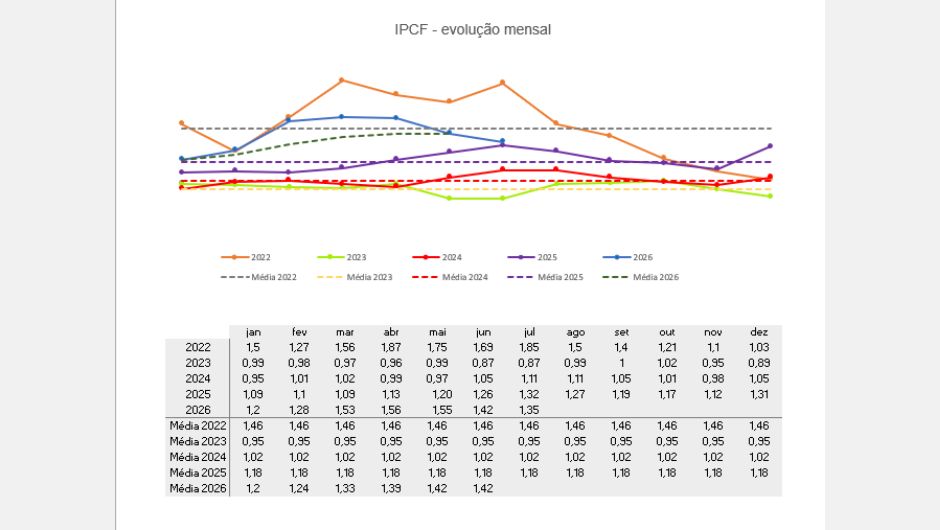
The Fertilizer Purchasing Power Index (IPCF) ended July at 1,35, a 5% decrease compared to June 2026. The result was mainly influenced by the combination of rising agricultural commodity prices and lower fertilizer and raw material prices, factors that had the greatest impact on the indicator. In the exchange rate market, another component of the index, the scenario was one of stability. The dollar ended the month practically unchanged, with a slight decline of 0,2% compared to the previous period, which limited its impact on the IPCF.
In agricultural commodities, there was an average increase of around 4%. Soybeans were the main highlight, with an advance of approximately 7%, driven by geopolitical tensions between the United States and Iran, which increased volatility in the oil market. Concerns about weather conditions in the United States and recent data from the United States Department of Agriculture (USDA), which increased uncertainties regarding the American harvest, also contributed to this movement. Corn saw a more moderate increase of around 0,5%, given the good results of the Brazilian second crop, which has already reached approximately 80% of the harvested area. Cotton advanced about 2%, while sugarcane remained stable.
Regarding fertilizers, prices fell by an average of about 8% during the month. The decline was mainly driven by a 30% reduction in urea prices and a 9% drop in the price of single superphosphate. On the other hand, prices for MAP (monoammonium phosphate) and MOP (potassium chloride) remained stable.
Another important point to consider is the impact of reduced phosphate fertilization – which cannot be generalized, as it depends directly on soil fertility and the management history of each area. Producers who have invested in building fertility in recent years are more protected in the short term, since they have a reserve of phosphorus in the soil. Even so, technical studies analyzed by Mosaic indicate that, in scenarios without phosphorus application, productivity losses can vary from approximately 6% to 20%, with a higher risk in areas with low availability of the nutrient. This scenario refers to normal weather conditions – in adverse situations this impact can be amplified.
Therefore, the recommendation is that any adjustments to fertilization should be made based on soil analysis and technical guidance, ensuring future phosphorus replenishment and avoiding greater impacts on subsequent harvests.
For the coming months, several factors remain on the radar and may influence the index's behavior. These include the evolution of the conflict in the Middle East, especially given the region's and the Strait of Hormuz's importance to the global trade of agricultural inputs, and weather conditions, with El Niño gaining strength and potentially affecting the planting calendar for soybeans and other important crops. These elements will continue to be crucial for the price dynamics of commodities, fertilizers, and consequently, the IPCF.
Receive the latest agriculture news by email


Receive the latest agriculture news by email