





American study indicates lower soybean production costs in Brazil
Research indicates lower total cost in the country, despite higher spending on fertilizers and pesticides
02.11.2026 | 16:26 (UTC -3)
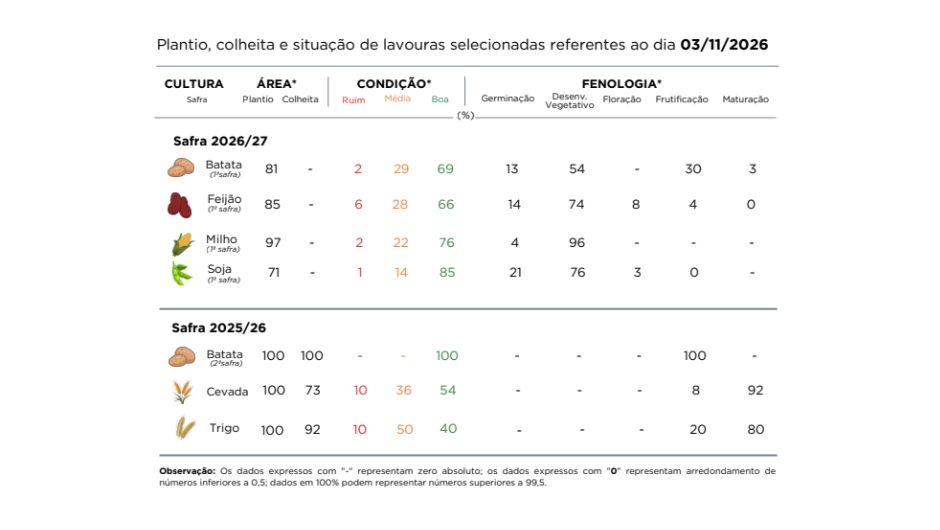
The excessive rainfall recorded in Paraná has hampered the progress of fieldwork and caused damage to various crops. In soybeans, waterlogged soils, low sunlight, and lower-than-expected temperatures are compromising crop establishment. In the winter crop, adverse weather conditions have reduced the productivity and quality of wheat, barley, and oat grains.
According to the Department of Rural Economy (Deral) of the Paraná State Secretariat of Agriculture and Supply (Seab), soybean planting progressed during periods of lower rainfall in the week of October 27 to November 3 and is nearing completion in several regions. However, some areas are still experiencing delays. Excess moisture hinders access for machinery to the cultivated areas and impairs the emergence and initial development of the plants.
Although some crops show good germination and adequate stand, there are also reports of emergence failures, reduced plant population, yellowing of leaves, and slow vegetative growth. Intense rainfall also favored erosion processes, terrace and contour line ruptures, and nutrient leaching. Gales and hailstorms caused partial and total losses in some areas.
The situation also increases concerns about the occurrence of weeds, pests, and diseases. Difficulties in accessing the fields compromise the performance of cultural practices and spraying during the recommended periods. According to Deral, these problems can affect the productive potential and prolong the soybean cycle, with possible repercussions for the planning of the second corn crop.
The planting of the first corn crop is in an advanced stage, with operations practically completed in some regions. In general, the crops show good germination and initial development. However, low sunlight, mild temperatures, and excess moisture cause yellowing and delay plant growth.
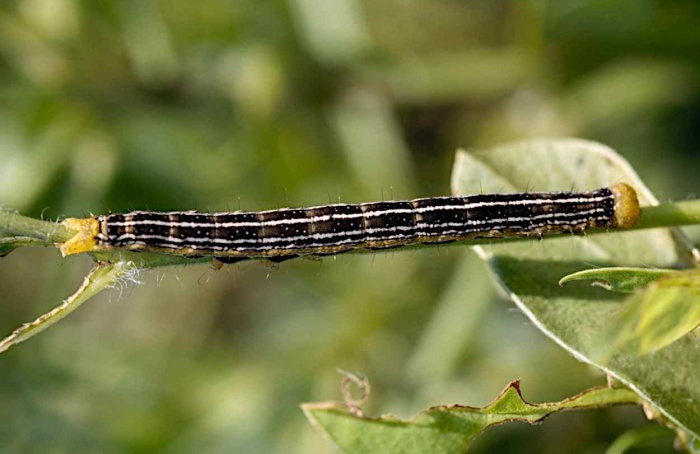
The bulletin also notes the occurrence of pests, mainly caterpillars and thrips, as well as concerns about the increased incidence of diseases. Heavy rains, strong winds, and hail represent additional risks to crop establishment.
Wheat harvesting is in its final stages in most regions of Paraná, although some areas are still pending, especially in higher altitude locations. The crop was largely hampered by excessive rainfall and low sunlight throughout the cycle, factors that compromised productivity and grain quality.
Deral observes a high volume of product classified as low-grade wheat, with a significant presence of triticale and, in some locations, wheat residues. Moisture during ear formation and grain filling, coupled with difficulties in phytosanitary management, also favored diseases such as blast, Fusarium head blight, and leaf spots.
The season's results may influence producers' decisions regarding the area allocated to winter cereals in the next cycle.
In the barley sector, the harvest is also well underway, but some regions are reporting yields below initial estimates. Despite the quantitative losses, some areas have grain quality sufficient for brewing classification.
Meanwhile, the white and black oat crops are nearing harvest completion, with reduced productivity and low grain quality due to adverse weather conditions.
Another crop affected by the weather conditions is irrigated rice. Floods caused by the rising levels of the Ivaí and Paraná rivers inundated cultivated areas and caused irreversible losses in part of the crops, with no possibility of replanting.
The losses are compounded by high production costs and difficulties in recovering the affected areas. The continuation of the activity will depend, in part, on the weather conditions in the coming months, especially the rainfall amounts in November and December.
Planting the first bean crop is facing obstacles due to excessive rainfall and climate risks. Production costs and the remuneration received by producers also discourage the purchase of seeds and the expansion of the cultivated area. In lower-lying areas, waterlogging has caused plant losses.
In tobacco farming, excessive moisture has hampered crop development in some regions. Leaf rot and reduced plant vigor are causing production losses and lower yield prospects. Isolated hail damage has also been reported.
Field conditions have distinct effects on other agricultural activities. In coffee, recent rains favor the development of plants, which are in different phases, between grain filling and flowering. To date, there are no reports of significant damage to flowering.
In sugarcane, the harvest is progressing unevenly and was even temporarily interrupted in some areas due to rain. With the arrival of favorable weather periods, work has resumed, as well as the renewal and planting of new areas.
In fruit and vegetable crops, excessive rainfall and difficulties accessing properties require attention to the continuity of harvesting and storage operations. Potato planting also remains behind schedule, despite progress recorded during periods of respite from the rains. In cassava, improved field conditions allow planting to resume in some regions, although newly planted areas remain vulnerable to waterlogging and erosion.
Conversely, pastures offer good green mass production and food availability for herds, facilitating animal management. Even so, the high rainfall volumes require attention to soil conservation and access conditions to the properties.
Receive the latest agriculture news by email



Receive the latest agriculture news by email