Corteva releases results for the second quarter of 2026
The company forecasts operating EBITDA of up to US$4,3 billion in 2026 and maintains its separation plan for October
30.07.2026 | 18:12 (UTC -3)
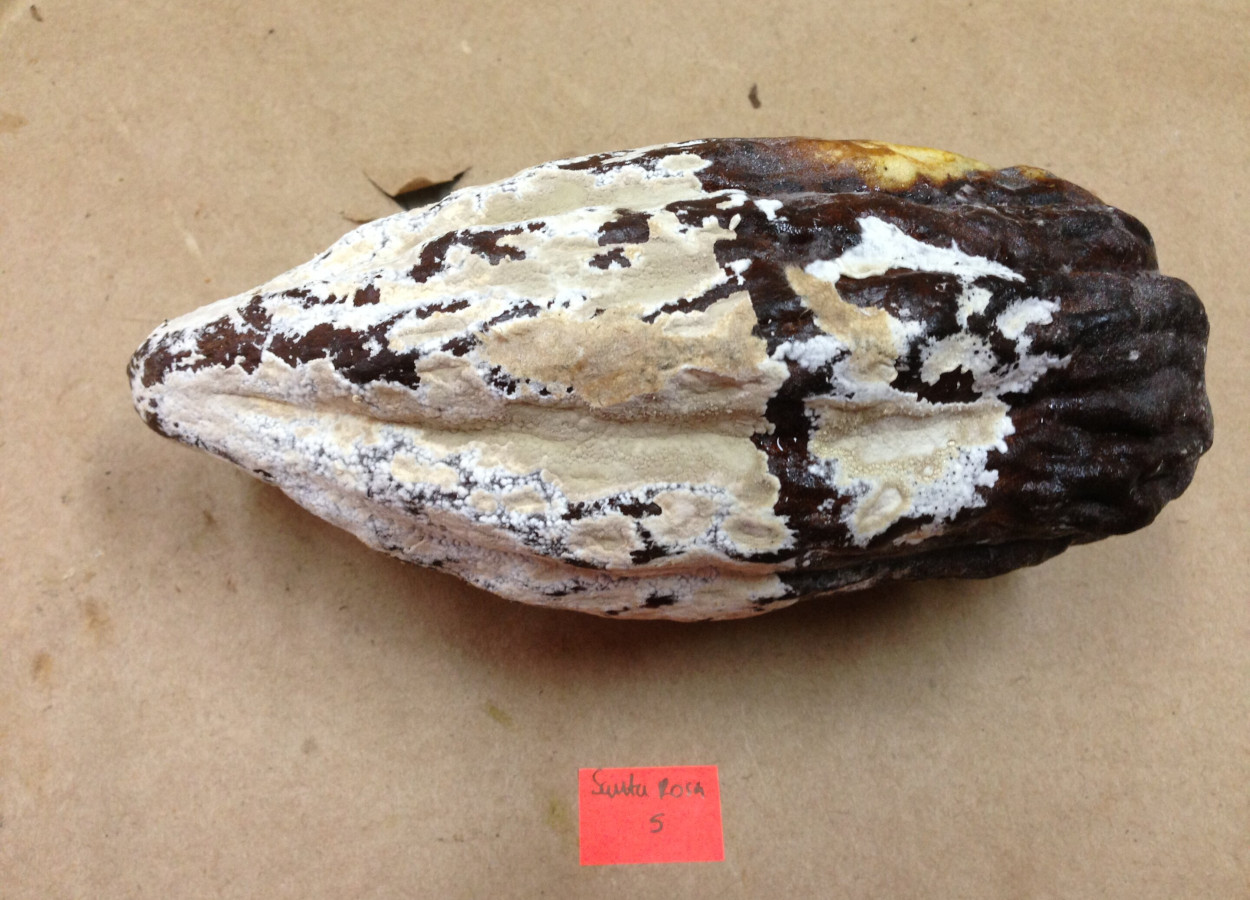
An emulsion composed of fengicin and cinnamon essential oil showed synergistic action against Moniliophthora roreri. The formulation inhibited the mycelial growth of eight Ecuadorian isolates and maintained colloidal stability during seven weeks of storage. The tests were conducted under laboratory conditions. Therefore, the results do not yet prove efficacy in the field.
Researchers at the Escuela Superior Politécnica del Litoral in Ecuador combined fengicin produced by Bacillus subtilis DS03 with essential oils of cinnamon, Cinnamomum zeylanicum, and peppermint, Mentha piperita. The work evaluated the antifungal activity of the isolated compounds and emulsions (DOI 10.3389/fpls.2025.1731535).
Fengicin inhibited up to 84,57% of the mycelial growth of Moniliophthora roreri at a concentration of one thousand parts per million. Cinnamon oil achieved an average inhibition of 84,89% at two hundred and fifty parts per million. From five hundred parts per million, the product completely suppressed the growth of the eight isolates.
Peppermint oil required higher doses. Inhibition reached 77,99% with one thousand parts per million and achieved 100% with two thousand parts per million. The results indicated a response dependent on concentration and isolate.
Chemical analysis identified (E)-cinnamaldehyde as the main component of cinnamon oil, comprising 69,72% of the composition. Eugenol represented 4,02%. In peppermint oil, menthol accounted for 51,07%. Menthone reached 17,12%, while neoisomenthol totaled 10,58%.
The most efficient combination brought together fengicin and cinnamon oil. In one of the mixtures evaluated at 250 parts per million, the formulation completely suppressed the growth of the eight isolates. The fractional inhibitory concentration index was below 0,5 in some of the materials, a result associated with synergistic interaction.
At a concentration of one hundred parts per million, another proportion of the emulsion exceeded 90% inhibition in all isolates. Three materials maintained residual growth. This behavior reinforces the variability in sensitivity within the pathogen population.
Isolates MR26, MR34, and MR50 showed reduced sensitivity to different treatments. This response occurred with fengycin and the two essential oils. The researchers relate the pattern to possible differences in membrane permeability, detoxification systems, and the transport of compounds out of cells. The study did not confirm these mechanisms.
The emulsion with fengycin and peppermint oil also increased antifungal activity. However, the interaction showed a primarily additive effect. The fractional inhibitory concentration index was close to one. Some combinations exceeded 90% inhibition in five of the eight isolates, but required a total concentration of one thousand parts per million.
Physical stability differentiated the formulations. The emulsion with cinnamon oil maintained particles between 850 and 1.050 nanometers over seven weeks. The zeta potential ranged from -26,43 to -35,67 millivolts. These values indicated colloidal dispersion with a low tendency to aggregate.
In the emulsion with peppermint oil, the particle size exceeded five thousand nanometers in the seventh week. The result indicated progressive aggregation. The zeta potential also showed greater variation, reaching minus 22,5 millivolts in the sixth week.
According to scientists, fengicin performed two functions. The lipopeptide acted against the fungus and also functioned as a biosurfactant. This second function favored the dispersion of cinnamon oil in water and increased the availability of antifungal compounds.
Mass spectrometry confirmed fengicin isoforms with mass-to-charge ratios between 1.435 and 1.491. The Bacillus subtilis DS03 strain also produced surfactin, but the antifungal assays and emulsions used the fraction identified as fengicin.
The formulations also acted on the spores. Combinations of fengicin with cinnamon oil, at concentrations of one hundred and two hundred and fifty parts per million, prevented germination in all isolates at various proportions tested. The emulsion with peppermint oil also achieved total inhibition in one of the formulations. Isolated fengicin showed inhibition of 84,05% at one hundred parts per million, 93,73% at two hundred and fifty parts per million, and 97,07% at one thousand parts per million.
The study points to an emulsion of fengicin and cinnamon oil as a candidate for the development of biofungicides for cocoa trees. Before agricultural use, the technology still depends on evaluations regarding dosage, persistence, phytotoxicity, production cost, application, and performance under field conditions.
Receive the latest agriculture news by email



Receive the latest agriculture news by email