American study indicates lower soybean production costs in Brazil
Research indicates lower total cost in the country, despite higher spending on fertilizers and pesticides
02.11.2026 | 16:26 (UTC -3)

Embrapa has developed a digital technology to track agricultural products from origin to market. Available as an API (Application Programming Interface), Embrapa Trace connects information from the soybean, coffee, and beef supply chains to demonstrate the agro-environmental and sanitary compliance of Brazilian production and facilitate access to international markets.
The tool integrates data from other public research solutions, such as TerraClass, developed by Embrapa and the National Institute for Space Research (Inpe), which monitors land cover and land use in the Amazon and Cerrado biomes, and ElegiAgro, a system that automates agro-environmental eligibility analyses.
According to researcher Anderson Alves, from Embrapa Agricultura Digital (SP), the technology standardizes self-reported information, validates certifications, and gathers evidence of sustainability and traceability into a single compliance report.
The solution meets international requirements, including the European Union Deforestation Regulation (EUDR) and antimicrobial controls in animal production. The system allows for separate monitoring of each production stage, from property registration and area monitoring to the transport, storage, and processing of products.
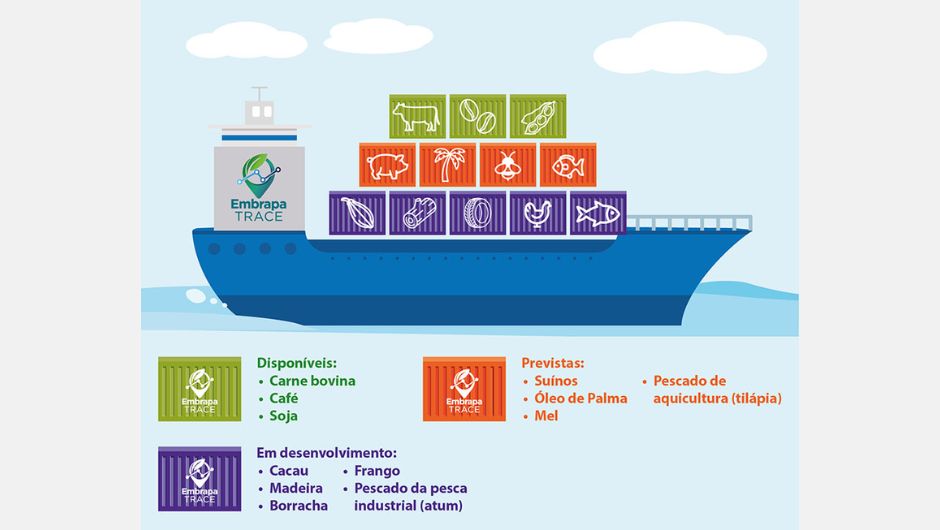
Embrapa Trace will also be available on the AgroBrasil Mais Sustentável (AB+S) Platform of the Ministry of Agriculture and Livestock (Mapa), and can be accessed through the AgroAPI platform. Compliance reports can be consulted via QR Codes and will offer technical support for trade negotiations and challenging trade barriers.
According to AB+S coordinator Lara Line de Souza, the solutions are complementary: while the Mapa platform evaluates the socio-environmental qualification of rural establishments, Embrapa Trace provides information on the traceability of production.
The system also uses digital tokens to create immutable audit trails and maintain national control over agricultural data. New supply chains are expected to be incorporated, including cocoa, timber, rubber, broiler chickens, pork, and fish.
Implementation gains relevance given the EUDR deadlines. Starting December 30, 2026, large and medium-sized exporters will have to prove that their products are not associated with areas deforested after December 31, 2020. For micro and small producers, the deadline will be June 30, 2027.
Receive the latest agriculture news by email



Receive the latest agriculture news by email